Nutella, much like Carmen Sandiego, is highly sought after. It’s the closest thing to sex you can spread on toast. Eating it immediately makes you more sensual and European. It’s just fucking delicious.
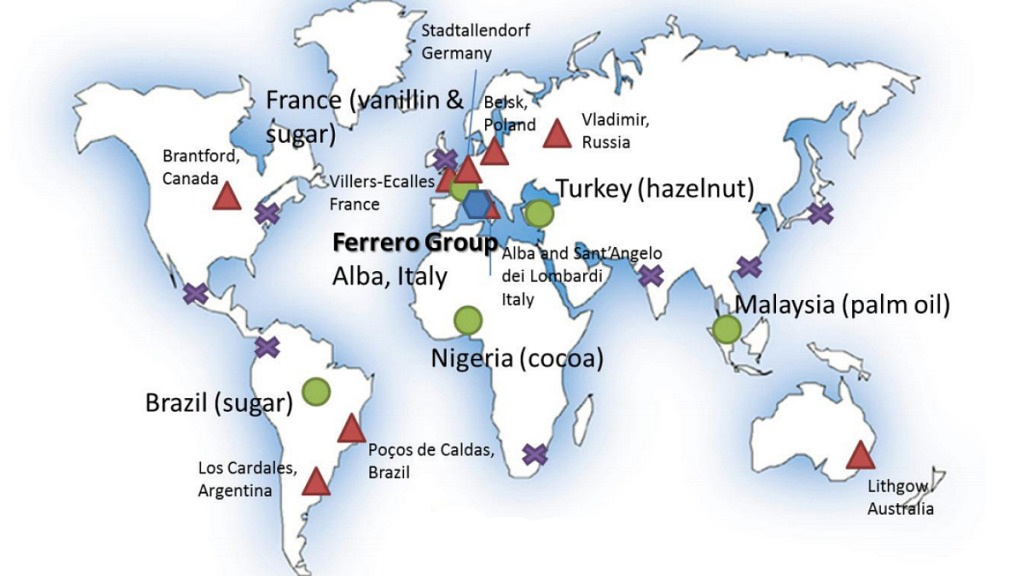
But try to track it down, and — like everyone’s favorite villain in a red trench coat — that’s when things get tricky. The OECD’s new report on global value chains features a case study on Nutella, revealing that it’s the dictionary definition of globalization. Check it:

Ferrero, SourcemapWhat a globetrotter! Click to embiggen.
Its factories and suppliers span six continents, with main ingredients coming from five countries: hazelnuts from Turkey, cocoa from Nigeria, vanilla from France, sugar from Brazil, and palm oil from Malaysia. And most of the factories aren’t in any of those countries, meaning that any jar of Nutella requires input from six countries or more.
All of that shipping can’t be great for the environment. Get a warrant and see if you can track down a chocolate-hazelnut spread at your local farmers market, gumshoe!
A message from
Your support keeps our climate news free.
Grist is the only award-winning newsroom focused on exploring equitable solutions to climate change. It’s vital reporting made entirely possible by loyal readers like you.
At Grist, we don’t believe in paywalls. Instead, we rely on our readers to pitch in what they can so that we can continue bringing you our solution-based climate news. Donate today to keep our site free.