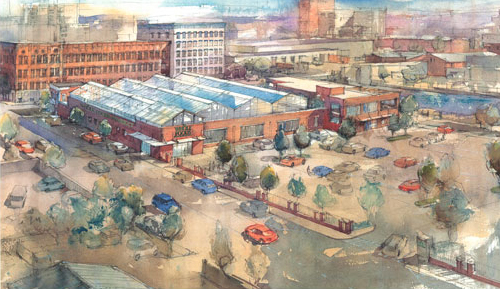
The Whole Food site in Gowanus, Brooklyn, doesn’t look like much yet. Actually, in general, Gowanus doesn’t look like much these days — it’s a once-industrial neighborhood that’s increasingly being taken over by pickling factories and music studios. You can walk whole blocks without passing by much except maybe a coffin wholesaler, and then hit upon a corner where there’s a pie place, a barbecue joint, and a home-brew shop.
It also smells bad, fairly often. Because this is where the Gowanus Canal is, and that’s still a Superfund site. The city’s sewage system still dumps overflow into it during storms. It is actually possible, if you’re lucky, to see poop float by.
So, here comes Whole Foods, a company that likes to talk about being local and green, and on top of its new, big store here, it’s going to build a rooftop farm. A 20,000-square-foot rooftop farm.
This is a mixed bag. There will be no pesticides and no need for wasteful shipping of produce. But there will be fumes coming from the canal. Also, it’s a greenhouse, so there will be winter tomatoes, not exactly the most energy-efficient of foods. (Also kale, because it’s impossible to do anything involving “local food” without kale.) But the farm will run on solar power and recycle rainwater.
So while we might be a little leery of both Whole Foods and veggies grown in areas long contaminated with industrial toxins, we’re willing to give these a try. Just, you know, maybe wash them. If you walk a few blocks you can probably find a little boutique selling handmade soap.
A message from
Your support keeps our climate news free.
Grist is the only award-winning newsroom focused on exploring equitable solutions to climate change. It’s vital reporting made entirely possible by loyal readers like you.
At Grist, we don’t believe in paywalls. Instead, we rely on our readers to pitch in what they can so that we can continue bringing you our solution-based climate news. Donate today to keep our site free.