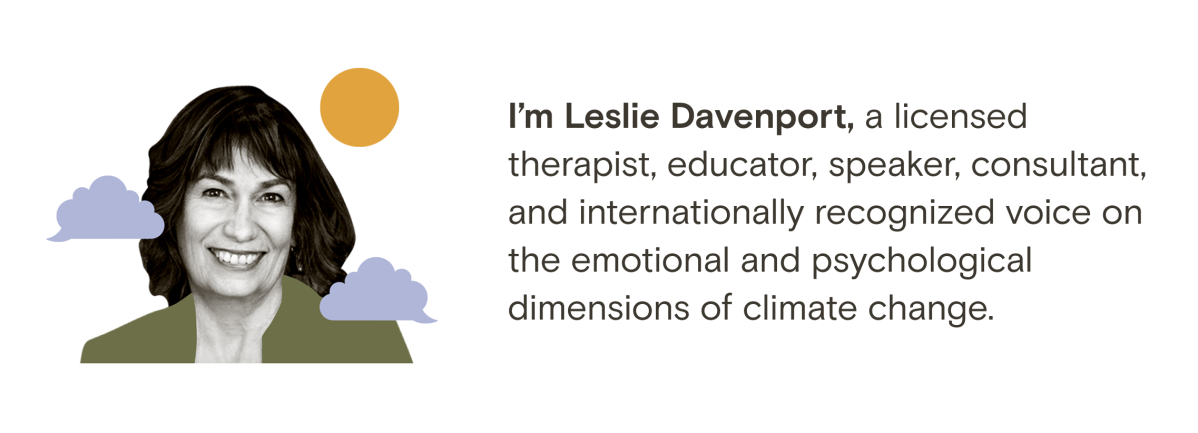
👋 Hi, everybody! We are back with the second column in our series Ask a Climate Therapist. Today, licensed therapist Leslie Davenport takes on a question about how to balance a love of traveling with the guilt and fear that comes with knowing its carbon price tag.
We appreciate all the great feedback we’ve gotten on the column so far, and the thoughtful questions many of you have submitted. And we’d love for Leslie’s advice to reach even more people who are concerned about the climate crisis and are navigating the emotional challenges that come with living through it.
Could you share this newsletter with one friend you think would enjoy the Ask a Climate Therapist column? 🙏 And encourage them to subscribe to Looking Forward for more.
Read on for Leslie’s advice, plus piping hot news about utilities, insurance, and gas prices.
This post originally appeared in Grist’s weekly solutions newsletter, Looking Forward. Not on our list yet? Subscribe here to get it in your inbox every Friday.
Ask a Climate Therapist: How can I balance my travel itch with guilt about emissions?

Dear Leslie,
Almost all of the money I save goes toward travel — meeting friends abroad, visiting relatives, or checking national and international parks off my bucket list. I try to be as sustainable in my personal life as possible, but I love traveling, despite knowing that travel is where some of our greatest carbon emissions come from. Every time I fly now, I feel this guilt and fear, and it’s sometimes hard to balance it with my excitement. How would you recommend proceeding when some of the decisions we make in our personal lives are at odds with our beliefs and goals?
— Wondering Wanderer
💚🧳💚
Dear Wondering Wanderer,
The tension you’re describing — the pull between loving this world and worrying about harming it — is a sign of a very intact compassion compass. Sometimes, that compassionate awareness stretches us beyond what’s comfortable or easy to resolve.
Don’t dismiss your discomfort, because it’s inviting you to stay awake to your impacts on the planet — but don’t let it shut down your capacity for joy. If guilt grows so heavy that it diminishes your ability to connect and feel alive, it’s lost any usefulness it once offered. The work now is to metabolize your guilt and fear into something that guides you rather than pulls you apart.
You might ask yourself this question: Given what I know, what kind of traveler do I want to be?
That opens up more nuanced choices than simply “Go or don’t go?” Maybe you’ll travel less often but stay longer, explore more locally using lower-carbon methods of transport, or prioritize trips that deepen relationships.
You might also focus on destinations where you can make a positive impact as a tourist. In countries like Costa Rica, Rwanda, Tanzania, and Bhutan, responsible tourism helps keep conservation efforts alive by funding wildlife protection, supporting local communities, and sustaining fragile ecosystems.
There’s a larger truth in this as well. You’re just one person — and your choices matter, but they were never meant to bear the full weight of a systemic crisis. You didn’t build the fossil fuel-dependent systems that make flying one of the only practical ways to stay connected across long distances or encounter the wider world. Guilt can keep us preoccupied with ourselves rather than on the larger structures driving the harm.
Continue to balance your personal choices with collective ones. To start, you might want to discuss your dilemma with friends and family — whether they’re your travel companions, or people in your life who may have already made different calculations about travel. (In last month’s column, I shared similar advice with a question asker who could well be on the other side of that conversation.) Having a shared understanding with loved ones might help you process your inner tension, while also letting your care for the planet ripple out in community.
Take some time to reflect, and then settle into commitments that feel right for you. Return to your decision from time to time and make changes as needed. When you feel a pang of guilt, let it keep you honest but not overwhelmed.
Remember: The places you visit, the people you love across long distances, and the wonder you feel in national parks aren’t separate from your love for the Earth. They’re expressions of it. Add in a dose of reflection, gratitude, and perhaps even awe, and your journeys will strengthen the passion and resilience that allow you to stay engaged in your work. In this way, the same travel that stirs your guilt can also help protect what you love. It’s not a clean or simple solution, but it’s real.
The aim is to stay present for the whole of it — to allow your love for our planet to be large enough to hold grief, responsibility, and joy at the same time. Let yourself embrace and enjoy the world wholeheartedly, even as you engage in protecting it.
Holding this with you,
Leslie

If you have a question of your own you’d like to ask Leslie for a future column, please submit it here.
More from Grist
🔌 An exercise in utility
Cities often have limited power to push investor-owned utilities to go green. To create more access to renewable options, Ann Arbor, Michigan, launched its own Sustainable Energy Utility — an opt-in service for residents that will run in parallel to the conventional utility. Read more
🏠 Uninsurable
Climate change is pushing the insurance industry toward a crisis. Here’s a look at where rates are rising the most, and why — as well as what homeowners, regulators, and insurance companies can do to better prepare for new climate realities. Read more
⛽ Some change for gas
When gas prices reach a certain tipping point (about $4 per gallon), the overall cost of owning an EV becomes the cheaper option. Since the start of the conflict in Iran, the national average has been creeping up. Whether this surge will drive more people to go electric remains to be seen. Read more
In other news
- Complying with a court deadline, FEMA will relaunch a grant program that helps states prepare for climate disasters (The New York Times)
- New York has begun a new initiative to install induction stoves in public housing units (Inside Climate News)
- Ag researchers are experimenting with perennial grains and new varieties of hops to make more climate-resilient beer (The Guardian)
- Scientists feared drought would drive the scarlet monkeyflower extinct. Instead, it evolved — bringing hope that other species can do the same. (Anthropocene Magazine)
- Ever wonder what an ocean current sounds like? The inside of a glacier? Bats talking to each other? New tech translates these sounds (and more) for the human ear. (The Washington Post)
And finally, looking forward to …
… a future where we’ll have more options for sustainable travel.
🚃⛴️🚲
Spring break is two weeks away, and you still haven’t made firm plans. You and your girlfriend have talked about taking the bullet train to Miami, or maybe the other direction, up to Vermont. Or doing an airship journey out west. Or even booking e-ferry tickets to the Caribbean.
“Babe, we really need to figure out where we’re going,” you urge over dinner.
“You know, we could stay home,” she starts. Of course she wants a staycation. That’s what you always do — ride your bikes. Cook. Sit around.
Reading your expression, she changes her tune. “OK — how about the airship?”
— a drabble by Claire Elise Thompson
🚃⛴️🚲
A drabble is a 100-word piece of fiction — in this case, offering a tiny glimpse of what a clean, green, just future might look like. Want to try writing your own (and see it featured in a future newsletter)? We would love to hear from you! Please send us your visions for our climate future, in drabble form, at lookingforward@grist.org
👋 See you next week!