👋 Hi, everybody! Wow. You all know your way around a geography guessing game. Shoutout to the hundreds of you who played the first week of our Earth Month scavenger hunt! Our first photo was from the Brazilian Cerrado.
And here is our leaderboard, as it currently stands — lots of you got the main question and the bonus point, so the ordering is based on speed, but we will create even more bonus point opportunities in the coming weeks. (Honorable mention to Dan W, Mary D, and Jimena C, who all scored two points as well but emailed me just a tad later.) To everybody else who emailed me, fear not, I am keeping track of your points! You could still make it on the board before the month is out. And if you’re not in on the game yet, well, as you can see, you’re only 2 points behind, so still plenty of time to start playing!

We’ve got another scavenger hunt prompt for y’all this week, right below our main story, so keep on reading!
Today’s newsletter is about how researchers are adapting their use of language to continue doing climate-related work under the Trump administration. We’ve also got another exciting piece of news to share: We’re gearing up for the next Looking Forward book club! It’ll be May 14, on Zoom. Find the details below, or head straight to the RSVP here.
This post originally appeared in Grist’s weekly solutions newsletter, Looking Forward. Not on our list yet? Subscribe here to get it in your inbox every Friday.
Scientists are still studying climate change. They’re just talking about it differently.
When Trump took office for a second time, one of his first priorities was stamping out “woke” scientific research — including, naturally, research on climate change. Memos leaked listing “banned” words that would essentially automatically disqualify funding proposals. The result has been a devastation of federally funded research, with ripple effects at organizations trying to stay on the administration’s good side.
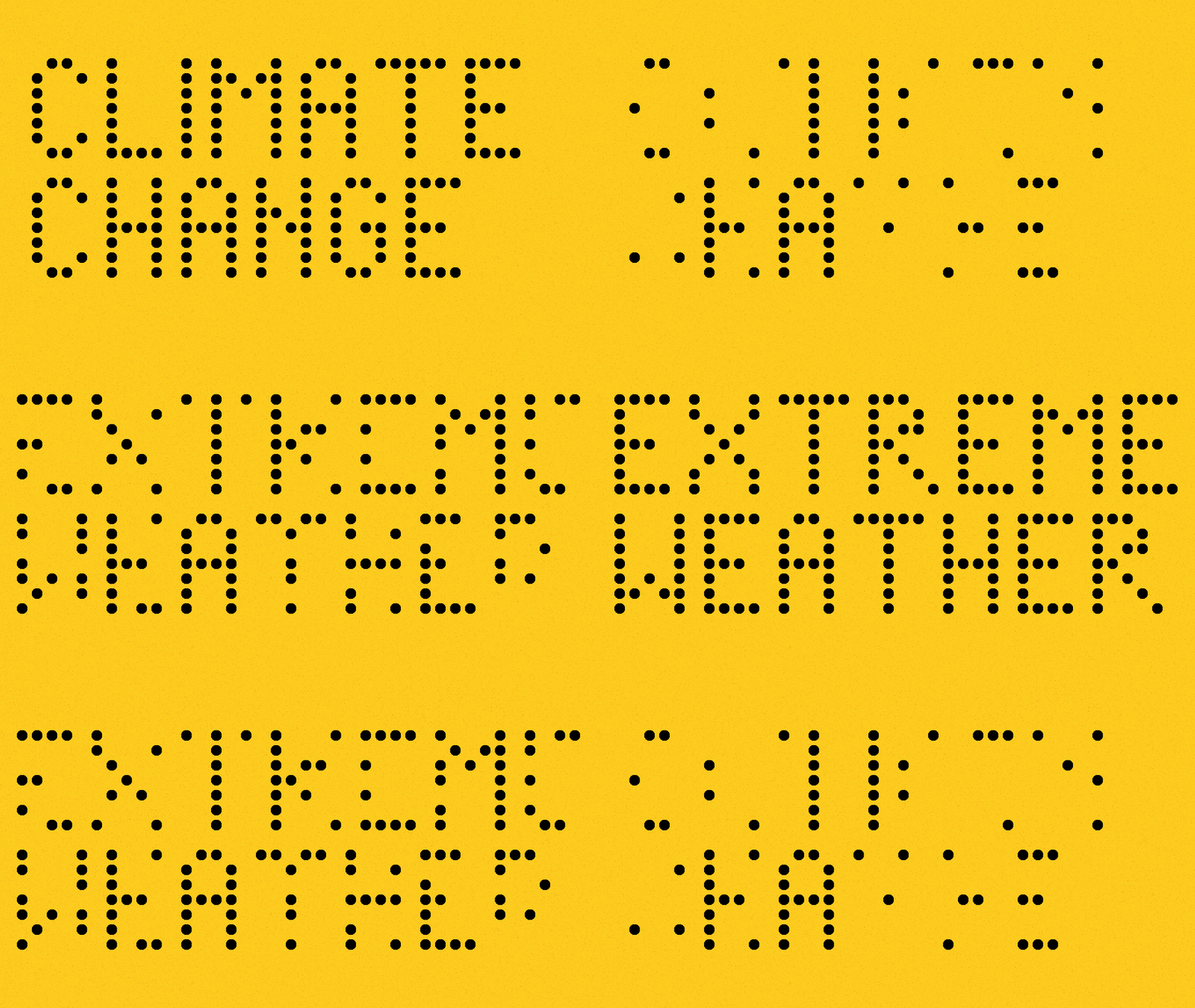
But something else is happening, too: Scientists are changing up the language they use to describe climate change — essentially talking in code — to keep their funding.
My colleagues Kate Yoder, Ayurella Horn-Muller, and Clayton Aldern crunched the numbers and talked to scientists to find out what’s been happening, in a story published last week.
Clayton, a data reporter, looked at publicly available summaries of National Science Foundation grants and saw clear evidence of a chilling effect on certain words and phrases. Most impacted were terms related to diversity and justice. The term “DEI” is gone completely, while “equity” and “environmental justice” have each decreased by 93 percent from their respective peaks during the Biden administration.
Climate change — “the forbidden C-word” as one source put it — has decreased by 77 percent since 2023. But at the same time, a different term has spiked up — “extreme weather,” a more politically neutral phrase to describe more or less the same thing.
As anyone who has ever written a grant proposal will know, there is always some degree of tailoring language or framing to match the priorities of a funder. In fact, in some of the examples Kate and Ayurella wrote about, researchers had amplified climate or equity components of research projects to fit the preferences of the Biden administration — which later came back to bite them.
Trent Ford, the state climatologist for Illinois, is part of a team studying how climate conditions could affect agriculture in the Midwest. When they submitted a grant proposal in late 2024, they described talking to a “diverse” group of farmers for their research. “By the time the proposal got reviewed by the program manager at NSF, that same language that was required four months ago was now actually a death sentence on it,” Ford told Kate.
The NSF did end up approving the grant. The researchers were asked to remove that line, and confirm that they would talk to “all American farmers.”
But while the pendulum has always swung, the Trump administration’s attacks on climate science, and science in general, are on another level. Ford told Kate that he now does everything possible to avoid naming “climate change” in his grant proposals, using alternatives like “weather extremes” and “weather variability.” He initially resisted that shift — dancing around the term “feels dirty,” he said. But the reality is, it’s keeping the work funded.
“On one hand, you can look at it and be like, scientists are censoring themselves and not talking about climate change, even when it’s what’s motivating their research,” Kate said. “But on the other hand, it’s allowing this research to continue in a way that it might not be able to otherwise.”
It’s one example of how climate-related work continues to press on, even when on the surface it looks like something different. One could look at the dropoff in “climate change” from NSF grant summaries and think that, under Trump, scientists are steering clear of studying it altogether. But the rise in alternative phrases tells a slightly different story — one of adaptation. Even as climate change has become a political taboo, scientists (and even federal grant reviewers) recognize the necessity of studying its impacts, “extreme weather” among them.
“There’s this theme of resilience,” Ayurella said. “Even though the work has been constricted and stripped and they’ve seen colleagues get fired and walk away and projects vanish overnight, it feels like there’s this implicit drive to communicate that ‘we are still doing this work. And we are really tired, but we’re here.’”
Dive deeper:
- To keep climate science alive, researchers are speaking in code
- Are we all living in Florida now? The rise of ‘don’t say climate’ politics.
- The USDA is unfreezing clean energy money — but ‘inviting’ grant recipients to remove DEI and climate language
Earth Month scavenger hunt
OK, all you clever guessers. Are you ready for your next scavenger hunt prompt? Take a minute to soak in this photo.
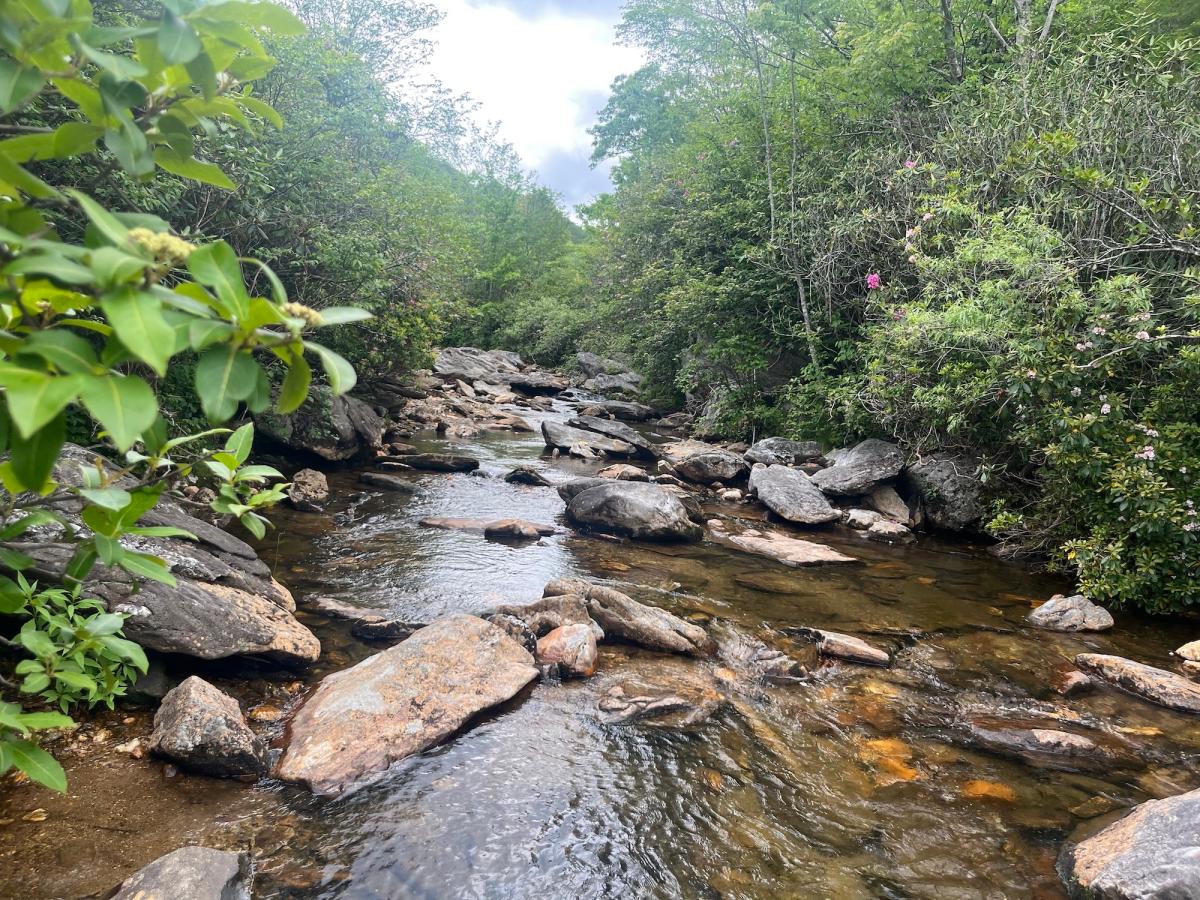
Do you think this is in:
- The Blue Ridge Mountains
- The Florida Everglades
- The Hoh Rainforest
- The Belizean Jungle
- The Western Sierra Madre
>>> Submit your answer here. (Use this link to make your guess, see the correct answer, and learn how to get points for this week!)
More from Grist
🌳 One plant in my pocket
Even the tiniest patches of green space in cities — cutely known as pocket parks or pocket gardens — can bring an array of benefits. Anywhere plants replace concrete, they help reduce urban heat, clean the air, absorb excess rain, and even buffer against noise pollution. Read more
🗳️ The hot seats
In Arizona, a battle is unfolding over the nation’s largest public power utility, the Salt River Project. While the board has embraced coal and gas in recent years, a coalition of clean energy advocates hopes to flip control and push the board to prioritize solar, batteries, and efficiency. Read more
☀️ Sunrise, sunset
After Hurricane Maria laid bare the long-simmering problems with Puerto Rico’s electricity grid, residential solar and backup batteries began to emerge as a solution. In 2022, Congress allocated $1 billion to support this build-out. But Trump has dismantled the initiative, and moved some of the funding to Puerto Rico’s troubled utility instead. Some neighborhood groups are looking for other funding to move forward. Read more
🌎 And one more thing
Grist is proud to be a media partner for the Commons Earth Summit, happening April 20–21 in Oakland, California, and online. This two-day gathering brings together the people and organizations bringing the circular economy to life, with a vibrant mix of art, conversation, and community. We’d love for you to join us! You can grab your tickets for both days of the summit here.
📚 And one more thing
Get ready for the next Looking Forward book club! We’re reading The Great Transition, a novel by Nick Fuller Googins. We’ll meet to discuss the book on Thursday, May 14, at 7 p.m. ET / 4 p.m. PT — and Nick has generously agreed to join our event for an author Q&A. We are also offering up five free copies of the book, courtesy of Atria Books. RSVP by next Friday (April 10) for a chance to win!
In other news
- With the global fuel crisis ongoing, the European Commission urges people to travel less and countries to double down on renewables (Politico)
- Renewables reached nearly 50% of global energy capacity last year, thanks in large part to the growth of solar (Reuters)
- Mangroves are climate and biodiversity powerhouses. Here’s how coastal stewards in Cambodia are protecting and restoring them. (NPR)
- Commercial fishers are helping to collect crucial climate data in the oceans where they work (The New York Times)
- Electrifying a home doesn’t have to mean costly panel upgrades — a new study finds many homes have enough power (Canary Media)
And finally, looking forward to …
… the perseverance of science that actually makes a difference in people’s lives. This drabble is courtesy of my editor, Jess Stahl.
🌊🏠🌊
It was tough to keep the research going. You called it so many things over the years — climate change adaptation, extreme weather preparedness, coastal resilience, beach integrity, and climate change adaptation yet again. But it did keep going, through all the political tides, because people lived there, and the land was sinking, and there was no denying that whatever you called it.
Today, you celebrate the last piece of the initiative your research helped inform, an artificial reef to protect the houses of those who remained (newly stilted), constructed from reclaimed pieces of the homes of those who chose relocation.
— a drabble by Jess Stahl
🌊🏠🌊
A drabble is a 100-word piece of fiction — in this case, offering a tiny glimpse of what a clean, green, just future might look like. Want to try writing your own (and see it featured in a future newsletter)? We would love to hear from you! Please send us your visions for our climate future, in drabble form, at [email protected]
👋 See you next week!