👋 Hi, everybody! Way back in August, I asked all of you what has helped you get to know your neighbors and neighborhoods better. My answer was walking my dog every day — and many of you shared the same. This week, we’re diving into a topic that I hope will resonate with many of you: pets, and what having them means for our climate journeys.
I penned an essay for Grist this week exploring a climate communication study that came out earlier this year and sparked a mild outrage on Reddit when people interpreted the results to be a condemnation of dog ownership. (It was not, the lead author assured me.) The debacle raised some interesting questions about personal climate action, which I’m excited to dig into with y’all.
We’ve also got news about rooftop gardening, “repair cafes,” and Indigenous advocacy at COP30.
This post originally appeared in Grist’s weekly solutions newsletter, Looking Forward. Not on our list yet? Subscribe here to get it in your inbox every Friday.
The curious case of the dog in the climate conversation
Mia Torres / Grist
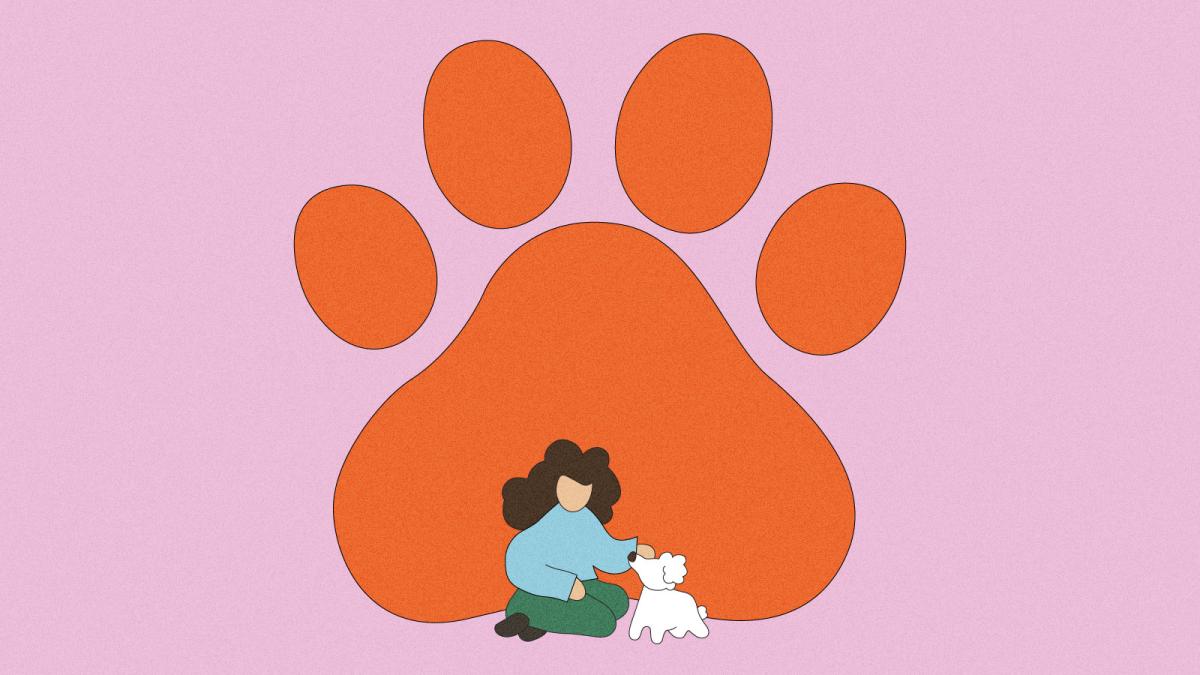
Longtime Looking Forward subscribers have met my dog, Loki. He’s a husky mix with a flair for dramatics, a touch of arthritis in his leg due to a break from before he came to us, and a furry little heart of gold, who is basically perfect in every way. Well, except one. Feeding him comes with a hefty carbon price tag.
Dogs and cats are responsible for about 25 to 30 percent of the environmental impact of meat consumption in the U.S., a calculation that’s getting worse as pet populations continue to go up and owners increasingly opt for “human-grade” meat products for their fur babies, which require additional resources and generate extra emissions.
I’ve been a vegetarian for well over a decade, a lifestyle choice I made to reduce my own impact on the planet. But Loki still eats meat. It’s a paradox that, until recently, I hadn’t given a huge amount of thought to.
Instead of obsessing about carbon footprints, I often think about my personal climate actions in terms of the world I want to live in, and how I can be an early adopter of that future. For me, the better world I want to help build is one where we can still have our beloved furry family members.
That might mean taking a hard look at their diets, alongside our own. I do feed Loki insect-based treats, as a low-carbon protein source (which he loves, by the way). But my love for him is also a source of motivation — one of those less quantifiable elements that is part of shifting norms just as much as the easily measurable ones.
“People have an emotional attachment to the people and animals and creatures that we love,” Nicholas said. “And that is actually, I think, very powerful. We’re not only going to solve climate change by lining up all the numbers — we certainly need to do that, but we have to tap into what people really care about and realize all those things are on the line and threatened by the amount of climate change we’re heading for with current policies.”
Read more:
More from Grist
🌽 Farm it from the rooftops
Urban farms can be a potent solution, bringing increased climate resilience and food security to communities. When they replace empty lots, they can become neighborhood oases, conferring social and psychological benefits while also helping to reduce heat and soak up excess rainfall. And another place to put them is on city roofs. They can even grow alongside rooftop solar panels. Read more
🌏 On the global stage
Earlier this year, the International Court of Justice at The Hague issued a landmark opinion stating that countries have a legal obligation to limit greenhouse gas emissions. The effort was led by Indigenous leaders from the Pacific, one of the regions most existentially threatened by climate change. This week, a number of those leaders are at COP30, the U.N. conference in Brazil, to remind world leaders of the ruling. Read more
💧 The adaptation era
While addressing climate change has become politically radioactive in some places, adapting to its impacts — like extreme heat, storms, floods, and fires — is no longer optional. As governments work to shore up infrastructure and keep communities out of harm’s way, they’re often finding that costly adaptation measures actually make mitigation efforts look easy. Read more
In other news
- A growing number of “repair cafe” events aim to reduce consumer waste and foster a culture of care (Inside Climate News)
- Window heat pumps offer a clean heating and cooling solution for multifamily buildings, which are otherwise difficult to retrofit (The Washington Post)
- Electric vehicles have taken off in Hawai‘i. Charging infrastructure hasn’t kept pace — but the state has plans to change that. (Honolulu Civil Beat)
- The environmental cost of data centers depends in part on where they’re built. A new analysis shows the ideal places to put them, from a resource standpoint. (Wired)
- In this op-ed, a group of physicians and health scientists discusses how people and governments should prioritize health threats from climate change (The Conversation)
And finally, looking forward to …
… a sustainable world that includes our beloved pets. In a recent episode of his podcast “Ethnocycology,” anthropologist and comedian David Ian Howe explored how dogs frequently appear in movies, TV shows, and video games about the apocalypse. We’ve evolved with dogs since before recorded history, and we envision their companionship lasting through the end of the world. (In some cases, like the 2007 film I Am Legend, that kinship is part of what helps the main character hold onto his humanity.) I was moved to write a scene of a slightly more utopian future, for us and our pals.
🐾🐾🐾
Your energetic rescue mutt runs ahead of you on the path.
“Here, Chonkus!”
It’s as if he knows how exciting today is — the long-contaminated lake is finally, officially safe to swim in. And you’re both eager for a cooling plunge.
You’re reminded of the dog beach you used to visit with your family pups. The mostly submerged fence now stands as a reminder of a bygone era. But also a reminder of all it took to keep the sea from rising even higher.
Chonkus runs back and you toss him a couple dried crickets, his favorite.
“What a good boy.”
— a drabble by Claire Elise Thompson
🐾🐾🐾
A drabble is a 100-word piece of fiction — in this case, offering a tiny glimpse of what a clean, green, just future might look like. Want to try writing your own (and see it featured in a future newsletter)? We would love to hear from you! Please send us your visions for our climate future, in drabble form, at [email protected]
👋 See you next week!