👋 Hey there, everyone. I hope you’re all taking care and staying sane through what has been a pretty tough time in the news — and the real world. My thoughts are especially with our readers in Minneapolis, but I know people everywhere are affected in various ways by what’s going on.
I was moved by something Emily Atkin wrote in the Heated newsletter this week:
“Very often, I don’t know how I’m supposed to move forward. How am I supposed to keep writing about, and caring about, climate change and pollution and government capture by Big Oil, when the government is executing people in broad daylight? … In these moments, I find I need to hype myself up, to talk myself into continuing, to tell myself that continuing to pay attention to climate change is not insensitive or irresponsible, but necessary.” (Read the full piece, and consider subscribing to Heated, here.)
The times we’re living through are unprecedented, in more ways than one. I’ve felt a lot of numbness and fear over the past few weeks. Like Emily, I admittedly find myself questioning whether and how to talk about climate solutions in this moment. But I also remind myself that the fight for human rights, democracy, and a safe climate are all intricately linked — we need them all for a future that is safer, healthier, and more just for everyone. And I personally am finding it more important than ever to focus on where there are still signs of progress and action, what we do have control over, and how we can continue to build a better world.
So today, I have a story for you all about a topic that hits close to home for me: how city policies can ensure that renters don’t miss out on the clean energy transition. We’ve also got news about offshore wind, growing plants under solar panels, and the health benefits of EVs.
This post originally appeared in Grist’s weekly solutions newsletter, Looking Forward. Not on our list yet? Subscribe here to get it in your inbox every Friday.
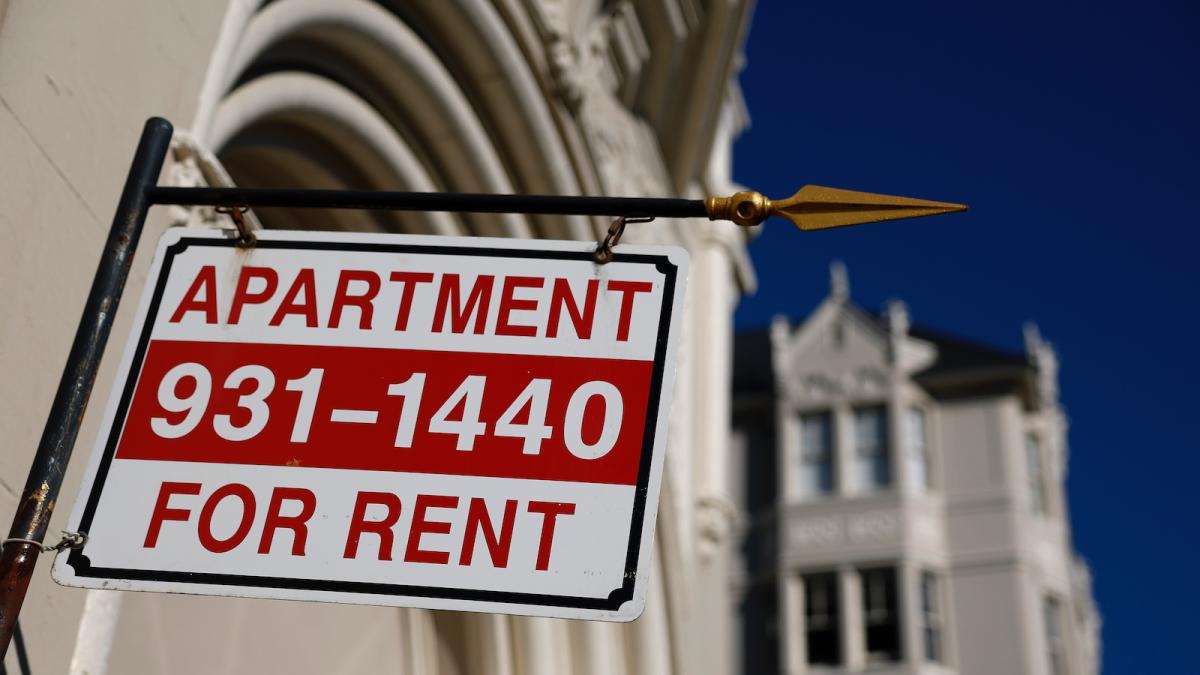
Renters often get left behind in the energy transition. Here’s how some cities are changing that.
Justin Sullivan / Getty Images
Like roughly 35 percent of the U.S. population — and I’m guessing many of you — I rent my home. That means that, while I might want to invest in upgrades to make my house greener and more efficient, I don’t ultimately have control over it. I can’t spring for better insulation. I can’t switch my gas boiler out for a heat pump, or ditch my ancient, unvented gas stove for an electric model. I couldn’t even convince my landlord that our house needed an air conditioner, despite summers in Seattle (where I live) becoming increasingly unendurable without one.
As my colleague Tik Root wrote earlier this week, renters represent a gap in local climate policy. Even as cities and states step in to fill the gap left by the federal government, with new incentives for improving home energy efficiency and getting homes off fossil fuels, new research finds that renters are not reaping those benefits.
People who rent tend to be lower-income and have higher energy burdens, the portion of income spent on utility bills — which means that they could benefit the most from measures to improve home efficiency. But while tenants are the ones paying energy bills, landlords are the ones who would pay for investments like replacing appliances or improving insulation. It’s what economists call a “split-incentive.” Landlords have less incentive to make these improvements because they wouldn’t see the savings on their monthly bills.
“I have seen that more local governments are starting to wrestle with this idea,” Stefen Samarripas, a local policy manager at the nonprofit American Council for an Energy-Efficient Economy, told Tik. One way cities can reach landlords, Samarripas said, is by focusing on savings for the utility bills that they do cover — for instance, in the common areas of multifamily buildings. They can also incentivize switching to more efficient, lower-emission appliances when old ones are at the end of their useful life.
In Minneapolis, the city government provides funding up to $50,000 for properties participating in its affordable housing program to pursue energy-efficiency upgrades. In Florida’s Alachua County, property owners can get up to $15,000 per rental unit to invest in things like better insulation or energy-saving appliances.
Other cities have chosen sticks over carrots. Burlington, Vermont, (where Tik lives) passed a weatherization ordinance in 2021 to ensure that rental properties with high energy use comply with efficiency standards, designed to keep tenants’ costs down and also uphold the city’s climate goals. And New York City’s ambitious Local Law 97 mandates emissions reductions for large buildings.
“Those folks have really stretched their minds and worked to be creative and innovative in how they’re approaching this problem,” Samarripas told Tik of the government officials who have found ways to bring energy-efficiency benefits to renters — a reminder of how local elected officials can really have an impact (if you needed another reminder in this midterm election year).
The future could hold more ways for renters to take matters into their own hands. Things like window heat pumps to replace inefficient window ACs, or plug-in batteries that regulate energy usage throughout the day, are already possibilities for some renters. If you dream of installing solar panels someday on a roof of your own, you might be interested to learn that balcony solar, already a popular option in much of Europe, is starting to overcome regulatory barriers in the United States. Utah became the first state to clear the path for these compact, plug-in solar panels last year, and a number of other states are following suit.
And I personally have tried to avoid overusing my dirty gas stove with one simple, and super-affordable, change: I got an electric kettle. I was actually inspired by Tik’s journey into home electrification, which he chronicled in a feature for Grist in 2024. At the time, he told me that using an electric kettle or hot plate was one thing he and his wife did when they were renters trying to avoid the pollution that comes from a gas stove.
It may be relatively small potatoes, but I adore my gooseneck kettle. And every time I use it, I know I’m displacing that little bit of methane gas with electricity — which, in the city of Seattle, comes from nearly 80 percent hydroelectric power — and breathing cleaner air in my home to boot.
Read more:
- Can cities make landlords care about energy efficiency?
- They thought getting their home off fossil fuels would be straightforward. Chaos ensued.
More from Grist
🌬️ Shoring up wind
The Trump administration has been extremely hostile to offshore wind. But the Northeast, the most densely populated region in the country, is counting on that wind power to meet growing energy demand over the next two decades. States will have to work to lure developers back, and experts say it’s more a question of “when” than “if.” Read more
🌻 Growing under the sun
If they’re built with minimal disturbance to ecosystems, solar farms can be a boon to native plant species and overall biodiversity. The panels reduce evaporation and provide shade that enables some plants to thrive, creating more vibrant habitats. At two solar sites in Minnesota, for instance, researchers saw the number of flowering plant species increase sevenfold in five years, while pollinating insects tripled. Read more
🚙 Not running on fumes
Prevailing wisdom has long held that electric vehicles would be good news for public health because they reduce air pollution from exhaust. New research using satellite data quantified that to the greatest extent yet — and showed that even a small uptick in EVs makes a difference in a neighborhood’s air quality. Read more
In other news
- Across the pond, 10 European nations have collaborated on a plan to build out a massive offshore wind project in the North Sea (Canary Media)
- Amsterdam has banned public ads of fossil fuel-intensive products like flights, gas-powered cars, and meat (DeSmog)
- Colorado managed to hold onto a $200M EPA grant that will help get heat pumps to low-income residents (The Colorado Sun)
- This single mom started a volunteer network to provide free childcare in the wake of disasters (The 19th)
- And here are some ways to support Minneapolis and St. Paul residents living through Operation Metro Surge (Sahan Journal)
And finally, looking forward to …
… creatures living their lives. Whenever I’m depressed or anxious about the state of the world, one of my greatest comforts is my dog, who knows nothing of national borders, or authoritarianism, or fossil fuels. This drabble, sent in by Looking Forward reader Deborah Freitag, reminded me this week to take pleasure in birdsong.
🐦🐦🐦
A meadowlark alights on a post and sings, “ErR-erth BEaUtiFUL place, ErR-erth BEaUtiFUL place.” He is right and just to celebrate the crystal sky, the cool dawn, and the sun rising behind a snow-topped mountain peak, shining golden in new light.
Cottontails emerge from warrens and hop, butt-up along the fence line. Humped up and chilly, they sit and wait for the sun to warm them.
Ravens glide in the blue because they can. Redwing blackbirds call to their neighbors “PO-to-WEEET, COME-to-EAT!” Buff-breasted swallows bounce, dive, and swerve.
It is right and just to give thanks for this beautiful place.
— a drabble by Deborah Freitag
🐦🐦🐦
A drabble is a 100-word piece of fiction — in this case, offering a tiny glimpse of what a clean, green, just future might look like. Want to try writing your own (and see it featured in a future newsletter)? We would love to hear from you! Please send us your visions for our climate future, in drabble form, at lookingforward@grist.org
👋 See you next week!