President Donald Trump’s approach to climate change rests on one key premise: Greenhouse gases are not that bad.
This is a simple argument — albeit one that flies in the face of the scientific consensus on climate change — but it could have profound consequences. If carbon dioxide and the other greenhouse gases spewed by cars and trucks are not particularly dangerous, the logic goes, then they can’t be considered air pollutants as defined by the Clean Air Act. That means that the Environmental Protection Agency can’t regulate them, and landmark federal rules that cracked down on vehicle tailpipe exhaust and improved fuel efficiency are invalid.
The Trump administration took a major step toward advancing this argument on Thursday. The EPA formalized its repeal of the so-called endangerment finding, a federal rule from 2009 that found greenhouse gas emissions can endanger “public health and welfare.” This finding provides the legal basis for almost every major climate regulation, from auto exhaust standards to caps on emissions from power plants. While the Trump administration has already initiated individual repeals of many of those rules, the latest move seeks to go much further by preventing future presidents from reestablishing any such regulations to combat climate change.
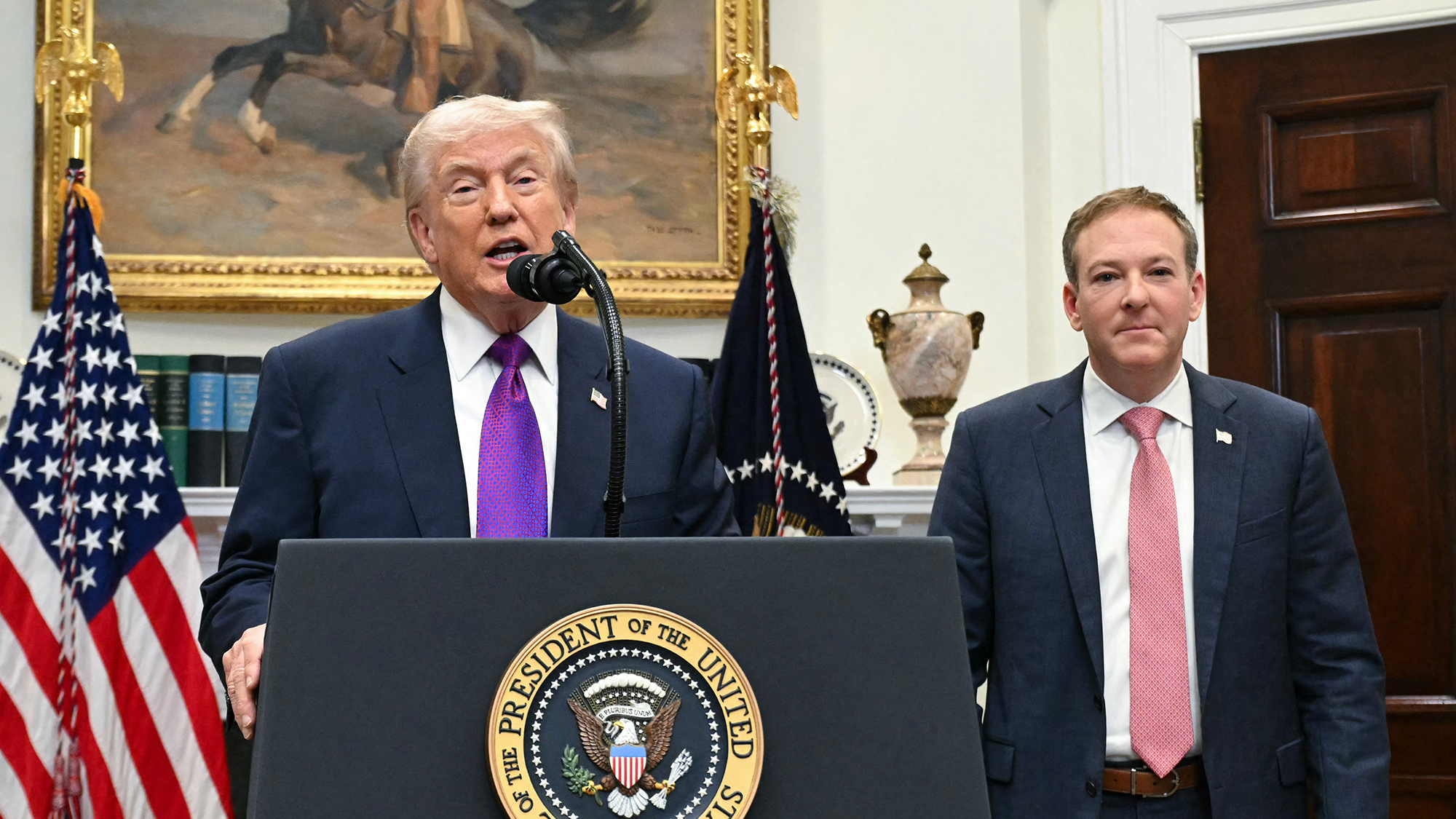
“This is a big one if you’re into environment,” President Trump said at the White House on Thursday. Joined by EPA administrator Lee Zeldin, he called the repeal “the largest deregulatory action in U.S. history” and claimed, without providing evidence, that the action would eliminate $1.3 trillion in regulatory costs and would cause car prices to come “tumbling down.” He described prior climate regulations as a “green new scam” and blamed them for blackouts and inflation.
“That’s all dead, gone, over,” he said.
But the administration’s move may well backfire. Legal experts say that regulating carbon dioxide is well-supported by the text of the Clean Air Act — a fact that even the conservative Supreme Court has recognized in multiple cases, suggesting the court could rule against the administration if the repeal winds up on their docket. (A coalition of health groups has already announced its intent to sue.) And even if the court did affirm that the federal government can no longer regulate greenhouse gases under existing law, states and private parties would have an open lane to set their own greenhouse gas rules or sue over the harms caused by climate change, respectively, given that they would no longer be preempted by federal authority. That would create regulatory chaos, potentially forcing Congress to restore the EPA’s authority.
“I think this is where there is an incredible overreach from this administration, and I think that this is when they will be held to account in the courts,” said Rachel Cleetus, the senior policy director at the Union of Concerned Scientists, an environmental advocacy organization. “It’s just throwing spaghetti at a wall.”
The Clean Air Act requires the federal government to regulate “any air pollutant” that “endangers … public health or welfare.” In the landmark 2007 case Massachusetts v. EPA, the Supreme Court ruled that this mandate includes greenhouse gases such as carbon dioxide and methane, even though those gases mix in with the global atmosphere rather than lingering in high concentrations at ground level, like most pollutants targeted by the law. Moreover, the act specifically states that danger to public welfare could include effects on ”weather” and “climate.”
The late Justice Antonin Scalia dissented from the 2007 decision, and current conservative justices Clarence Thomas and Samuel Alito have urged a reconsideration of the case, saying the Clean Air Act should only apply to “local” pollutants. Trump’s EPA revived that logic in its early proposals to repeal the endangerment finding.
Still, the Supreme Court has upheld its Massachusetts decision in several other cases. Even in 2022’s West Virginia v. EPA, when the current court overruled an ambitious program to phase out coal-fired power, the conservative justices did not argue that the EPA lacked the authority to regulate carbon. A few months later, when Congress passed the Inflation Reduction Act, it amended the Clean Air Act to create grant programs “that help reduce greenhouse gas emissions and other air pollutants,” a strong implication that the act does cover those gases. The Supreme Court refused to hear a legal challenge to the endangerment finding as recently as late 2023.
“It seems to me unlikely that the court would say that the EPA has no power to regulate carbon,” said Michael Lewyn, a professor of environmental law at Touro Law Center and critic of environmental regulations.
Other legal experts expressed more uncertainty, noting that none of the members of the 2007 majority are still on the court, and that at least one newer conservative justice, Brett Kavanaugh, has expressed skepticism about using the Clean Air Act to regulate greenhouse gases.
“Predicting the outcome of any Supreme Court case is difficult these days,” said Romany Webb, deputy director of the Sabin Center for Climate Change Law at Columbia University. “I think it’s especially hard here.”
The EPA has delayed publication of its final repeal for months following the release of a draft proposal in July. In its draft repeal, the Trump administration cited a contrarian report drafted by its Department of Energy, which argued that responsibility for global warming isn’t certain and that its harmful effects may be overstated. A federal judge recently ruled that the report was drafted illegally, but did not strike it from the federal record, meaning the EPA could still cite the climate skeptics to argue that greenhouse gases don’t endanger public health.
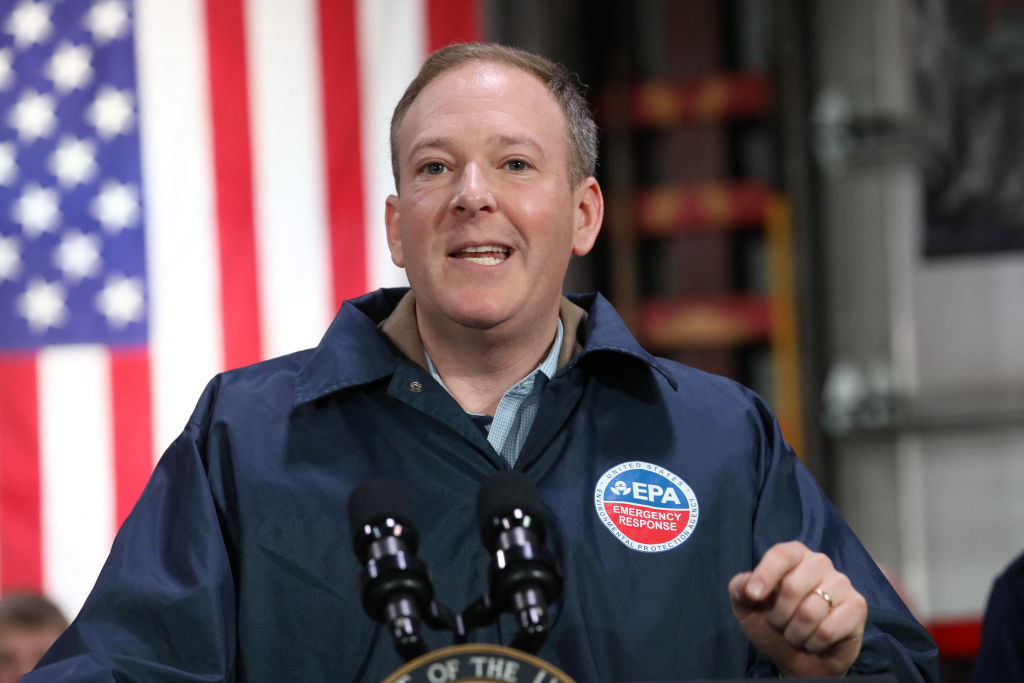
“[The Obama administration] claimed new powers over the vehicles we drive, even though the best reading of the Clean Air Act clearly states otherwise,” said Zeldin at Thursday’s press conference. “The endangerment finding and the regulations that were based on it didn’t just regulate emissions, it regulated and targeted the American dream.” He condemned mileage improvements and efficient start-stop capabilities as “climate participation trophies.”
The agency chose to repeal the endangerment finding for “mobile sources” such as cars, but it did not repeal its separate endangerment findings for emissions from “stationary sources” like power plants and oil wells. Several groups representing polluting industries, including the American Petroleum Institute, or API, had urged the administration to focus on cars — likely because of the increased legal liability they’d face if carbon pollution is no longer subject to federal regulation. It’s unclear if this distinction holds water, though, since the other endangerment findings rely on the original 2009 finding for emissions from vehicles.
In response to questions from Grist about the consequences of the repeal, a spokesperson for the EPA defended the move as part of an effort to lower consumer costs.
“EPA is actively working to deliver a historic action for the American people,” the spokesperson said. “Sixteen years ago, the Obama administration made one of the most damaging decisions in modern history. … In the intervening years, hardworking families and small businesses have paid the price as a result.”

If the Supreme Court upholds the EPA’s argument that it can’t regulate greenhouse gases, it would open a Pandora’s box of complications. The Clean Air Act requires states to seek a special waiver from the EPA in order to set emissions standards that are different from the federal government’s, which is why California needed special permission to impose its now-cancelled phaseout of gasoline-powered cars. But if the Clean Air Act no longer applied to carbon, states could theoretically set their own vehicle greenhouse gas emissions standards without approval from the feds.
The EPA tried to write around this difficulty in its filing, arguing that the Clean Air Act both prevents it from regulating carbon and also gives it the authority to preempt states from doing the same.
“I think that that’s going to be hotly contested,” said Amanda Lineberry, a senior associate at the Georgetown Climate Center and former environmental lawyer in the Department of Justice. “That’s a delicate needle to thread.”
State-led regulation of carbon pollution would mean regulatory chaos. Automakers could be required to sell electric vehicles in California, the nation’s largest car market, but would have freedom to sell gas-guzzling pickups in nearby Idaho. Trucks in Massachusetts might need to be ultra fuel-efficient, but neighboring New Hampshire might not. The Alliance for Automotive Innovation, an auto industry trade group, has already worried over this possibility. In official public comments on the draft of the endangerment finding repeal, it said that the end of federal preemption “[raises] the risk that automakers would be subject to multiple inconsistent regulatory regimes.”
“California and others that have been acting to promote the transition to hybrid and fully electric transportation will not back down,” said Mary Nichols, an EPA official during the Clinton administration and former chair of the California Air Resources Board, the state’s climate change regulator. “But this is the most significant official roadblock the feds can set up to protect the oil industry’s dominance of transportation.”
If the federal government does stop regulating carbon, it could unleash a barrage of lawsuits. The Supreme Court ruled in 2011’s American Electric Power v. Connecticut that the Clean Air Act bars climate-related lawsuits against corporations under federal common law. As long as EPA regulates greenhouse gases, individuals can’t sue oil companies and power plants over their contributions to climate change in federal court. That’s why most climate lawsuits from states and individuals have played out in state courts, and why oil companies have long sought to move them to federal courts. In a Supreme Court brief last year, the American Petroleum Institute cited “the inherently federal nature of emissions regulation,” invoking the liability shield provided by the Clean Air Act. The endangerment finding repeal could shatter that shield.
Nevertheless, API pioneered many of the arguments now wielded against the endangerment finding. In 1999, the group held a meeting of industry lobbyists who strategized challenges to an early EPA proposal to regulate greenhouse gases, according to documents first reported by DeSmog and compiled by Fieldnotes, a research group focused on the oil and gas industry. At the meeting, the API circulated a legal analysis noting that there is “no clear-cut, explicit answer in statute” on the greenhouse gas question, and that “CO2 does not endanger public health and welfare and there are no cost-effective systems of emission control.” In 2008, after the Massachusetts decision, the group argued that the EPA had not produced “sufficient evidence of potential effects and harm,” and it opposed reducing tailpipe emissions in the U.S. on the grounds that this would not end climate change on its own.
Trump’s EPA used many of these same arguments in its proposed endangerment finding repeal, demonstrating how much his deregulatory agenda owes to the oil industry’s work. But now the API is taking a different stance, seeking to protect itself from federal lawsuits. In its comments to the EPA last September, it stated that it “believes EPA has authority to regulate [greenhouse gases]” under the Clean Air Act.
“There’s a reason industry directly regulated by these rules hasn’t been clamoring for the ideological extremes,” said Hana Vizcarra, a senior climate attorney at the environmental nonprofit Earthjustice.
If the flood of lawsuits and state regulations does become a threat to the industry, Congress could resolve the entire debate with a single line of legislative text, affirming in unambiguous terms that the Clean Air Act gives the EPA the power to regulate greenhouse gases. Republican lawmakers have no incentive to do such a thing now, but the unintended consequences likely to follow from the endangerment finding repeal could someday force the legislature’s hand.
“It’s going to be chaotic,” said Vizcarra.
Naveena Sadasivam and Zoya Teirstein contributed reporting to this story.
Editor’s note: Earthjustice is an advertiser with Grist. Advertisers have no role in Grist’s editorial decisions.
A message from
Your support keeps our climate news free.
Grist is the only award-winning newsroom focused on exploring equitable solutions to climate change. It’s vital reporting made entirely possible by loyal readers like you.
At Grist, we don’t believe in paywalls. Instead, we rely on our readers to pitch in what they can so that we can continue bringing you our solution-based climate news. Donate today to keep our site free.