Grist List
-
![]()
![]()
Organic chicken farms have fewer drug-resistant bacteria
When poultry farms switch from conventional to organic farming practices, they almost immediately start seeing way fewer drug-resistant bacteria.
-
![]()
![]()
Japan’s government allowed evacuations into radiation plume’s path
In the aftermath of Fukushima, Japanese people are registering less trust in their government, and stories like this one are the reason why. The entire community of Namie evacuated out of the area surrounding Fukushima to a safe haven, only to find later that they were still in the path of radiation, and the government had tools that indicated as much.
When a large plume of something nasty — chemicals, biological hazards, or radiation — is released into the air, it doesn't stay in one place. It's not always obvious where it will go, though. Winds and air pressure systems shift. Obstacles like tall buildings, forests, and mountains can have an impact. Predicting a plume's path is sort of like predicting the path of a nasty storm, only the consequences of being wrong are a little more dire than a few wet people who didn't bring an umbrella to the office. -
![]()
![]()
Trucks and buses get efficiency standards for the first time ever
President Obama has announced the first ever emissions standards for trucks and other heavy-duty vehicles. They'll be shooting for a 9 to 23 percent reduction in fuel consumption by 2018, depending on the type of vehicle. Big rigs will need to achieve approximately a 20 percent reduction, for example; garbage trucks will need more like 10 percent.
-
![]()
![]()
New LCD screens will make your iPhone solar-powered

What if you could simply leave your iPhone face-up on a table or windowsill in order to trickle charge it and extend its battery? And what if the same technology that turned its screen into a photovoltaic panel also made its display significantly more efficient than current displays, leading to substantially increased battery life even if you're trapped inside a cave?
-
![]()
![]()
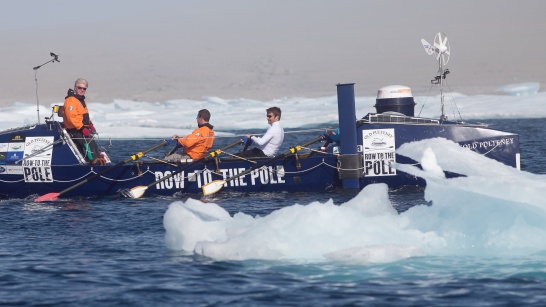
Daredevils rowing to North Pole to draw attention to climate change

In order to draw attention to the perilous state of the Arctic, "Scottish adventurer" Josh Wishart teamed up with fiver other fellows to row 500 miles across the Arctic sea, starting from Resolute Bay in Canada. The journey should take four to six weeks, and the men will row in three hour shifts in order to stave off fatigue.
-
If the ‘smart grid’ gets too smart it will destroy itself, says study
If our utility company gives us too much information about the price of electricity -- a cornerstone of the "smart grid" -- we'll probably use that information to crash the grid and cause massive blackouts, says a new study from MIT.
-
Critical List: Shipping industry objects to E.U. emissions scheme; when horses act like squirrels
Like the airline industry, the shipping industry objects to the E.U.'s decisions to include it in a emissions trading system.
Will the federal government be spending less on disaster response in the future? Somehow “let ‘em drown” doesn’t seem like the best possible debt reduction plan.
Australia's carbon tax, which was so hotly disputed that people were sending climate scientists death threats, would apply to just 400 of the country's top polluters.
Hydro turbines are going into the Puget Sound by late summer 2013. -
![]()
![]()
Long Island lobster catch dwindling to nothing
It really sucks to be a lobster fisherperson working in the Long Island Sound. Twelve years ago, 90 percent of the lobsters died off because of pesticides or climate change or both. The ones still there have weird-looking shells, a result of bacteria colonizing the sounds, that keep people from wanting to eat them. Things are so bad some of the lobstermen don't even bother fishing for lobster anymore, says the New York Times:
-
![]()
![]()
What wind turbines can learn from fish
Wind turbines are loners. They need to give each other space to be effective. But a new design for wind farms, using a different type of turbines than the giant-fan kind going up all over the place, takes a page from a very social group of animals -- schooling fish -- to create the same amount of energy with shorter turbines, in a smaller area of land.
These wind farms use vertical-axis turbines, which are often described as looking like egg-beaters.