Climate Food and Agriculture

Climate + Food and Agriculture
EDITOR’S NOTE
Grist has acquired the archive and brand assets of The Counter, a decorated nonprofit food and agriculture publication that we long admired, but that sadly ceased publishing in May of 2022.
The Counter had hit on a rich vein to report on, and we’re excited to not only ensure the work of the staffers and contractors of that publication is available for posterity, but to build on it. So we’re relaunching The Counter as a food and agriculture vertical within Grist, continuing their smart and provocative reporting on food systems, specifically where it intersects with climate and environmental issues. We’ve also hired two amazing new reporters to make our plan a reality.
Being back on the food and agriculture beat in a big way is critical to Grist’s mission to lead the conversation, highlight climate solutions, and uncover environmental injustices. What we eat and how it’s produced is one of the easiest entry points into the wider climate conversation. And from this point of view, climate change literally transforms into a kitchen table issue.
Featured
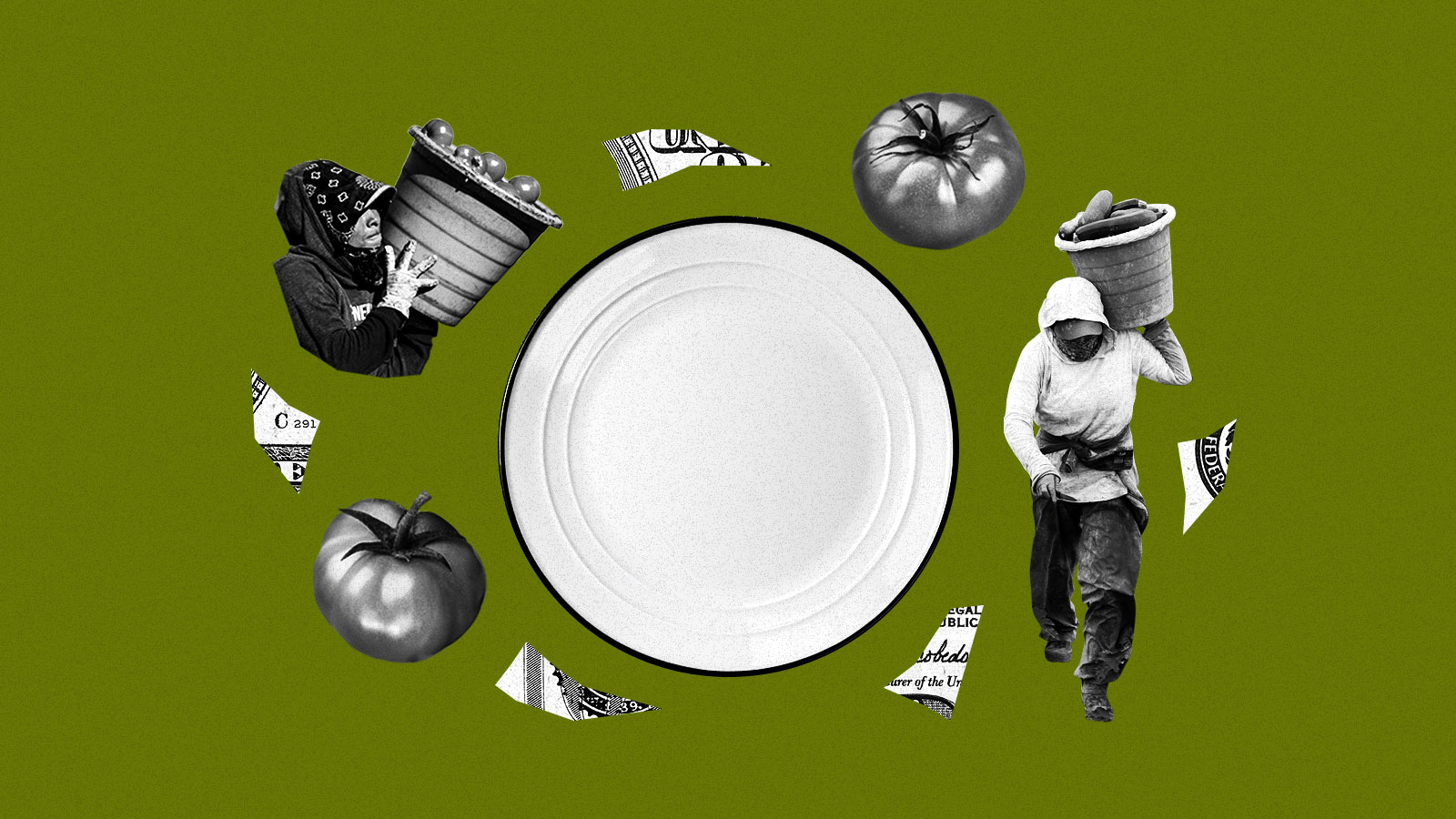
The people who feed America are going hungry
Climate change is escalating a national crisis, leaving farmworkers with empty plates and mounting costs.
Latest Articles
-
Why is the FDA unwilling to study evidence of mercury in high-fructose corn syrup?
Paging Erin Brockovich! There’s mercury in our water soda pop! Courtesy Universal Pictures, Inc. High-fructose corn syrup doesn’t just deliver a jolt of sweetness to thousands of processed food items consumed by tens of millions of Americans each day. It also may add a touch of mercury, a powerful neurotoxin that may not be safe […]
-
Michelle Obama hearts community gardens
"I'm a big believer in community gardens ... both because of their beauty and for providing access to fresh fruits and vegetables to so many communities across the nation and the world."
-- Michelle Obama, speaking at USDA headquarters
-
A former USDA worker claims that small farm numbers may be overstated
Are there more small farms or not? Everyone from Reuters to the NYT has documented what appears to be an increase in the number of small farms in the U.S. But blogging ag economist and former USDA Economic Research Service researcher, Michael Roberts disagrees. According to him (h/t Ezra Klein), the supposed increase in small farms represents the USDA potentially fudging the numbers:
USDA has also been working harder and harder to find and count hiding $1000 potential farms. Most of these guys don't know they're farms and so they can be hard to find and difficult to entice to return their census forms. So non-response rates are growing, mostly for tiny farms that probably don't realize they're farms in the first place.
Non-response? No problem. USDA just uses weights to account for the non-response which boosts the officially reported number of farms.The important revelation here is that the USDA uses statistical weighting to arrive at the numbers for these micro-farms since many of these people don't even self-identify as farmers -- and so their precision is entirely a question of their methodology, i.e. how they decide to model the presence/frequency of these small operations. Census weighting is, of course, both controversial and necessary. Counting everything by hand can have a larger margin for error than rigorous statistical modeling. Indeed, this "controversy" is right now at the heart of a monumental battle between Democrats and Republicans over the U.S. Census (just ask Sen. Judd Gregg).
That said, there is nothing inherently wrong with the practice. However, even if your overall approach is solid, if you then change your weighting techniques from year to year, comparing annual changes is all but impossible. And that appears to be exactly what the USDA is doing.
-
For a quick fix to school-lunch woes, pack an appealing salad and dip
On a recent morning, I heard a report on Morning Edition that jolted my attention from an extremely delicious cup of shade-grown fair-trade organic ultra-correct joe. (Public radio and fancy coffee: see Stuff White People Like.) The radio piece, by NPR correspondent Eleanor Beardsley, was called “In Paris, Culinary Education Starts in Day Care.” Now, […]
-
NYC's Scott Stringer releases a plan for remaking the urban food system
For those of us wondering what it would take to "localize" urban food systems, Manhattan Borough President Scott Stringer has some answers. In a just-released study called "Food in the Public Interest," Stringer's office analyzes the New York City "foodshed" (a term we'll be hearing a lot of in the future) and comes up with a lengthy set of recommendations. If it does anything, the report emphasizes just how daunting a task it will be to reform food policy in this county.
Much of what Stringer hopes to accomplish (especially in the area of nutrition programs) will be handled at the federal level. Still, the report emphasizes the outsized impact on issues that involve land use and commercial development that the control over zoning and business licensing regulations gives to local authorities. Attempting to eliminate food deserts in low-income areas by creating "Food Enterprise Zones" and reducing red tape in the permitting of food processing companies is exactly the kind of thing that zoning and licensing reforms can address.
Interestingly, the report's conclusions on food deserts align with a recent study by two SUNY-Buffalo researchers. They suggest the solution may lie in thinking small (increase the number of neighborhood grocery stores) rather than big (spending tax money on attracting chain supermarkets). Indeed, the same focus on local regulations applies to the expansion of urban agriculture (first step: overturn New York City's beekeeper ban!) and to the development of a wholesale farmers' market and food storage network (so that industrial and commercial buyers can better take advantage of local agricultural output).
-
UN unveils ambitious ‘green’ food programme
NAIROBI — The UN Environment Programme has unveiled an ambitious seven-point plan to feed the world without polluting it further by making better use of resources and cutting down on massive waste. A survey of the current state of food production and consumption released to a forum of the Kenya-based UNEP and world environment ministers […]
-
Thomas Friedman enthuses over 'eco-friendly alternatives to fertilizers'
It was a Thomas Friedman column like so many others: the pundit careens through the roads of India, breathlessly marveling at the innovation he sees. Ain't globalization ... awesome?
But this is Thomas Friedman 2.0, green version; this time, he's not being squired about by a loquacious and colorful local taxi driver, but rather by a pair of young Yalies in a "a plug-in electric car that is also powered by rooftop solar panels." And rather than gape slack-jawed at some software wizard's handiwork or a gleaming new factory, the pundit is bowled over by stuff like "organic farming in Andhra Pradesh, or using neem and garlic as pesticide."
And that's not all. Friedman and his entourage visit a "local prince's palace to recharge their cars," and discover that his highness' business was "cultivating worms and selling them as eco-friendly alternatives to chemical fertilizers."
Friedman once proclaimed that prospects for world peace hinged on dotting the globe with McDonald's franchises. Now he's blustering over organic farming. It's enough to make you gush about universal progress.
-
Doomsday seed vault’s stores are growing
CHICAGO — The stores of seeds in a “doomsday” vault in the Norwegian Arctic are growing as researchers rush to preserve 100,000 crop varieties from potential extinction. The imperiled seeds are going to be critical for protecting the global food supply against devastating crop losses as a result of climate change, said Cary Fowler, executive […]
-
![]()
![]()
Ten reader food quandaries solved!
In Checkout Line, Lou Bendrick cooks up answers to reader questions about how to green their food choices and other diet-related quandaries. Lettuce know what food worries keep you up at night. Dear Checkout Line readers, You know how those languishing items on your to-do list start to gnaw at you like — I […]
-
Tufts study: Corn subsidies are a sop to HFCS industry, but don't alone make bad food cheap
I have a complex and much criticized view of farm subsidies.
On the one hand, I acknowledge that the "commodity program" embedded in the Farm Bill is a back-door sop to agribusiness giants like meat titan Tyson and grain-processor Archer Daniels Midland. By encouraging farmers to produce as much corn and soy as possible even when prices are low, subsidies push down the price of commodity crops -- and fatten the profits of the firms that buy them.
On the other hand, I disagree with sustainable-food activists who claim that subsidies are the root of our food-system problems. Take them away, I've argued more than once, and you'd still have a food system that mainly produces junk churned out by a few big companies. Plus, rather than campaigning to end subsidies, I think we should be pushing to redirect them to more useful purposes: like rebuilding local and regional food infrastructure.
A study just released by the Global Development and Environment Institute at Tufts illustrates my point. The authors -- veteran Tufts researcher Tim Wise, plus Alicia Harvie -- look at the effect corn subsidies have had on consumption of high-fructose corn syrup, the U.S. food industry's favorite sweetener.
They essentially pose two questions: 1) Do HFCS producers benefit from the subsidy program?; and 2) Can the rise in obesity/overweight and diabetes rates be tied to corn subsidies through HFCS? Their conclusions might surprise you.