Climate Food and Agriculture
Climate + Food and Agriculture
EDITOR’S NOTE
Grist has acquired the archive and brand assets of The Counter, a decorated nonprofit food and agriculture publication that we long admired, but that sadly ceased publishing in May of 2022.
The Counter had hit on a rich vein to report on, and we’re excited to not only ensure the work of the staffers and contractors of that publication is available for posterity, but to build on it. So we’re relaunching The Counter as a food and agriculture vertical within Grist, continuing their smart and provocative reporting on food systems, specifically where it intersects with climate and environmental issues. We’ve also hired two amazing new reporters to make our plan a reality.
Being back on the food and agriculture beat in a big way is critical to Grist’s mission to lead the conversation, highlight climate solutions, and uncover environmental injustices. What we eat and how it’s produced is one of the easiest entry points into the wider climate conversation. And from this point of view, climate change literally transforms into a kitchen table issue.
Featured
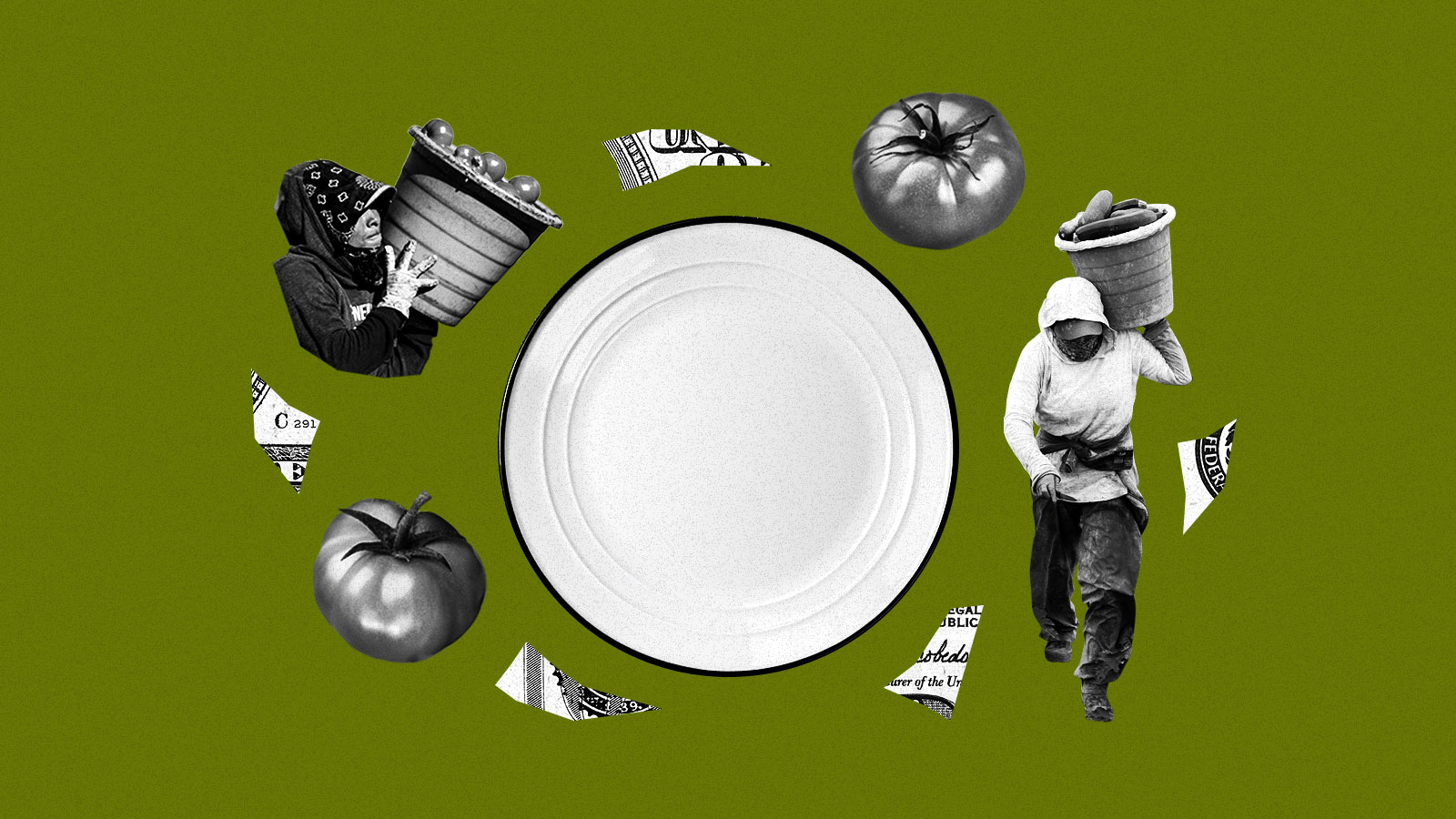
The people who feed America are going hungry
Climate change is escalating a national crisis, leaving farmworkers with empty plates and mounting costs.
Latest Articles
-
Outline for a move to a sustainable agriculture system
The agricultural industry is one of the biggest users of water, energy, and chemicals on the planet. Overall it poses one of the biggest threats to global biodiversity, which is why it deserves significant attention from the environmental community.
But when it comes to defining what is meant by "sustainable agriculture," there is a lot of confusion. Many people think "organic," or "local," or "non-GMO," or even "biodynamic." It will come as little surprise that economists don't think of the issue in this way; they primarily examine the basic conditions for the efficient use of resources in the agricultural sector.
The following outline is the beginning of what a move toward a sustainable agricultural system would entail:
-
Can locavores embrace a truly place-based agriculture?
In "Dispatches From the Fields," Ariane Lotti and Stephanie Ogburn, who are working on small farms in Iowa and Colorado this season, share their thoughts on producing real food in the midst of America's agro-industrial landscape.
 The architectural remnants of an ancient agrarian civilization known as the Ancestral Puebloans cover the Southwest.Photo: Stephanie Ogburn.
It's somewhat astonishing that there's a thriving local food scene where I live, in Montezuma County, Colorado. Not because the area is poor, rural, and thus removed from the trendiness of the local food movement that has hit most large population centers -- rather, because it's so difficult to grow food here.
In a normal year, towns in Montezuma County get between 13 and 18 inches of precipitation. The growing season is short; although most of the region falls into zones 6a/5b on the USDA hardiness map, it frosted here on June 12 this year, and that's not unusual. Temperature variation between day and night can easily range 40 degrees, as the thin desert air heats up with the sun but fails to retain any of that heat due to the lack of humidity.
-
If we just trust Monsanto and ADM, we can eat and drive to our heart’s content
I’ve been a pretty harsh critic of industrial agriculture for a while. I’ve also been known to utter unkind words about the government’s extraordinary, multibillion-dollar effort to promote ethanol. But I’ve changed my mind. I now believe chemical-dependent, monocrop agriculture can be counted on to not only “feed the world,” but also keep its hundreds […]
-
Farmers markets and local agriculture: age-old systems for the future
We often think that farmers markets are products of our times as they spring up in cities and small towns across the country. Truth is, a farmers market is the traditional way of selling agricultural produce around the world.
The really nice aspect of this transaction is that the farmer receives just compensation for his product and the eater can be assured the product is fresh, local, and grown in a manner that is acceptable to all. If these criteria are not met, the consumer can look for another farmer whose products better suit his or her needs.
After the industrialization of agriculture, farmers still sold at farmers markets, but it was just a matter of time before supermarkets were developed and farmers started selling to large companies that moved food all over the world; many Americans stopped planting gardens because it was so much easier to get "everything" at the store.
We certainly have gained something through the globalized food system: more variety, foods we cannot grow in cold climates, and, of course, cheap food that is mass-produced by underpaid farmers and farm workers. Some good news, some bad. I certainly like coffee and chocolate, but I want to know the growers and workers were paid fair wages and that the crops were grown in an environmentally-responsible manner. I would like to be sure all the food I need to buy meets those same standards, whether imported or locally grown.
-
Beware of U.S. trade officials bearing gifts
U.S. Trade Representative Susan Schwab made headlines this week by offering to reduce U.S. farm subsidies. The context was the so-called Doha Round of trade talks — the WTO’s latest, oft-stalled effort to grease the wheels of global trade. Among sustainable-food advocates, there’s a reflexive tendency to cheer whenever farm subsidies go on the chopping […]
-
EPA to ban pesticide carbofuran from food in U.S.
In an unexpected move, the U.S. EPA announced Thursday that it will act to ban the pesticide carbofuran from food in the United States before next year’s growing season. The EPA said the pesticide can cause “nausea, dizziness, confusion, and — at very high exposures — respiratory paralysis and death”; the pesticide has also killed […]
-
Declaring an ’emergency,’ EPA allows a restricted pesticide in Florida
If you love starfruit, you may want to consider giving your habit a rest for a while. A friend emailed me this bit from [PDF] from Wednesday’s Federal Register. Declaring an “emergency,” the EPA has established a “time-limited tolerance” for residues of fludioxonil, a pesticide, on starfruit. According to the EPA, Florida starfruit is being […]
-
The paper of record identifies — sort of — a new trend
New York Times food reporter Kim Severson has declared a new trend: “lazy locavores,” people who want to “eat close to home” but are too time-strapped (or lazy) to put much effort into it. According to Severson, “a new breed of business owner” has arisen to cater to their whims. She opens her piece with […]
-
How to ask hard questions of the people who grow your food
In Checkout Line, Lou Bendrick cooks up answers to reader questions about how to green their food choices and other diet-related quandaries. What to do when it’s not so spelled out for you? Photo: Jennifer Dickert Dear Checkout Line, Any suggestions on how to ask local farmers (or the person selling the goods at […]
-
No government disaster assistance for alternative farmers in Iowa
In "Dispatches From the Fields," Ariane Lotti and Stephanie Ogburn, who are working on small farms in Iowa and Colorado this season, share their thoughts on producing real food in the midst of America's agro-industrial landscape.
-----
Now that Iowa has started to dry out from record flooding, farmers are looking to their fields and feeling the uncertainty of this year's crop. For conventional commodity crop farmers, that feeling is fleeting; they can breathe a sigh of relief knowing that government-backed crop insurance and disaster assistance programs [PDF] will cover their losses. For Iowa's alternative farmers, government-backed crop insurance is a pipe dream that requires them to be innovative in their risk management strategies.
