Climate Food and Agriculture

Climate + Food and Agriculture
EDITOR’S NOTE
Grist has acquired the archive and brand assets of The Counter, a decorated nonprofit food and agriculture publication that we long admired, but that sadly ceased publishing in May of 2022.
The Counter had hit on a rich vein to report on, and we’re excited to not only ensure the work of the staffers and contractors of that publication is available for posterity, but to build on it. So we’re relaunching The Counter as a food and agriculture vertical within Grist, continuing their smart and provocative reporting on food systems, specifically where it intersects with climate and environmental issues. We’ve also hired two amazing new reporters to make our plan a reality.
Being back on the food and agriculture beat in a big way is critical to Grist’s mission to lead the conversation, highlight climate solutions, and uncover environmental injustices. What we eat and how it’s produced is one of the easiest entry points into the wider climate conversation. And from this point of view, climate change literally transforms into a kitchen table issue.
Featured
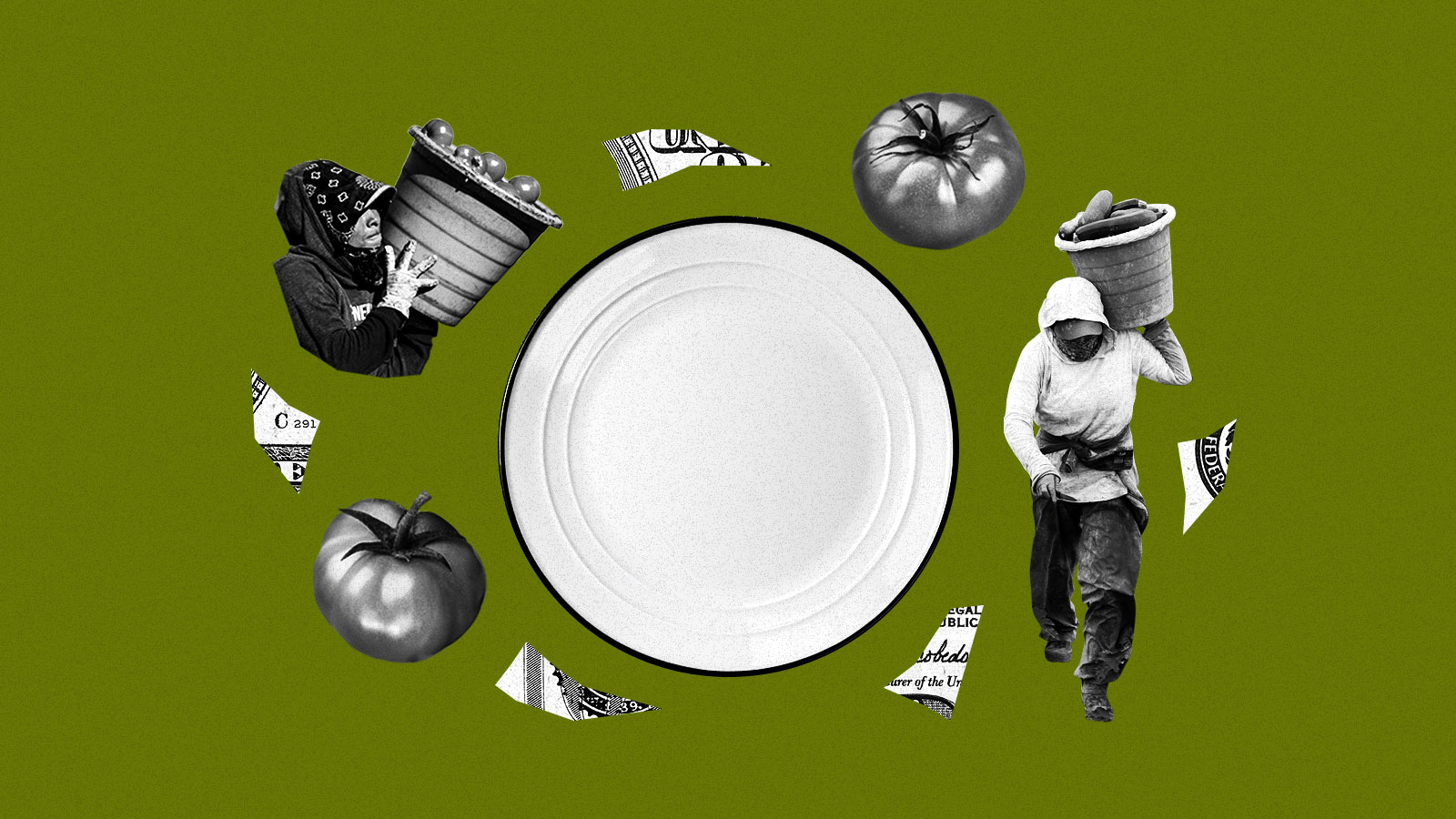
The people who feed America are going hungry
Climate change is escalating a national crisis, leaving farmworkers with empty plates and mounting costs.
Latest Articles
-
WaPo’s misguided call to scale back the Conservation Reserve Program
Back in April, it already seemed obvious: Spooked by skyrocketing prices for corn, soy, and wheat, policymakers would push to put as much land as possible in the Midwest under the plow, environmental consequences be damned. One of the first policy levers, I figured, would involve gutting the Conservation Reserve Program. The CRP is a […]
-
Judge says Calif. salmon in trouble but offers no short-term solution
The dams and aqueducts that shuttle water from California’s Sacramento River Delta to the rest of the state will “appreciably increase jeopardy” to salmon and steelhead in the coming months, U.S. District Judge Oliver Wanger said Friday. But while Wanger agreed with environmentalists that “the three salmonid species are not viable and are all in […]
-
Sick of algae-polluted water, Florida groups sue EPA
A flock of Florida green groups has sued the U.S. EPA, seeking state and national water-pollution standards for fertilizer runoff from factory farms. Nitrogen and phosphorus flow from agricultural operations into many Florida waterways (among other places), triggering algae blooms which suck oxygen from the water and kill off marine life. Exposure to the algae, […]
-
Ugandan coffee endangered by climate change
Uganda’s coffee industry could be basically kaput in 30 years, according to a new Oxfam report. Uganda is Africa’s second-largest coffee exporter after Ethiopia, but the report direly predicts that if “average global temperatures rise by two degrees or more, then most of Uganda is likely to cease to be suitable for coffee.” In the […]
-
USDA scientist: Some crop residues may be too valuable for biofuels
Converting crop residues into cellulosic ethanol sounds to many people like a good idea -- certainly better than using food crops themselves. Yet according to respected USDA soil scientist Ann Kennedy, the stems and leaves left over after crops are harvested may have more value if they are left on the ground, especially in areas receiving less than 25 inches of precipitation annually.
That includes most of the United States (click on link to see map) west of the 100th meridian, which runs roughly from Bismark, S.D. through Laredo, Texas.
-
In eastern North Carolina, citizens and students rise up for environmental justice
Few places in the world have been pooped on more than Eastern North Carolina in the past 20 years. As jobs in textiles and tobacco moved out over the past few decades, the hog industry moved in, bringing with it the source of the poop: 10 million hogs on 2,300 farms, producing about 19 million tons of waste per year. This waste is stored in huge, open pits called lagoons and then sprayed on surrounding fields, which causes the stench to waft for miles around.
-
Urban homesteading in Washington, D.C.
Today's slow yet steady movement towards sustainable foods has a decidedly urban feel to it.
This morning, sitting at my backyard patio table and drinking my morning coffee, I looked appreciatively out into my backyard and took a satisfying breath. The highway behind my house roared with the morning rush hour traffic, the high rise apartments across the street were bustling with people hurrying off to school and work, and I was sitting in my own piece of urban heaven. In the past three months, my small yet robust rhombus-shaped backyard has turned into a garden oasis rarely found in even the fertile soils of rural areas. Three raised beds and several fence-side beds later, I was staring at the most satisfying seeds I had ever sowed -- and all of this in the middle of Washington, D.C.
-
Urban fruit: An untapped resource
 Photo: Fallen Fruit.
Here's a great local food/art initiative, Fallen Fruit, a map project of neighborhoods where one can collect unwanted fruit in Los Angeles. Humans should be making use of these urban apples, avocados, pomegranates, etc. as much as possible, not raking them up into a garbage bag or compost pile. The folks at LocalEcology have started one for Berkeley, and folks with the Portland Fruit Tree Project collect fruit that grows on neighborhood trees for drop-off at local food banks (check out the links section of their site for other projects like it in Philadelphia, Vancouver, and more). Their harvesting parties look to be very fun and take place on Saturdays, 10:00 a.m. to 12:00 p.m., beginning August 2.
Is there free fruit by you?
-
Gulf dead zone likely to be more gigantic than ever
The dead zone in the Gulf of Mexico may be vaster than ever this year, National Oceanic and Atmospheric Administration scientists predicted Tuesday. Thanks in large part to recent Midwest flooding, the oxygen-starved zone — caused when fertilizer runoff from upstream ag spurs growth of algae that suck oxygen as they decompose — could measure […]
-
For some farmers, distant markets offer the best prices
In "Dispatches From the Fields," Ariane Lotti and Stephanie Ogburn, who are working on small farms in Iowa and Colorado this season, share their thoughts on producing real food in the midst of America's agro-industrial landscape.
I don't know how many different farmers markets readers have the opportunity to attend within one area. As a consumer, it seems reasonable to pick one and stick with it. But as a farmer, it's a good idea to sell at multiple markets; it offers the opportunity to sell products at different times during the week as produce becomes available and also increases sales, since the farmer can reach that many more customers at each market.
Here in southwest Colorado, the farmer for whom I work attends no fewer than four markets per week. Two of them are fewer than 10 miles from the farm, and the other two are much further afield, requiring drives of 45 and 75 miles to reach. Interestingly, the market that is farthest away is also the most lucrative, and this got me thinking about farm location versus consumer location, a dynamic that makes the buy-local trend a little challenging.

