Climate Food and Agriculture

Climate + Food and Agriculture
EDITOR’S NOTE
Grist has acquired the archive and brand assets of The Counter, a decorated nonprofit food and agriculture publication that we long admired, but that sadly ceased publishing in May of 2022.
The Counter had hit on a rich vein to report on, and we’re excited to not only ensure the work of the staffers and contractors of that publication is available for posterity, but to build on it. So we’re relaunching The Counter as a food and agriculture vertical within Grist, continuing their smart and provocative reporting on food systems, specifically where it intersects with climate and environmental issues. We’ve also hired two amazing new reporters to make our plan a reality.
Being back on the food and agriculture beat in a big way is critical to Grist’s mission to lead the conversation, highlight climate solutions, and uncover environmental injustices. What we eat and how it’s produced is one of the easiest entry points into the wider climate conversation. And from this point of view, climate change literally transforms into a kitchen table issue.
Featured
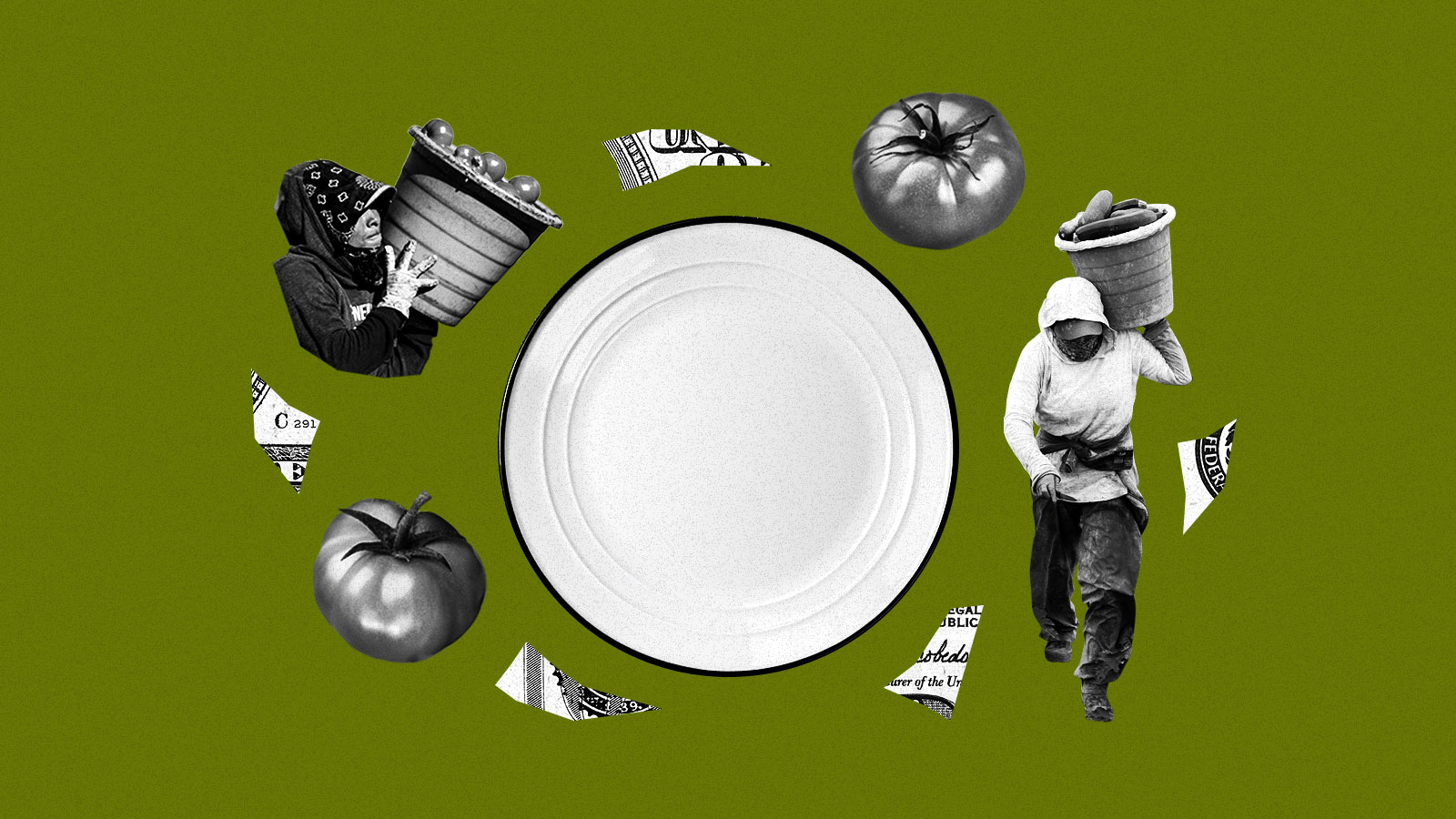
The people who feed America are going hungry
Climate change is escalating a national crisis, leaving farmworkers with empty plates and mounting costs.
Latest Articles
-
Agriculture and energy solutions to avoid the fate of North Korea
John Feffer has a good article over at Asia Times Online.
It points out the deep danger we're in -- how teetery both the world and America's food and energy systems are. It is well worth a read, particularly because of its clear articulation of the bind we're in -- the strategies we've used in the past to get out of disaster will only accelerate collapse in the long-term.. The tools we're using to get more food out of the ground take food from the future.
-
Don Lee Farms veggie patties are the shizzle
I’m probably going to get in trouble for this, since it’s not organic and it comes from some anonymous frozen-food manufacturer, but the discovery of a veggie pattie that doesn’t suck is good news that must be shared with the world. As you’re probably aware, most "veggie burgers" taste like cardboard. Most real veg-heads I […]
-
California officials yank controversial urban spraying plan
California officials have announced that they will not spray the urban Bay Area with a pheromone this summer, delighting activists who had campaigned strenuously against the plan. The pheromone with the ominous name CheckMate LBAM-F keeps the crop-gobbling light brown apple moth from reproducing, but also has been linked to complaints of respiratory trouble in […]
-
Now’s the time for scapes and green garlic
Food headlines hardly bring comfort these days: tales of lost harvests, hunger riots, agrichemical runoff, tainted pork and tomatoes. A society’s foodways surely reveal something about its quality of life. From studying the industrial-food system, as I do, it’s easy to conclude that we live in a brutal culture: content to destroy the ecosystem, exploit […]
-
The toll of the shrimping industry on Southeast Asia
Southeast Asia would have fared better during the tsunami and the recent cyclone if the majority of the region's coastal mangrove forests were intact. Everyone accepts that. But many of the mangroves have been cut for firewood, largely to make way for shrimp farming. The cost of the mangrove-loss to coastal fisheries is great, since much of the food chain spends its early years amongst the trees' roots.
But the human cost, besides those lost in the flood waters, is also great: Labor abuses in the farmed shrimp industry are rampant. Read "The True Cost of Shrimp" (PDF) for details on the child labor, human trafficking, beatings, torture, and murder associated with these farms. There are also toxins that farm workers get to enjoy spraying into the shrimp pens to keep the critters from succumbing to infections. So, what to do?
-
Vegan food ain’t Badu
“Vegan food is soul food in its truest form. Soul food means to feed the soul. And, to me, your soul is your intent. If your intent is pure, you are pure.” — Erykah Badu, in the recentest issue of VegNews
-
Midwest woes a boon to fertilizer companies
The recent Midwestern floods have caused all manner of misery: Burst levies, lost homes, ruined crops, higher food prices, a gusher of agrichemicals and god know what else flowing into streams. One way to soothe the sting is to own shares in giant fertilizer companies like Potash Corp. of Saskatewan and Mosaic. These companies have […]
-
Why are sperm counts so low in the show-me state?
Surrounded by agriculture powerhouses Kansas, Iowa, Nebraska, and Illinois, Missouri sits at the southern edge of the heartland. Are the region’s titanic annual lashings of agrichemicals — synthetic and mined fertilizers, as well as poisons designed to kill bugs, weeds, and mold — leaching into drinking water and doing creepy things to the state’s citizens? […]
-
Humans have a hand in Midwest flooding
Photo: Mark Hirsch How much responsibility do humans have for the floods disastrously deluging the Midwest? Of course the rain poured for days, but it fell on plowed-up prairies, drained fields, altered streams, no-longer-wetlands, and developed flood plains — all unable to absorb precipitation to the best of their natural ability. Between 2007 and 2008, […]
-
Why North Korea was a global crisis canary
This essay was originally published on TomDispatch and is reprinted here with Tom's kind permission.
-----
Gas prices are above $4 a gallon; global food prices surged 39 percent last year; and an environmental disaster looms as carbon emissions continue to spiral upward. The global economy appears on the verge of a TKO, a triple whammy from energy, agriculture, and climate-change trends. Right now you may be grumbling about the extra bucks you're shelling out at the pump and the grocery store, but, unless policymakers begin to address all three of these trends as one major crisis, it could get a whole lot worse.
Just ask the North Koreans.
In the 1990s, North Korea was the world's canary. The famine that killed as much as 10 percent of the North Korean population in those years was, it turns out, a harbinger of the crisis that now grips the globe -- though few saw it that way at the time.
That small Northeast Asian land, one of the last putatively communist countries on the planet, faced the same three converging factors as we do now -- escalating energy prices, reducing food supplies, and impending environmental catastrophe. At the time, of course, all the knowing analysts and pundits dismissed what was happening in that country as the inevitable breakdown of an archaic economic system presided over by a crackpot dictator.
They were wrong. The collapse of North Korean agriculture in the 1990s was not the result of backwardness. In fact, North Korea boasted one of the most mechanized agricultures in Asia. Despite claims of self-sufficiency, the North Koreans were actually heavily dependent on cheap fuel imports. (Does that already ring a bell?) In their case, the heavily subsidized energy came from Russia and China, and it helped keep North Korea's battalion of tractors operating. It also meant that North Korea was able to go through fertilizer -- a petroleum product -- at one of the world's highest rates. When the Soviets and Chinese stopped subsidizing those energy imports in the late 1980s and international energy rates became the norm for them too, the North Koreans had a rude awakening.
