Climate Food and Agriculture
Climate + Food and Agriculture
EDITOR’S NOTE
Grist has acquired the archive and brand assets of The Counter, a decorated nonprofit food and agriculture publication that we long admired, but that sadly ceased publishing in May of 2022.
The Counter had hit on a rich vein to report on, and we’re excited to not only ensure the work of the staffers and contractors of that publication is available for posterity, but to build on it. So we’re relaunching The Counter as a food and agriculture vertical within Grist, continuing their smart and provocative reporting on food systems, specifically where it intersects with climate and environmental issues. We’ve also hired two amazing new reporters to make our plan a reality.
Being back on the food and agriculture beat in a big way is critical to Grist’s mission to lead the conversation, highlight climate solutions, and uncover environmental injustices. What we eat and how it’s produced is one of the easiest entry points into the wider climate conversation. And from this point of view, climate change literally transforms into a kitchen table issue.
Featured
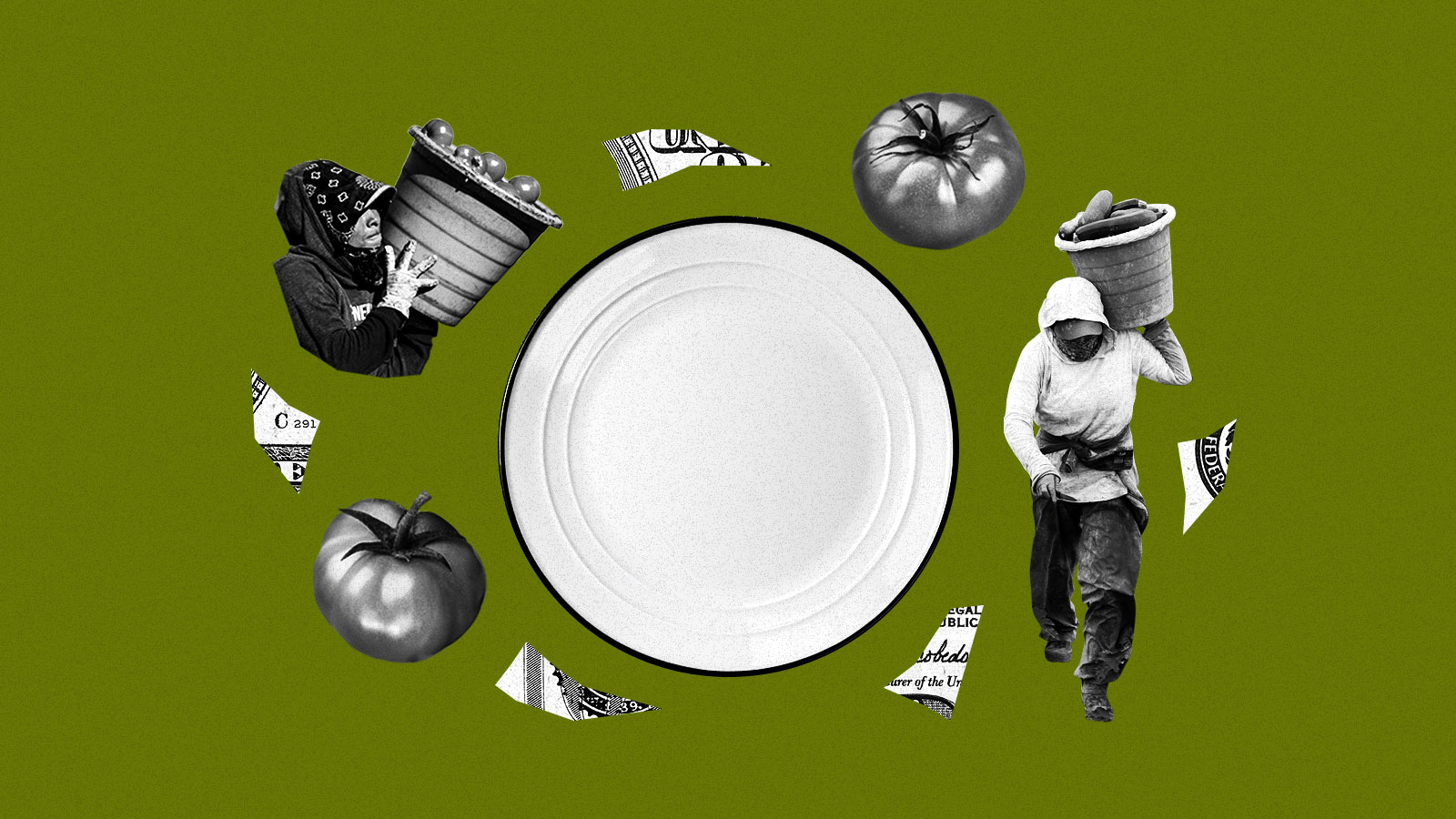
The people who feed America are going hungry
Climate change is escalating a national crisis, leaving farmworkers with empty plates and mounting costs.
Latest Articles
-
The U.S. media discover how food production works without access to cheap oil
The story is legendary in peak-oil circles: Twenty years ago, the Soviet Union pulled the plug on Cuba’s cheap-energy, cheap-food era. (See Bill McKibben’s feature piece on the subject here.) No longer would the fading superpower accept the tiny island nation’s sugar as payment for crude oil. From then on, only hard currency would do. […]
-
U.S. officials dither while antibiotic-resistant bacteria strains creep into our pork supply
In Meat Wagon, we round up the latest outrages from the meat and livestock industries. The good news is that people are earnestly trying to figure out if a deadly antibiotic-resistant bacteria strain is infecting our nation’s vast supply of pork. The bad news is, they don’t work for a government regulator with the power […]
-
Why mow the grass when you can harvest salad greens?
Lawn grass is the largest irrigated U.S. crop. “Even conservatively,” notes NASA researcher Cristina Milesi, “I estimate there are three times more acres of lawns in the U.S. than irrigated corn.” Wow, that’s a lot of ornamental grass — about 128,000 square kilometers worth, roughly equal in size to the state of Wisconsin. According Milesi, […]
-
FDA warns of salmonella-infected tomatoes in the Southwest
What’s next, tainted buns? In yet another blow to the burger, tomatoes have joined beef and lettuce as star players in that booming industrial-food genre, the disease-outbreak drama. This one involves tomatoes that carry what the FDA calls “an uncommon strain” of salmonella called Saintpaul. Some 57 people have come down with salmonellosis in New […]
-
Still more reasons to eat local and lay off the beef
Photo: Elizabeth Thomsen via Flickr.Increasingly, consumers are trying to reduce the environmental impacts of the foods they eat. But it's not so easy to know what to do, in part because of the bewildering array of food choices the market offers, but also because it's hard to know what food choices carry the biggest impact.
This nifty study tries to clear away some of the murk by tackling a fairly straightforward question: If you care about the climate, which is more important, what kind of food you eat, or where that food is grown?
To summarize the findings: All else being equal, locally grown food is friendlier to the climate than food grown half a continent away. But if you're looking for a single food choice that will help curb your climate impact, your best bet is to stay away from cows!
-
Michael Pollan calls for crafting a viable alternative for next time
After many, many months of wrangling, Congress recently passed a farm bill, overriding a veto by the president. In my view, it is not a very good bill -- it preserves more or less intact the whole structure of subsidies responsible for so much that is wrong in the American food system.
On the other hand, it does contain some significant new provisions that, with luck, will advance the growing movement toward a more just, sustainable, and healthy food system.
You might rightly ask why there was so little movement on commodity subsidies, in a year when crop prices are at record highs and public scrutiny of the subsidy system has been intense. Indeed, the people on the Hill I talk to tell me they have not seen so much political activism around the farm bill in a generation. All the calls, cards, and emails sent by ordinary eaters clearly made a difference.
So why so little change on the key issue? Why didn't we get a food bill, rather than another farm bill? Here's what I think happened.
-
The good, bad, and ugly in our national five-year agricultural plan
We've all noticed higher grocery bills, but did you know Congress passed a $307 billion farm bill in late May that has a much bigger impact on what you will eat for dinner tonight than what you chose to place in the grocery cart?
The farm bill has a hand in all that happens before the swallow. The bag of Tyson chicken wings (grain subsidies), gallon of Horizon Organic milk (forward contracting), and pound of Fuji apples (country of origin labeling) are all regulated in some fashion by this policy determining how our food is raised and who profits.
But does the massive legislation support family farmers? Increase food access in urban food deserts? Or feed the 40 million poor and hungry in the United States?
Yes and no.
-
Purdy lil Heifer
Heifer International, a nonprofit that lets people make gifts of livestock to farmers in impoverished areas, gave a shout out to Grist in its March/April WorldArk magazine (albeit using .com in the web address).
Now, in the May/June issue, not only does Grist get a shout out with a correction in the letters column, but the whole issue is outstanding.
Here's just a sample of the terrific content:
-
Despite efforts, Chesapeake Bay oysters still struggling
State and federal officials have spent $58 million since 1994 trying to make Chesapeake Bay a welcoming place for oysters — and it all seems to have been for naught. There are less bivalves in the bay now than there were in the mid-’90s, and the Maryland and Virginia oyster industries have declined in turn. […]
-
Sustainability a big theme at the World Science Festival
What do vertical farms, green roofs, soft cars, breathing walls, and Dongtan, China, have in common? They were all subjects of discussion at Friday's Future Cities event in New York City, part of the four-day 2008 World Science Festival.
To a packed house, Columbia University microbiologist Dickson Despommier described his vision for feeding the planet's burgeoning, and increasingly urban, population. The vertical farm takes agriculture and stacks it into the tiers of a modern skyscraper. Instead of stopping at the corner pizzeria for dinner, Despommier suggested, you could pluck a nice head of lettuce, maybe some corn, and some tomatoes for a big salad, all in your own building, on the way to your apartment. You can't get fresher or more local than that.
According to Despommier, the farms will be "grown organically: no herbicides, pesticides, or fertilizers." (Of course, being indoor, there won't be many insects to spray for.) The farms will also require much less irrigation since all water can be re-circulated, and they'll curb the growing pressure to turn forest into farmland.
The vertical farm sounds (and looks) pretty amazing, and certainly Despommier deserves much credit for thinking boldly ... but I was left with several questions.
