Climate Food and Agriculture

Climate + Food and Agriculture
EDITOR’S NOTE
Grist has acquired the archive and brand assets of The Counter, a decorated nonprofit food and agriculture publication that we long admired, but that sadly ceased publishing in May of 2022.
The Counter had hit on a rich vein to report on, and we’re excited to not only ensure the work of the staffers and contractors of that publication is available for posterity, but to build on it. So we’re relaunching The Counter as a food and agriculture vertical within Grist, continuing their smart and provocative reporting on food systems, specifically where it intersects with climate and environmental issues. We’ve also hired two amazing new reporters to make our plan a reality.
Being back on the food and agriculture beat in a big way is critical to Grist’s mission to lead the conversation, highlight climate solutions, and uncover environmental injustices. What we eat and how it’s produced is one of the easiest entry points into the wider climate conversation. And from this point of view, climate change literally transforms into a kitchen table issue.
Featured
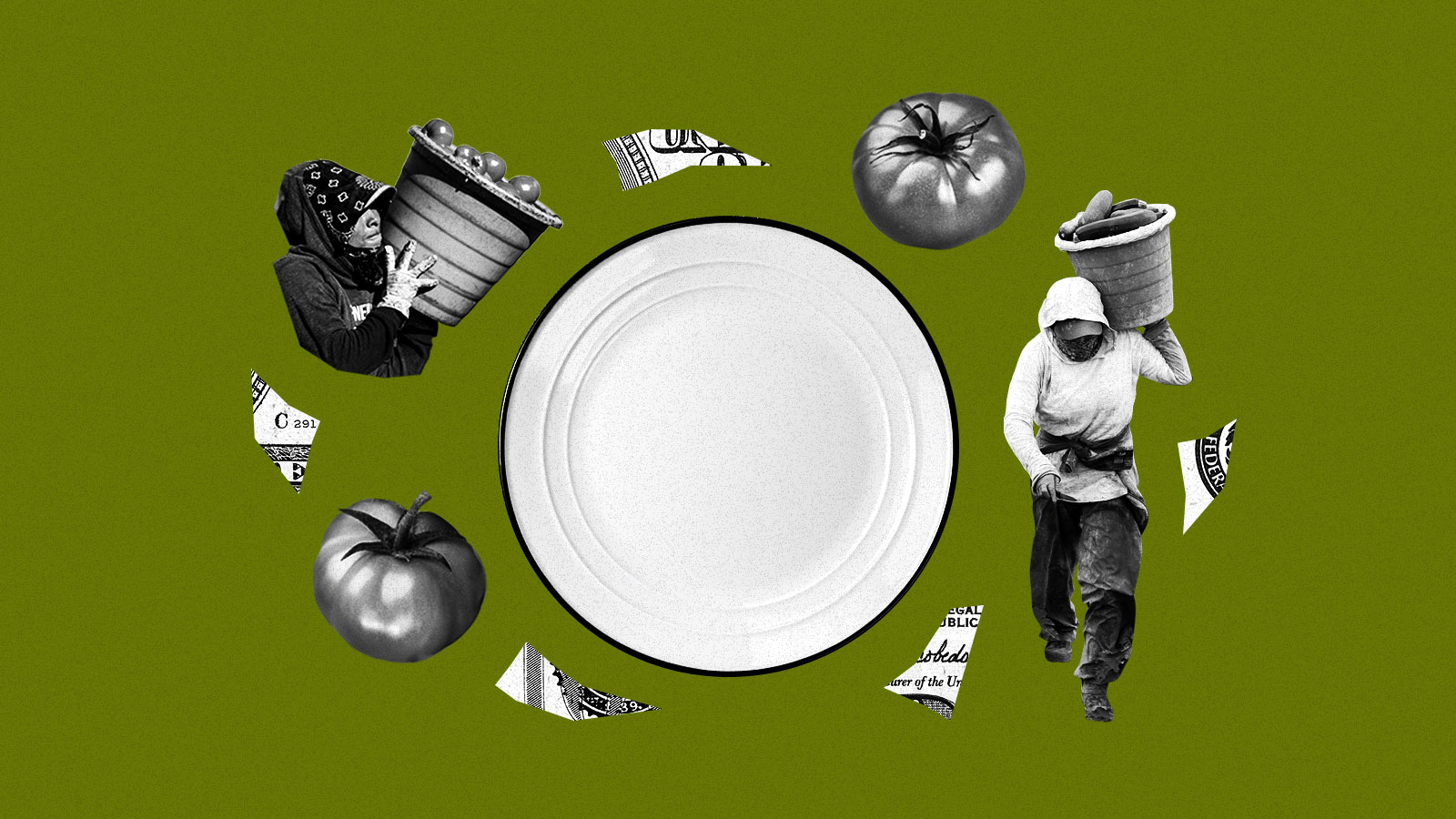
The people who feed America are going hungry
Climate change is escalating a national crisis, leaving farmworkers with empty plates and mounting costs.
Latest Articles
-
USDA defends America’s fuel supply
Much of what Vinod Khosla had to say in his latest post, and my responses to that post here, have been covered in previous posts. So, if some of this sounds eerily familiar, now you know why.
Admittedly, I have an advantage in this debate because he can't respond directly to my arguments. Remember the West Wing episode where the Josh Lyman character makes the mistake of responding to a blogger?
On the other hand, I'm not an independent blogger with my own website. Thus, the fine line between courage and stupidity. May I offer an apology to Grist for my stupidity and my thanks for allowing me to express it.
Khosla begins his defense reiterating the following belief:
In fact, I strongly believe any nascent technology that cannot exist without subsidies beyond an introductory period will not gain market penetration and is not worth supporting ...
-
Climate change doing a number on U.S. West, says USDA report
Climate change is having “profound impacts” on the U.S. West and will continue to do so in coming decades, says a new report spearheaded by the U.S. Department of Agriculture. Titled “The Effects of Climate Change on Agriculture, Land Resources, Water Resources, and Biodiversity,” the report focuses on Western rangelands, arid lands, forests, and fisheries. […]
-
-
The agency cravenly stops measuring the poisons used in U.S. farming
The USDA’s “Agricultural Chemical Use Database” is a wonderful thing. With a few clicks, consumers, researchers, and anyone else kind find all manner of information on pesticides, broken down by crop and by state. As an agriculture writer, I have an interest in industrial corn, by far our biggest crop. With a simple search, I […]
-
Are ‘organic pesticides’ the way forward for organic agriculture?
How are proponents of regenerative agriculture supposed to respond to news like this? Green pesticide and herbicide developer Marrone Organic Innovations is nearly done raising $7 million in a second round of funding, CEO Pamela Marrone said Wednesday. Wow, somebody’s investing in organic agriculture — millions, no less. That’s news. But does it have to […]
-
The USDA’s new ban won’t keep sick cows out of the food supply
Months after the downer-cow scandal of last winter, USDA chief Ed Schafer announced plans to ban all downer cows from the food supply. The rule involves cows that get sick after an initial inspection by veterinarians before slaughter. Under old rules, such cows could be reinspected by vets and then cleared for slaughter if the […]
-
It does not save carbon and is not a carbon offset
The list of very knowledgeable folk who still are pushing no-till farming as a greenhouse-gas mitigation strategy -- even though science passed them by a while ago -- includes:
- Sen. John McCain
- Princeton University* [PDF]
- The Chicago Climate Exchange [PDF]
- The Nicholas Institute for Environmental Policy Solutions [PDF]
I buried the science in the McCain post, but it deserves higher visibility. As a major review article [PDF] from Agriculture, Ecosystems and Environment, "Tillage and soil carbon sequestration -- What do we really know?" concluded:
-
Wall Street Journal editorial mischaracterizes both my position and biofuels
To my surprise, on Tuesday I found myself cited by the Wall Street Journal as a strong advocate of subsidies for food-based ethanol, and as a recipient of "federal dole" who ought to "take a vow of embarrassed silence." While I appreciate the Journal's foray into fiction writing (and I'd love to discuss my status on the dole with my accountant, who recently filed my taxes), I would like to clarify a few facts and offer a more rounded view of biofuels and ethanol in general.
A few facts:
-
The Onion on GM tomatoes
From The Onion: PASADENA, CA–Geneticists at the California Institute of Technology announced Monday that they have developed a tomato with a 31 percent larger price tag than a typical specimen of the vine-ripened fruit. “By utilizing an exciting new breakthrough in gene-splicing technology, we’ve been able to manipulate this new tomato with recombinant DNA in […]
-
A new generation pilots the farm’s operations as it transitions to training others
Some Grist readers may have noticed that I’ve been writing on the blog nearly every day, while keeping up the Victual Reality column. How can I do all of that and farm, too? The truth is, I went full-time at Grist last November, when I took on the position of food editor. And to maintain […]

