Climate Food and Agriculture
Climate + Food and Agriculture
EDITOR’S NOTE
Grist has acquired the archive and brand assets of The Counter, a decorated nonprofit food and agriculture publication that we long admired, but that sadly ceased publishing in May of 2022.
The Counter had hit on a rich vein to report on, and we’re excited to not only ensure the work of the staffers and contractors of that publication is available for posterity, but to build on it. So we’re relaunching The Counter as a food and agriculture vertical within Grist, continuing their smart and provocative reporting on food systems, specifically where it intersects with climate and environmental issues. We’ve also hired two amazing new reporters to make our plan a reality.
Being back on the food and agriculture beat in a big way is critical to Grist’s mission to lead the conversation, highlight climate solutions, and uncover environmental injustices. What we eat and how it’s produced is one of the easiest entry points into the wider climate conversation. And from this point of view, climate change literally transforms into a kitchen table issue.
Featured
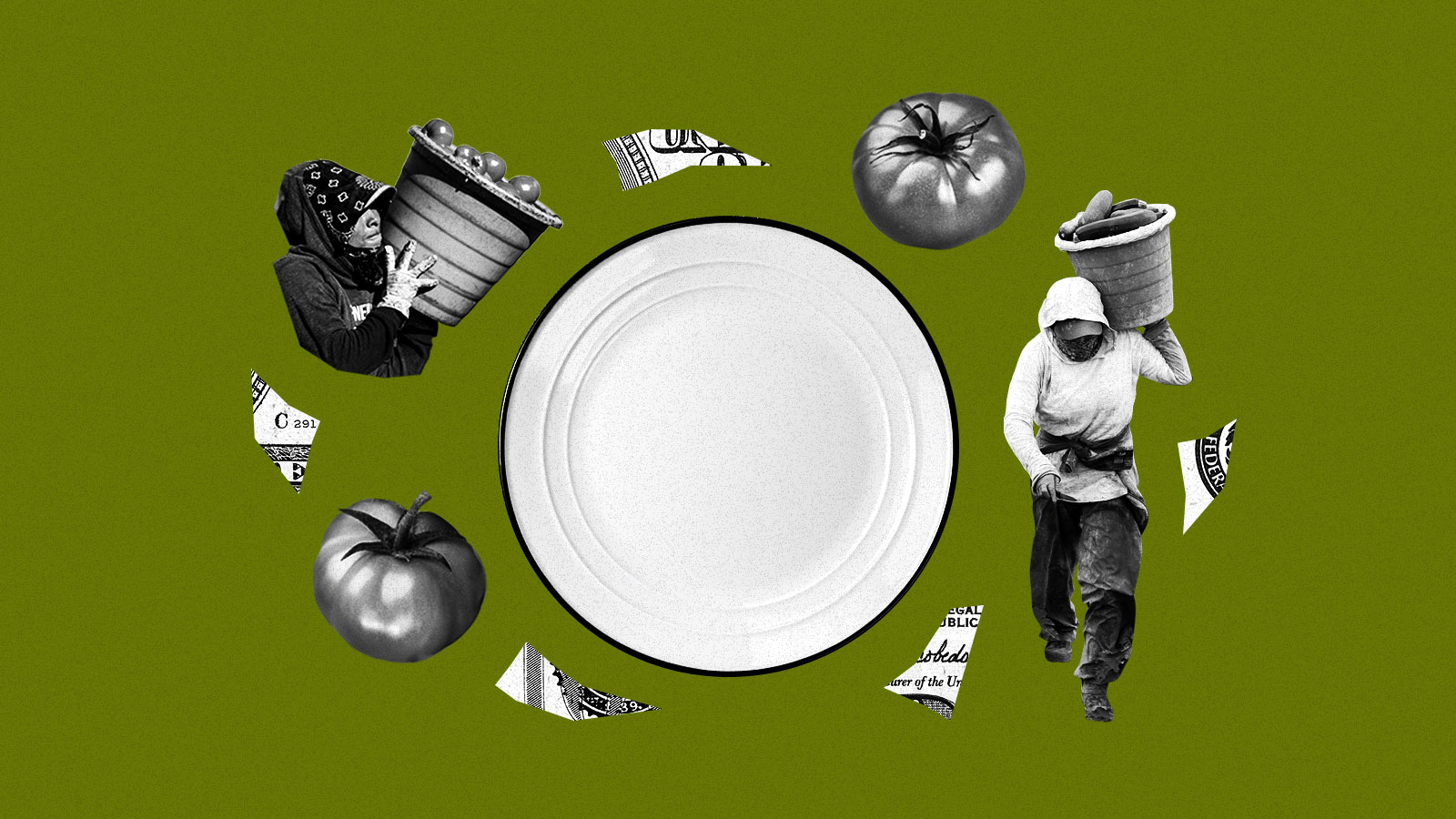
The people who feed America are going hungry
Climate change is escalating a national crisis, leaving farmworkers with empty plates and mounting costs.
Latest Articles
-
Thanksgiving isn’t just about the food; it is about relationships
The Thanksgiving holiday serves to focus our attention on man's relationship with nature. In a celebration of the fall harvest, we express our appreciation for the bounty we have received.
In American tradition, the Pilgrims' survival in the New World was enabled by the Native Americans, with whom they joined in a great feast of thanks. Every year Americans set aside a day to hold their own feast of Thanksgiving which features traditional foods that are native to the Americas, such as, turkey, sweet potatoes, cranberry sauce, corn, turnips, and pumpkin pie.
Our celebration of Thanksgiving is the perfect opportunity to reinforce our connection, not only with the earth which still provides us with such a bounty but also the members of our community who have made raising these foods their life's work. While opening a can of yams, defrosting a frozen industrial turkey and buying a boxed pumpkin pie may have meaning in continuing some parts of the Thanksgiving tradition, I suggest we celebrate our relationship with the present as well as the past by making an extra effort to eat as many of these traditional foods from local, humanely raised sources as possible. Here in the Northeast that is pretty easy for most of the meal, but what about the turkey?
-
There’s no lead-free lunch
Have you heard the one about the “healthy lunch” campaign that used lunchboxes found to contain lead? No joke.
-
A good NYT piece on Alice Waters
Edible Media takes an occasional look at interesting or deplorable food journalism. Alice Waters is so beloved and renowned in the sustainable-food world that her status approaches that of a saint. Inevitably, all that reverence gives rise to a certain amount of irreverence. I don’t think anyone’s gone after her with the vitriol that Christopher […]
-
![]()
![]()
On kids, zucchini, and an experiment with pizza soup
A few weeks ago, when I made zucchini blueberry bread with my friends’ kids, it was revealed that one of them didn’t care much for zucchini in its non-dessert incarnations, seeing as how it was a vegetable and all. So I challenged myself to invent some kid-friendly zucchini dishes to see if I could get […]
-
More than half of U.S. families bought packaged meat last year. Gross
The phrase "luncheon meat in pouches" strikes me as singularly unappetizing — industrially grown meat, lashed with God-knows-what chemicals, and stuffed into plastic. Even as an industrial-food-scarfing child, the slippery wetness and sketchy pink color of such food always struck me as just wrong (not that it stopped me from digging in). Can’t be easy […]
-
Songbird endangered in France hunted as a culinary delicacy
Ortolan is a French delicacy: a tiny songbird, roasted whole and swallowed in one bite, bones and all. Ortolan hunting has been banned in France since 1998 to protect the species, but the birds have a high price on the black market, and as many as 30,000 a year are fattened up and sold by […]
-
Mercury moves from coal plant to fish dinner as fast as its name implies
A Scientificblogging post explains that it only takes three years for mercury emitted by coal-fired plants to travel up the food chain into fish that we eat:
"Before this study, no one had directly linked atmospheric deposition (mercury emissions) and mercury in fish," says study co-author Vincent St. Louis of the University of Alberta.
The experiment filled a major gap in scientists' understanding of how mercury moves from the atmosphere through forests, soils, lakes and into the fish that people eat.
It's immediate value is that it provides undeniable proof of a direct link, said St. Louis, who specializes in what is called whole-ecosystem experimentation.
He said it should spur policy-makers to enact regulations for more rapid reductions in mercury emissions by industry. -
Pesticides up to no good, says new research
A decrease in pesticide availability led to an associated decrease in suicide rates in Sri Lanka, researchers publishing in the International Journal of Epidemiology have concluded. In 1995 and 1998, restrictions were put into place on importation and sales of highly toxic pesticides in Sri Lanka; in 2005, the country’s suicide rate was half what […]
-
Mercury contamination in fish declines when emissions go down
Mercury contamination of waterways and marine life doesn’t have to be an ongoing problem — all we have to do is limit industrial mercury emissions. Easy! After a seven-year experiment in a Canada lake, researchers publishing in the Proceedings of the National Academy of Sciences concluded that mercury concentrations in fish would decline relatively quickly […]
-
PETA VP argues vegetarianism is the best way to help the planet
This is a guest essay from Bruce Friedrich, vice president for campaigns at People for the Ethical Treatment of Animals (PETA). It was written in response to Alex Roth's essay "PETA's dogma is all bark and no bite." Friedrich has been an environmental activist for more than 20 years.

In 1987, I read Diet for a Small Planet by Frances Moore Lappé and -- primarily for human rights and environmental reasons -- went vegan. Two decades later, I still believe that -- even leaving aside all the animal welfare issues -- a vegan diet is the only reasonable diet for people in the developed world who care about the environment or global poverty.
Over the past 20 years, the environmental argument against growing crops to be fed to animals -- so that humans can eat the animals -- has grown substantially. Just this past November, the environmental problems associated with eating chickens, pigs, and other animals were the subject of a 408-page United Nations scientific report titled Livestock's Long Shadow.
The U.N. report found that the meat industry contributes to "problems of land degradation, climate change and air pollution, water shortage and water pollution, and loss of biodiversity." The report concludes that the meat industry is "one of the ... most significant contributors to the most serious environmental problems, at every scale from local to global."