Climate Food and Agriculture

Climate + Food and Agriculture
EDITOR’S NOTE
Grist has acquired the archive and brand assets of The Counter, a decorated nonprofit food and agriculture publication that we long admired, but that sadly ceased publishing in May of 2022.
The Counter had hit on a rich vein to report on, and we’re excited to not only ensure the work of the staffers and contractors of that publication is available for posterity, but to build on it. So we’re relaunching The Counter as a food and agriculture vertical within Grist, continuing their smart and provocative reporting on food systems, specifically where it intersects with climate and environmental issues. We’ve also hired two amazing new reporters to make our plan a reality.
Being back on the food and agriculture beat in a big way is critical to Grist’s mission to lead the conversation, highlight climate solutions, and uncover environmental injustices. What we eat and how it’s produced is one of the easiest entry points into the wider climate conversation. And from this point of view, climate change literally transforms into a kitchen table issue.
Featured
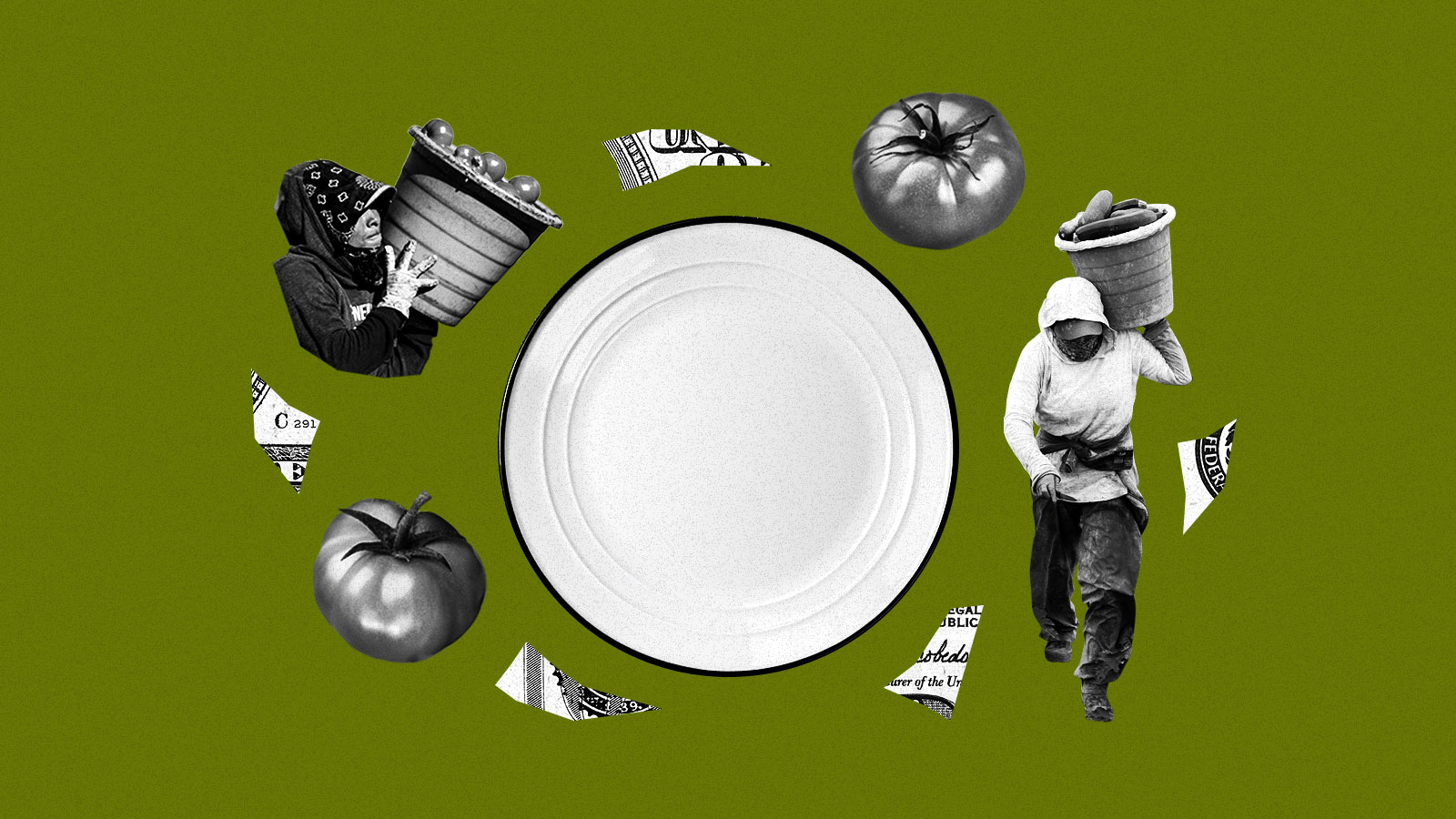
The people who feed America are going hungry
Climate change is escalating a national crisis, leaving farmworkers with empty plates and mounting costs.
Latest Articles
-
Strengthening community is an important benefit of eating locally
The following is a guest essay originally posted at AlterNet by David Morris, vice president of the Institute for Local Self-Reliance.
Some 30 years ago NASA came up with another big idea: assemble vast solar electric arrays in space and beam the energy to earth. The environmental community did not dismiss NASA's vision out of hand. After all, the sun shines 24 hours a day in space. A solar cell on earth harnesses only about four hours equivalent of full sunshine a day. If renewable electricity could be generated more cheaply in space than on earth, what's the problem?
A number of us argued that the problem was inherent in the scale of the power plant. Whereas rooftop solar turns us into producers, builds our self-confidence, and strengthens our sense of community as we trade electricity back and forth with our neighbors, space-based solar arrays aggravate our dependence. By dramatically increasing the distance between us and a product essential to our survival, we become more insecure. The scale of the technology requires a global corporation, increasing the distance between those who make the decisions and those who feel the impact of those decisions. Which, in turn, demands a global oversight body, itself remote and nontransparent to electric consumers.
-
Biofuels subsidies will only lead to increased food costs and habitat destruction
This, courtesy of the Financial Times, is a welcome development. Hopefully, the Doha Round of the GATT will get restarted, and this can be addressed in addition to the more general discussion of agricultural subsidies.
-
![]()
![]()
As the season fades, it’s time for one last blueberry blowout
Before summer gets away from me entirely, I’d like to share a few more moments from the Northeast Organic Farming Association conference I went to a couple of weeks ago. (By the way, I referred to it as the Farmers’ Association last time, which may seem like a small difference, but is actually an important […]
-
Japan offers Micky D’s as reward for climate change promises
Today, in Japan: A Japanese government website crashed Wednesday as people raced to take up an offer of a half-price McDonald’s hamburger in exchange for pledging to fight global warming. … People were asked to check up to 39 boxes on a form they could download from the environment ministry’s website, each listing a way […]
-
While the FDA and EPA look away, noxious fumes from fake butter wreck lungs
Back in May, I drew attention to the remarkable fact that food-industry workers are literally dying from exposure to a key ingredient in microwave popcorn. The food additive diacetyl (responsible for that "buttery note" in nuked popcorn and also in margarine) emits a noxious fume when heated up — one that can literally destroy people’s […]
-
‘Extreme localism’ in the New Yorker
Edible Media takes an occasional look at interesting or deplorable food journalism. Whatever else it has accomplished, the local-food movement has certainly conquered the appetites of New York’s influential food-media editors. Following the lead of Gourmet, glossy mags like Food & Wine and Bon Appetit now offer regular paeans to place-based eating. The New York […]
-
Huge organic dairy farm skirted organic rules, agrees to behave
One of America’s largest organic dairies has agreed to alter its operations to comply with national organic standards after the U.S. Department of Agriculture threatened to remove its certification for skirting the rules. Aurora Organic Dairy, which sells milk under the label High Meadows and also makes milk for private-label brands including Wild Oats and […]
-
Driving Us to Vegetarianism
Animal-rights groups say meat-eating worse for climate than driving With which instrument do you cause more greenhouse-gas emissions: your car key or your fork? It’s a question asked in an advertising campaign by the Humane Society, which, along with other big animal-rights groups, is striving to open consumers’ eyes to an oft-overlooked connection: the climatic […]
-
… for real
It sounds like an unappetizing combination, I know, but it's for real: http://www.shrimp-petrofest.org/
-
USDA brings the enforcement hammer down on nation’s largest organic dairy producer
This, fresh from the Cornucopia Institute, is big news: Tonight at 7:20 p.m. EST, August 29, the USDA issued an emergency news release announcing that they had sent a Letter of Revocation to the Aurora Organic Dairy. In lieu of revoking Aurora’s organic certification, the Agency has instead entered into a consent agreement requiring the […]