Climate Food and Agriculture

Climate + Food and Agriculture
EDITOR’S NOTE
Grist has acquired the archive and brand assets of The Counter, a decorated nonprofit food and agriculture publication that we long admired, but that sadly ceased publishing in May of 2022.
The Counter had hit on a rich vein to report on, and we’re excited to not only ensure the work of the staffers and contractors of that publication is available for posterity, but to build on it. So we’re relaunching The Counter as a food and agriculture vertical within Grist, continuing their smart and provocative reporting on food systems, specifically where it intersects with climate and environmental issues. We’ve also hired two amazing new reporters to make our plan a reality.
Being back on the food and agriculture beat in a big way is critical to Grist’s mission to lead the conversation, highlight climate solutions, and uncover environmental injustices. What we eat and how it’s produced is one of the easiest entry points into the wider climate conversation. And from this point of view, climate change literally transforms into a kitchen table issue.
Featured
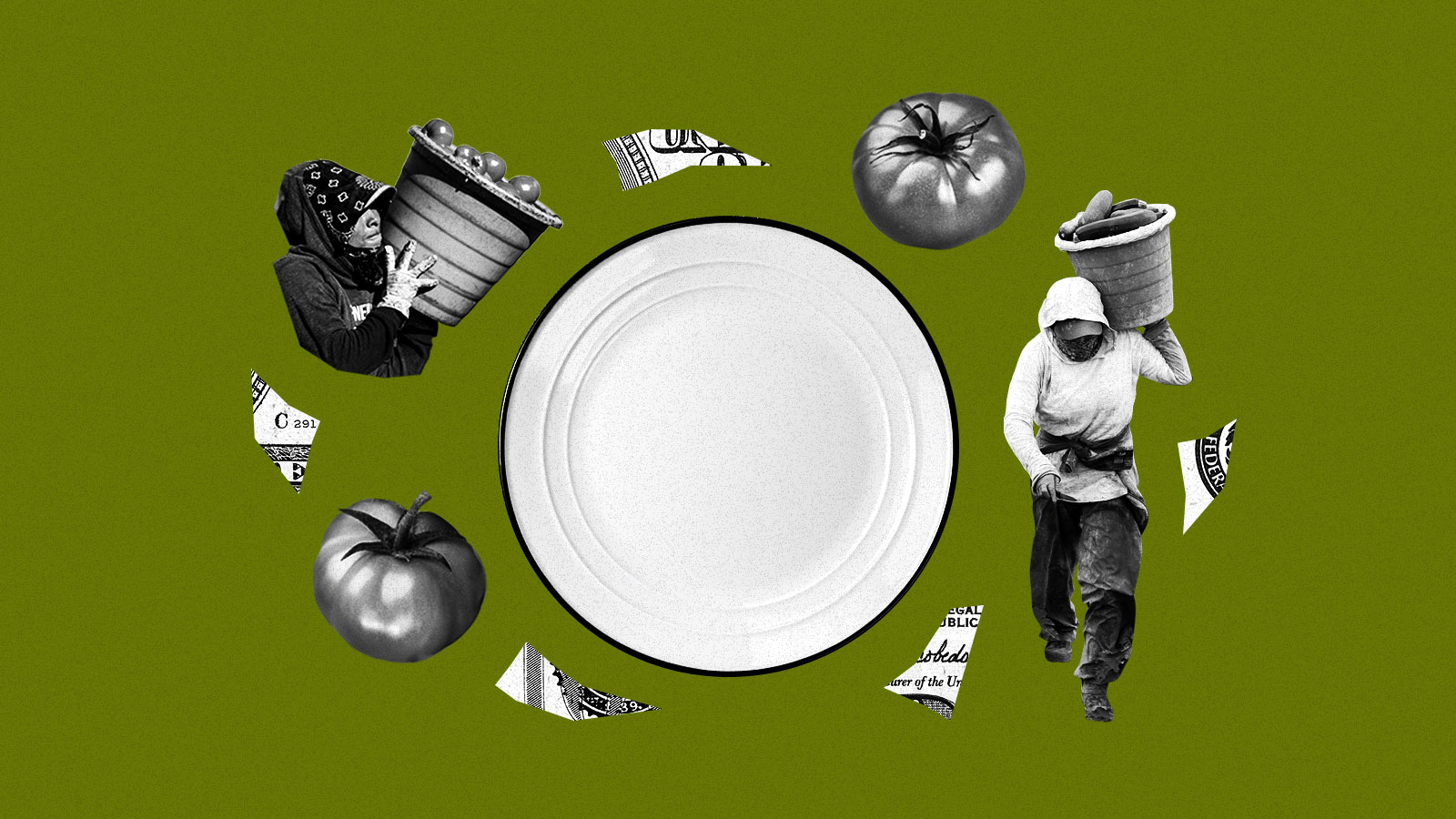
The people who feed America are going hungry
Climate change is escalating a national crisis, leaving farmworkers with empty plates and mounting costs.
Latest Articles
-
Umbra on prioritizing organic purchases
Hi Umbra! I just recently became a stay-at-home mom. Life is bliss, except for the one-income household we now have (my husband brings home the tofu-bacon). Now that we have very limited funds I cannot afford to buy all organic food. Sometimes organic food is nearly double the price of conventional food … yikes! I […]
-
Fairness tradeoff?
Sven Wunder, a researcher with the Center for International Forestry Research (CIFOR), notes the following trade-off [PDF] for the kind of environmental charity where people are paid not to pollute. His conclusion: we are better off paying the moderately bad guys than the really bad guys or the good guys. I'm going to post this without further comment, because either you see hidden assumptions and problems with this, or you don't:
-
Think again
This article in today's NYT highlights new research that shows that locally produced food in some instances may actually be more energy intensive than food imported from hundreds or thousands of miles away. While this may surprise many environmentalists, it shouldn't.
A lot of factors contribute to the total energy/carbon footprint of food, and the distance the food travels is only one dimension. But there are many other reasons to question the "local is always better" logic.
For example, importing grains can be an amazingly efficient way for areas lacking in water to conserve water resources. Dried grain is light, doesn't require refrigeration, and is nutritious. Areas like the Midwest that receive lots of rainfall are great areas for grain production, while deserts in California are not.
There is an added dimension as well. Many developing countries rely on agricultural exports to generate foreign currency so that they can buy medicines, cellphones, clothes, and all sorts of goods that help them improve their material standard of living. If everyone in the developed world suddenly stopped importing their food, they would be further impoverished.
None of this is to suggest that food miles are not something to be conscious of, but they aren't the only thing. One of the insights from economic analysis is always to focus on the root of a problem, because of the law of unintended consequences. If energy consumption or carbon emissions is the real problem, then policies aimed directed at energy or carbon costs are the best way to address the issue, not a secondary dimension such as food miles.
-
Climate change impacts on wineries: Could this be the last straw for some?
Many of those opposed to action on global warming might change their tune if they knew that it would actually affect their beverage of choice. That's right, global warming might change wine. For more info on this, check out this story from KQED Public Broadcasting in San Francisco.
-
Freight Fright
Organic farmers in Africa fear for their livelihoods as U.K. frets over food miles Small-scale organic farmers in Kenya and other African countries are waiting anxiously to find out whether the U.K.’s main organic certifier, the Soil Association, will withdraw organic certification from food items that are flown in from far-flung regions. Concerned that the […]
-
Are Those Bisphenol Genes You’re Wearing?
New study confirms that bisphenol A can mess with animal genetics Know what time it is? It’s time to check in on bisphenol A, the chemical in many plastics that gets creepier by the day. Despite continuing claims by the chemical industry that products containing the compound — which can include baby bottles, water bottles, […]
-
It’s a thing
Tom Konrad ponders the ethanol situation and wonders: what if, instead of feeding most of our corn to cows, and then growing a bunch of grass to make cellulosic ethanol, we use all the cow corn for ethanol and feed the grass to the cows? Gimmicky hook, but quite a fact-filled, educational article.
-
How many are there in your state?
Via Modeshift, check out the Factory Farm Map, which shows the location of factory farms in the U.S. by state and by county. Here in Washington we have a relatively low eight. Sorry to all you folks in Iowa, where there are 3,876. That’s a lot!
-
An oasis amid slaughterhouses and monoculture
When you make the three-hour drive from Des Moines to Sioux City (pop. 100,000), the heart of Woodbury County, nothing you see raises your hopes for a good dinner. All along the way, lush farmland lies smothered by what seems like one big blanket, alternately colored light and dark green: corn and soy. At a […]
-
Grist’s own Tom Philpott and his farm get written up
Grist’s own Tom Philpott is apparently too humble to draw attention to the media adulation with which he is being showered. It’s a task I’m happy to take up. The Winston-Salem Journal has a fantastic long piece on Maverick Farms, the small organic farm Tom runs with his co-conspirators. As the piece describes in detail, […]
