Climate Food and Agriculture
Climate + Food and Agriculture
EDITOR’S NOTE
Grist has acquired the archive and brand assets of The Counter, a decorated nonprofit food and agriculture publication that we long admired, but that sadly ceased publishing in May of 2022.
The Counter had hit on a rich vein to report on, and we’re excited to not only ensure the work of the staffers and contractors of that publication is available for posterity, but to build on it. So we’re relaunching The Counter as a food and agriculture vertical within Grist, continuing their smart and provocative reporting on food systems, specifically where it intersects with climate and environmental issues. We’ve also hired two amazing new reporters to make our plan a reality.
Being back on the food and agriculture beat in a big way is critical to Grist’s mission to lead the conversation, highlight climate solutions, and uncover environmental injustices. What we eat and how it’s produced is one of the easiest entry points into the wider climate conversation. And from this point of view, climate change literally transforms into a kitchen table issue.
Featured
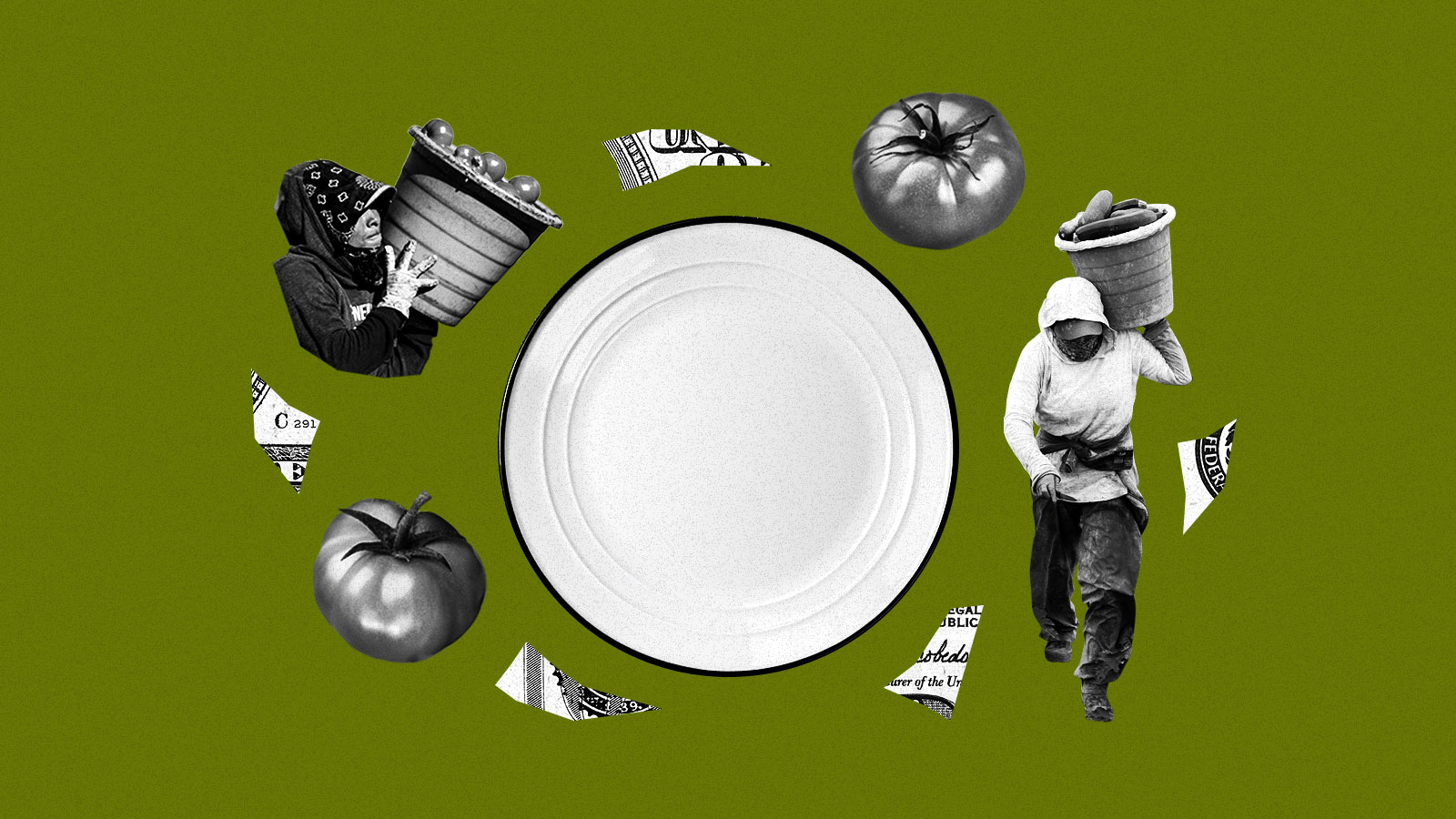
The people who feed America are going hungry
Climate change is escalating a national crisis, leaving farmworkers with empty plates and mounting costs.
Latest Articles
-
The WSJ documents GM contamination
The Wall Street Journal came out with a terrific page-one article documenting "genetic pollution" -- the damage caused when genetically modified crops cross-pollinate with conventional crops.
The article leads with an organic farmer in Spain whose sells his red field corn at a premium to nearby chicken farmers, who prize the product because it "it gives their meat and eggs a rosy color." (I'd be willing to bet that rosy color also translates to higher nutrition content.)
Now the farmer is screwed -- his seeds, carefully bred over time, have become contaminated by GM corn from nearby farms. The rich red color of his corn, like his premium, has vanished into the ether.
-
You Taint Seen Nothing Yet
Fans and foes of gene-modified crops square off over biotech pollution Folks who want their vittles straight up with no freaky-gene twist may find it increasingly tough to get the good stuff. Genetically modified (GM) crops are gaining popularity worldwide, leading to more accidental biotech pollution, wherein ordinary crops are tainted by their GM cousins. […]
-
Seedy Business
A sustainable-ag champion gets plowed under at Iowa State Composting is nothing new at Iowa State University’s Leopold Center for Sustainable Agriculture, but throwing the director out on the compost heap is. After five years as head of the center, sustainable-ag champion Fred Kirschenmann was unceremoniously replaced last week, with two days notice. That stinks […]
-
Is agribusiness behind the ouster of one of its biggest critics?
 Plunked down in the land of huge, chemical-addicted grain farms and the nation's greatest concentration of hog feedlots, Iowa State University's Leopold Center for Sustainable Agriculture has always had a tough row to hoe.
Imagine trying to operate an Anti-Cronyism League from Bush's West Wing, and you get an idea of what the Leopold Center is up against. Industrial agriculture runs the show in Iowa, sustained by regular infusions of federal cash and its government-sanctioned ability to "externalize" the messes it creates. The state grabbed $12.5 billion in federal agriculture subsidies between 1995 and 2004 -- second only to Bush's own home state. Iowa leads all states in hog production: It churned out 14.5 million pigs in 2001 alone, the vast majority from stuffed, environmentally and socially ruinous CAFOs (confined-animal feeding operations).
Yet since springing to life in 1987 by fiat of the Iowa legislature -- funded ingeniously by state taxes on nitrogen fertilizer and pesticide -- the Leopold Center has become an invaluable national resource for critics of industrial agriculture and seekers of new alternatives.
Now, however, a sudden purge at the top has called the Center's much-prized independence from industrial agriculture into question.
-
Lather, Prince, Repeat
Prince Charles frets over climate change, promotes organic foods Britain’s Prince Charles is getting dreadfully worried about climate change. In an interview with the BBC last week, he called it the “greatest challenge” to face humanity. And on CBS’s 60 Minutes last night, he said, “You know, if you look at the latest figures on […]
-
Argan Eat That?
Rare oil made from goat-pooped pits may save North African tree For centuries, since even before the Phoenicians arrived (there goes the neighborhood!), goats have climbed Morocco’s evergreen argan trees to munch their leaves and fruits. Then they poop or spit out the undigested fruit pits. Then shepherds root through the poop, pick out the […]
-
Barbarians at the Irrigate
Big Ag wins, fish and wildlife lose in California’s water wars Thanks in part to a recent public-relations blitz and some crucial assistance from the Bush administration, Big Agriculture seems to have won California’s decades-long water wars. Irrigation districts in California’s Central Valley are signing federal contracts that ensure taxpayer-funded water supply for the next […]
-
Ag giants launch new public-tv show that promises to be so bad it’s … bad
What do you get when Monsanto and the Farm Bureau (whose sorry politics are discussed here) team up with the National Corn Growers Association, the United Soybean Board, the U.S. Grains Council, and the National Cotton Council (discussed here)?
If your answer is vast-scale, heavily subsidized, environmentally ruinous agriculture, you have a point. But I was thinking of a different response: Television that promises to be so bad that it might qualify as camp.
-
You Picked a Bovine Time to Peeve Me
USDA loophole lets penned cows get certified organic The U.S. Department of Agriculture may be caving to owners of factory dairy farms by failing to revise some rules on organic milk. At issue is how the agency defines an organic bovine. One requirement is that the cows have “access to pasture,” but another provision allows […]
-
USDA inaction supports feedlot-style
Consumers looking for milk from grass-fed cows can't rely on the USDA's organic label.
As this Chicago Tribune article shows, the department has been allowing feedlot-style mega-dairies to claim organic status -- despite a recommendation from the National Organic Standards Board that it close existing loopholes.
Access to pasture lies at the heart of any meaningful definition of organic farm-animal stewardship. Grass-fed cows produce a healthier product, they're easier on the environment, and they're not forced to live miserable lives completely enslaved by the mechanized milker.
