Climate Food and Agriculture

Climate + Food and Agriculture
EDITOR’S NOTE
Grist has acquired the archive and brand assets of The Counter, a decorated nonprofit food and agriculture publication that we long admired, but that sadly ceased publishing in May of 2022.
The Counter had hit on a rich vein to report on, and we’re excited to not only ensure the work of the staffers and contractors of that publication is available for posterity, but to build on it. So we’re relaunching The Counter as a food and agriculture vertical within Grist, continuing their smart and provocative reporting on food systems, specifically where it intersects with climate and environmental issues. We’ve also hired two amazing new reporters to make our plan a reality.
Being back on the food and agriculture beat in a big way is critical to Grist’s mission to lead the conversation, highlight climate solutions, and uncover environmental injustices. What we eat and how it’s produced is one of the easiest entry points into the wider climate conversation. And from this point of view, climate change literally transforms into a kitchen table issue.
Featured
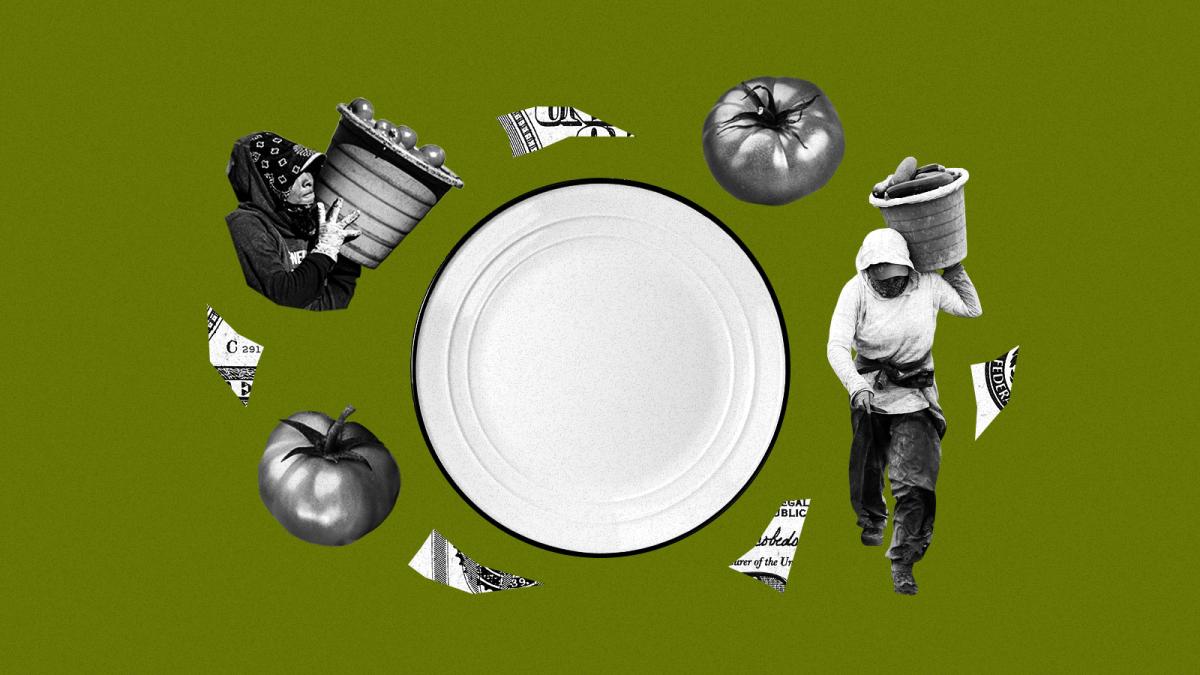

The people who feed America are going hungry
Climate change is escalating a national crisis, leaving farmworkers with empty plates and mounting costs.
Latest Articles
-
GM seed manufacturers create conditions that will force their acceptance
This post first appeared on Bitter Greens Journal.
Maverick Farms, where I work, lies on a dirt road halfway up a steep hollow in the Blue Ridge Mountains. Twenty years ago all the land around here was agricultural. Each family generally had a couple of milk cows, a pig or two, and a garden plot to feed themselves; for cash, they planted cabbage (to be sold to a nearby sauerkraut factory, long gone) and tobacco.
All of that has changed. The word "farm" has become a marketing tool to move real estate, and little else. The only other entity with "farm" attached to its name on our road is "Clark's Creek Farm" -- a suburban-style subdivision.
Our area is a magnet for SUV-driving second-home seekers and the real-estate flacks who serve them. Up the road from us, the dirt flies as machines rip into the mountainside to create new lots for fancy homes. Starting at about 7:00 a.m., the rooster's hoarse cry is drowned out by the steady roar of giant trucks careening up the mountain, carrying construction material and machinery.
Nearly everyone up there wants the road to be paved -- it would make construction so much easier, and you could comfortably drive your SUV faster than 20 mph to get up and down the mountain. We say: Hell, no. We're joined in our refusal by two neighbors, people with deep family roots in the area who don't want to see our holler turned into a suburb of Orlando or Charlotte. We refuse to sign the papers that would force the road's paving.
In the end, we will lose and the developers and second-homers will win. They will have forcibly created the logic that makes the road's paving "necessary." Carve enough mini-mansions into the mountainside, cram the road with enough construction trucks and "utility" vehicles, and of course it will have to be paved. It will become a safety issue. The road as it is will have to be condemned; a handsome strip of asphalt will rise up in its place. Progress! And goodbye to our chicken shed and springhouse.
I tell this bitter story to illustrate what's going on with genetically modified (GM) food in Europe. Bear with me.
-
Despite a recent crackdown, Washington State’s raw-milk policy might point way forward.
In a nation riddled with diet-related maladies like obesity and diabetes, the official fear that greets raw milk is impressive.
You can waltz into any convenience store and snap up foods pumped liberally with government-subsidized high-fructose corn sweetener, deep-fried in government-subsidized partially hydrogenated soybean oil. Yet in many states, teams of bureaucrats devote themselves to "protecting" us from raw milk -- and imposing onerous fines on farmers who dare sell it.
Some states ban raw milk outright; others have erected elaborate barriers between farmer and consumer. Here in North Carolina, for example, I have to pretend I'm buying animal fodder when I visit a nearby dairy farm to pick up a gallon or two of raw milk.
Even so, consumers are increasingly demanding it, banding together with farmers to form Prohibition-like cells from New York City to Portland. To me, it tastes better, more alive, than even the best pasteurized milk; and I tend to believe the health claims made for it.
According to this AP article, Washington State is stepping up enforcement of its raw-milk restrictions, which are actually relatively enlightened.
-
Three paths toward a green — and tasty — Thanksgiving
Of all the crimes against nature Thanksgiving inspires — SUVs clogging the highways, planes shuttling fliers around the country, factory farms churning out millions of frozen turkeys — the most grievous may be culinary. First, the above-mentioned turkeys typically taste like sawdust; cranberry “sauce,” a gelatinous goo that ominously retains the shape of the can […]
-
The WSJ documents GM contamination
The Wall Street Journal came out with a terrific page-one article documenting "genetic pollution" -- the damage caused when genetically modified crops cross-pollinate with conventional crops.
The article leads with an organic farmer in Spain whose sells his red field corn at a premium to nearby chicken farmers, who prize the product because it "it gives their meat and eggs a rosy color." (I'd be willing to bet that rosy color also translates to higher nutrition content.)
Now the farmer is screwed -- his seeds, carefully bred over time, have become contaminated by GM corn from nearby farms. The rich red color of his corn, like his premium, has vanished into the ether.
-
You Taint Seen Nothing Yet
Fans and foes of gene-modified crops square off over biotech pollution Folks who want their vittles straight up with no freaky-gene twist may find it increasingly tough to get the good stuff. Genetically modified (GM) crops are gaining popularity worldwide, leading to more accidental biotech pollution, wherein ordinary crops are tainted by their GM cousins. […]
-
Seedy Business
A sustainable-ag champion gets plowed under at Iowa State Composting is nothing new at Iowa State University’s Leopold Center for Sustainable Agriculture, but throwing the director out on the compost heap is. After five years as head of the center, sustainable-ag champion Fred Kirschenmann was unceremoniously replaced last week, with two days notice. That stinks […]
-
Is agribusiness behind the ouster of one of its biggest critics?
 Plunked down in the land of huge, chemical-addicted grain farms and the nation's greatest concentration of hog feedlots, Iowa State University's Leopold Center for Sustainable Agriculture has always had a tough row to hoe.
Imagine trying to operate an Anti-Cronyism League from Bush's West Wing, and you get an idea of what the Leopold Center is up against. Industrial agriculture runs the show in Iowa, sustained by regular infusions of federal cash and its government-sanctioned ability to "externalize" the messes it creates. The state grabbed $12.5 billion in federal agriculture subsidies between 1995 and 2004 -- second only to Bush's own home state. Iowa leads all states in hog production: It churned out 14.5 million pigs in 2001 alone, the vast majority from stuffed, environmentally and socially ruinous CAFOs (confined-animal feeding operations).
Yet since springing to life in 1987 by fiat of the Iowa legislature -- funded ingeniously by state taxes on nitrogen fertilizer and pesticide -- the Leopold Center has become an invaluable national resource for critics of industrial agriculture and seekers of new alternatives.
Now, however, a sudden purge at the top has called the Center's much-prized independence from industrial agriculture into question.
-
Lather, Prince, Repeat
Prince Charles frets over climate change, promotes organic foods Britain’s Prince Charles is getting dreadfully worried about climate change. In an interview with the BBC last week, he called it the “greatest challenge” to face humanity. And on CBS’s 60 Minutes last night, he said, “You know, if you look at the latest figures on […]
-
Argan Eat That?
Rare oil made from goat-pooped pits may save North African tree For centuries, since even before the Phoenicians arrived (there goes the neighborhood!), goats have climbed Morocco’s evergreen argan trees to munch their leaves and fruits. Then they poop or spit out the undigested fruit pits. Then shepherds root through the poop, pick out the […]
-
Barbarians at the Irrigate
Big Ag wins, fish and wildlife lose in California’s water wars Thanks in part to a recent public-relations blitz and some crucial assistance from the Bush administration, Big Agriculture seems to have won California’s decades-long water wars. Irrigation districts in California’s Central Valley are signing federal contracts that ensure taxpayer-funded water supply for the next […]
