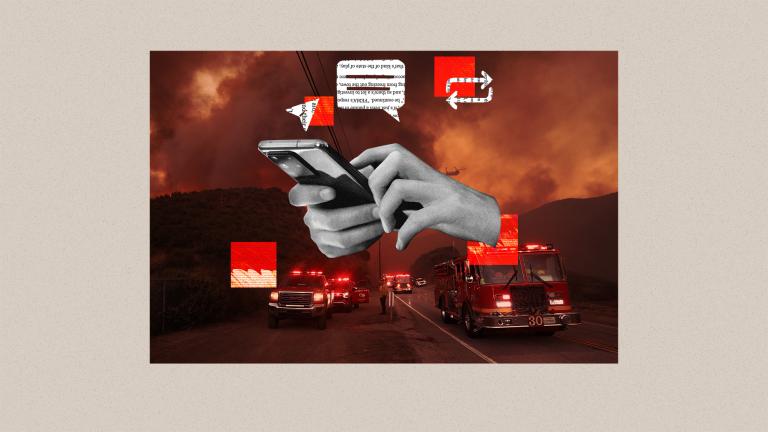
In the direct wake of an extreme weather event, information systems are scrambled and chaos reigns, providing a unique opportunity for misinformation and conspiracies to spread.
It is a phenomenon that Grist reporters have witnessed with increasing alarm in recent years: After a winter storm hit Virginia in January, rumors swirled online that the event was caused by the Leviathan waking up. NOAA scientists have long had to fact-check false claims that geoengineering or the U.S. government creates and steers hurricanes. People often refuse to evacuate a storm because they’ve heard that the FEMA will steal their property. And after Hurricane Helene in 2024, federal disaster response efforts were disrupted by rumors of a militia attack on FEMA employees. The swarm of untruths has gotten so bad that FEMA now often puts out anti-misinformation bulletins after disasters.
As climate change fuels more extreme weather events, this problem is only getting worse. Today, Grist launched a new series, “Distorted: Truth and Trust in an Age of Climate Disasters,” that aims to understand and combat this trend. The project is made possible thanks to support from the CO2 Foundation.
“Having your life upended due to extreme weather is destabilizing, confusing, and devastating,” said Grist editor-in-chief Katherine Bagley. “People in those situations need to know who and what they can trust.”
Over the next several months, the package will blend deeply reported stories with community engagement and training. It will trace the pathways through which mis- and disinformation spreads before, during, and after extreme weather — and how those falsities disrupt relief and recovery services and real people’s lives. And it will give readers the tools to navigate disrupted information systems, better identify what’s real and what’s fake when disaster strikes, and highlight successful attempts to build trust and ground truth in disaster-prone communities. All stories and resources in this series will be available to republish.
“In years of on-the-ground reporting about climate disasters, I’ve heard countless stories about disinformation and mistrust,” said Jake Bittle, a senior staff writer at Grist who is helping to lead the project. “This series will finally bring this information chaos to the forefront and give readers real tools to build trust and combat disinformation when disaster strikes.”
In addition to reported stories and resource guides, Grist will use learnings from the series to work with trusted messengers on vetting information and preventing the spread of misinformation during a disaster. This effort begins with a webinar in partnership with Climate Central, and will also include targeted workshops for meteorologists and independent creators, as well as social-first content that they create and distribute with us.
Grist is also using this project to ensure our work is more easily identified as independent, responsible journalism. This effort includes launching a new public-facing explanation of our reporting, editing, and fact-checking processes, as well as updating author biographies.
“In order to chip away at this massive problem, we know we can’t only report on it. We have to meet people where they’re at — whether that’s YouTube, TikTok, or in person at a local event,” said Lyndsey Gilpin, senior manager of community engagement at Grist. “We have to be part of trusted information ecosystems in communities.”