This story is produced by Floodlight, a nonprofit news site that investigates climate issues. Sign up for Floodlight’s newsletter here.
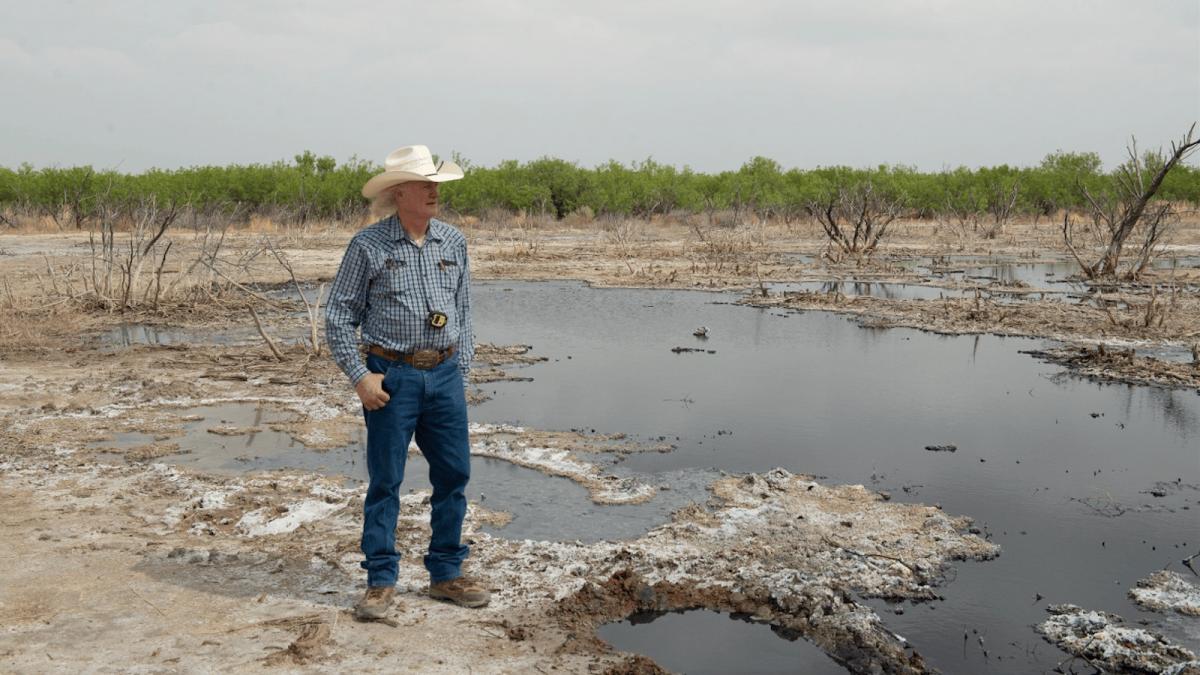
Schuyler Wight is a fourth generation rancher who has raised longhorn cattle outside Midland, Texas, for decades. Wight is no geologist, but over the years, he’s had to familiarize himself with what lies underground. Scattered across his sprawling 20,000-acre ranch are more than 100 abandoned oil and gas wells left behind by wildcatters who drilled in random locations for decades looking for oil. Many were unsuccessful, but the drilling opened up layers of porous rock, revealing water, and minerals.
Rather than cap the holes, the wildcatters and their oil companies–now long gone–transferred ownership of unproductive wells to the previous owners of Wight’s ranch to be used as water wells, known as P-13 wells.
Decades later, some of the wells on Wight’s land are leaking contaminated water, hydrogen sulfide and radioactive materials. Occasionally, Wight’s cattle drink water that has bubbled up to the surface and die, representing thousands of dollars in losses for his ranch.
Typically, the Texas Railroad Commission would take responsibility for cleaning up oil and gas wells abandoned by now–defunct drilling companies. But the commission won’t spend a dime on wells like Wight’s. That’s because the commission argues his wells aren’t oil or gas wells because they never successfully produced fossil fuel.
Without state or federal funds to clean up the mess, farmers, ranchers, and small local governments are struggling to fix the major environmental damage left from decades of drilling. Wight has spent hundreds of thousands of dollars–and counting–to clean up just a few of the wells on his property.
“That’s a lot of money when you’ve got to pay it back with cattle,” Wight said.
Across the state, according to the commission’s records, there are nearly 2,000 documented P-13 wells. Not all of them have started to leak as on Wight’s ranch, but it’s impossible to know the full scale of the problem. “The RRC does not maintain a cost estimate to plug abandoned water wells as it is the responsibility of the landowner to complete those pluggings,” the agency’s spokesperson Andrew Keese said in an email.
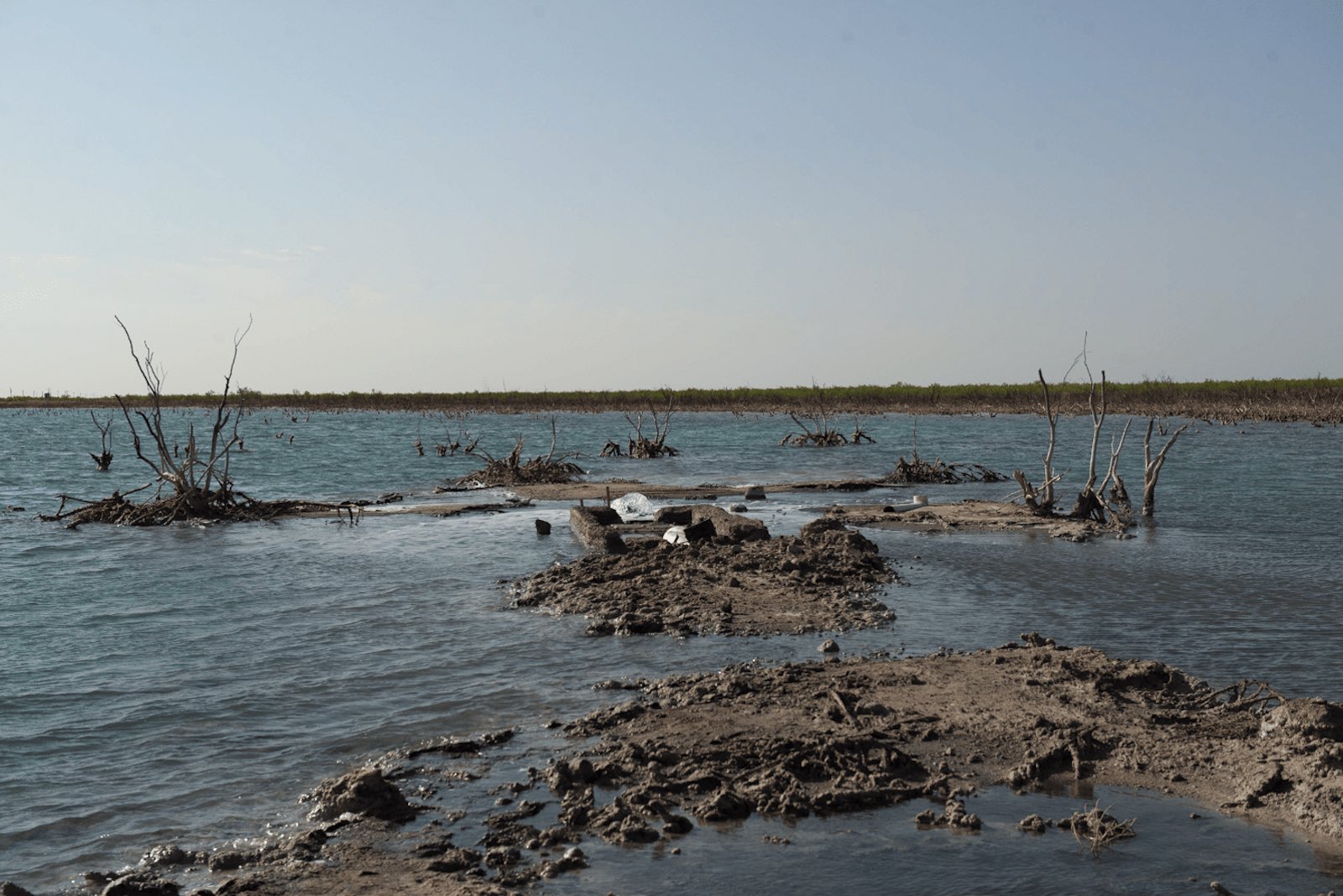
In Pecos County, the Middle Pecos Groundwater Conservation District has repeatedly asked the Railroad Commission to add 40 wells to the agency’s statewide list of 8,000 abandoned wells marked for cleanup. The small local agency doesn’t have the funds, staff or resources it needs to plug the abandoned wells that are now polluting groundwater in the region, said Ty Edwards, the district’s manager. Many of the wells are on remote properties, owned by absentee landowners, environmental advocates say. The most infamous of these wells, Sloan Blair #1, has been spewing so much briny water that it’s formed a body of water nicknamed Lake Boehmer in the middle of the West Texas desert.
The Railroad Commission contends that only two of the 40 wells that the groundwater conservation district identified were oil and gas wells under the agency’s jurisdiction, and it plugged those wells.
According to an analysis commissioned by the groundwater district, the well was originally drilled into the San Andres formation as an oil test well and then was abandoned. Now, underground pressure is causing the salty water to spew to the surface, bringing with it contaminants such as benzene and xylene, both carcinogens. The analysis found both compounds were at unsafe levels. The well is also leaking hydrogen sulfide gas at potentially lethal levels for humans, and heat-trapping gasses including methane and carbon dioxide. To survey the site, researchers have to wear hazmat suits.
“The problem is that when they drilled into this formation, there are several [layers] with no well integrity–you’re picking up different constituents that are causing the water quality to go very, very bad,” Edwards said. “The water quality in the area is drastically degrading over time,” becoming undrinkable and unusable. “It’s known that you can’t get any good water in the area–most people get on the county water line that comes from 20 or 30 miles away. It’s making some areas uninhabitable.”
The million dollar– perhaps even billion dollar– question is why the Railroad Commission has doubled down on shedding responsibility for the converted water wells, said Cole Ruiz, a lawyer for the groundwater district. “The factual circumstances around these P-13 wells is that they were originally drilled by oil and gas operators–which requires a permit granted by the Railroad Commission,” he said. “There’s nothing in the statute that allows them to shed jurisdiction once they’ve reclassified it as a water well.”
In essence, the Railroad Commission’s narrow definition of what counts as an oil and gas well allows it to choose which wells it will plug with state and federal funds. Since wells are still being converted on paper to water wells–anywhere from a handful to a few dozen in recent years–that means the problem is still growing, and operators may be escaping future liability.
Ruiz suspects if the wells were added to the state’s roster of orphan wells, they’d cost millions of more dollars than the state has already committed towards cleanup, and would slow the progress the agency has been reporting in recent years. In one particularly severe case, for example, an abandoned and improperly plugged oil and gas well on Wight’s land caused a sinkhole so deep the state transportation agency is now spending more than $25 million to reroute a road.
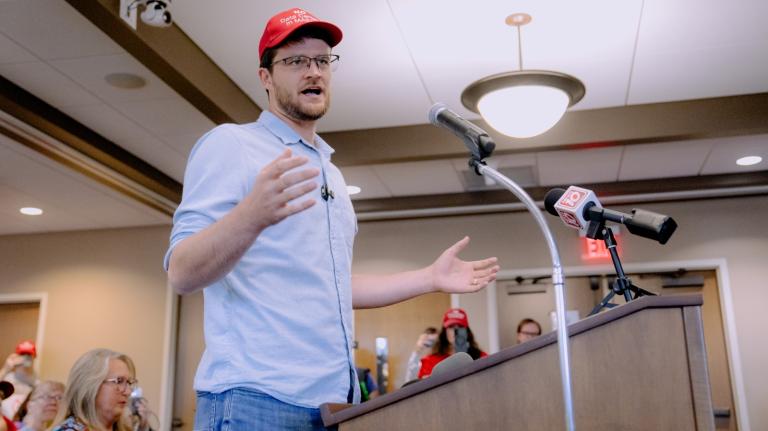
Railroad Commission staff members who testified at a recent Texas House Natural Resources Committee hearing repeated their argument that some of Pecos County’s most troublesome wells, like the one that created Lake Boehmer, simply aren’t in the agency’s jurisdiction. “It never produced any oil, or any gas. But it did produce a lot of water,” said Clay Woodul, the commission’s assistant director of field operations. “And that’s the difference. It never has been an oil or gas well. It will never be an oil or gas well.”
In the 1980s, the Texas Legislature allocated money from regulatory and permit fees toward cleaning up wells and oil fields that were abandoned by companies that went bankrupt. Each abandoned well can cost at least $20,000 to plug, according to some estimates. An influx of federal dollars through the Biden administration’s infrastructure bill has granted the state $25 million to chip away at the $480 million problem. The commission has said it won’t use federal money for the P-13 wells.
Nationwide, the Environmental Protection Agency estimates there are more than 2 million abandoned oil and gas wells that need to be plugged in order to reduce methane emissions still leaking from the wells, in addition to other pollutants.
When Wight first noticed the leaking wells on his property in 2015, he couldn’t find records for them in the Railroad Commission’s databases. Wight hired a surveyor from Dallas, Jackie Portsmouth, who searched through the basement of the Midland Energy Library to find a paper trail for the problem wells. “Part of the problem is that the Railroad Commission’s older well data from 1964 hasn’t been put in their system properly,” Portsmouth said.
Portsmouth used GIS tools to determine the geolocation of the wells. Eventually, he found the permits, the mineral rights leases, and other documentation for the wells. The company that drilled one of the problem wells in 1969, Union Texas Petroleum, doesn’t exist on paper anymore–it was acquired by ARCO, another oil and gas company, for $2.5 billion in the 1990s.
“One of the arguments the [Railroad Commission] is making now is, ‘We never got any oil out of this,’” Wight said. “But sometimes you drill dry holes, that’s the way that thing goes. You have to get a permit to drill it. I’m not very smart, but it sure looks like it’s their baby.”
Advocates and experts say the Railroad Commission’s distinction between water wells and oil and gas wells is arbitrary. The decision seems to be based solely on current commissioners’ and staffers’ interpretations of the state’s natural resource code; there are no strings attached to federal orphan well funds that would make some wells ineligible.
“The definition of orphan wells is broad enough that it could encompass P-13 wells,” said Tannya Benavides, the advocacy director for the nonprofit watchdog group Commission Shift. “The Railroad Commission is passing the buck–these wells weren’t originally drilled as water wells.”
Commission Shift has advocated for the state legislature to amend the Natural Resources Code to specifically include the converted wells in its definition of orphan wells. That would force the commission to include the wells in its cleanup and could also provide additional funding, studies and resources to address the problem of converted wells on private property.
“I’m not trying to put words in their mouth, but it seems like this is a problem the Railroad Commission wants to go away,” Ruiz, Middle Pecos’ lawyer, said. “But I can tell you, it’s not going to go away.”
This story has been updated to include additional comment from The Railroad Commission.