Odds are you’re probably on Facebook. And if you’re anything like me, you’ve probably also squashed requests to play FarmVille like they were aphids under your thumb. If you’re not like me, you may be one of the 80 million people playing this popular Facebook farming game every month.
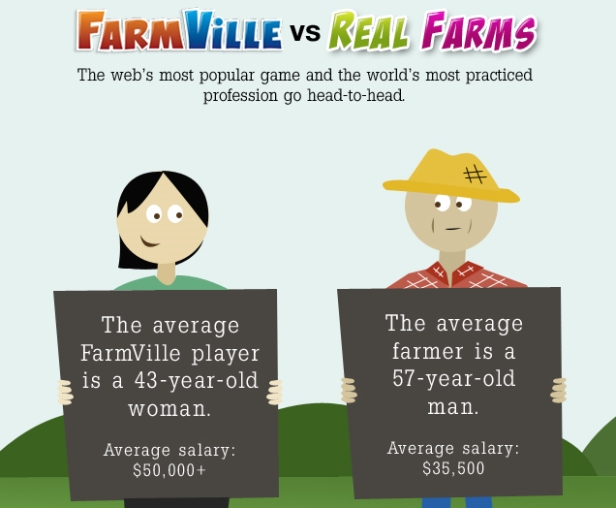
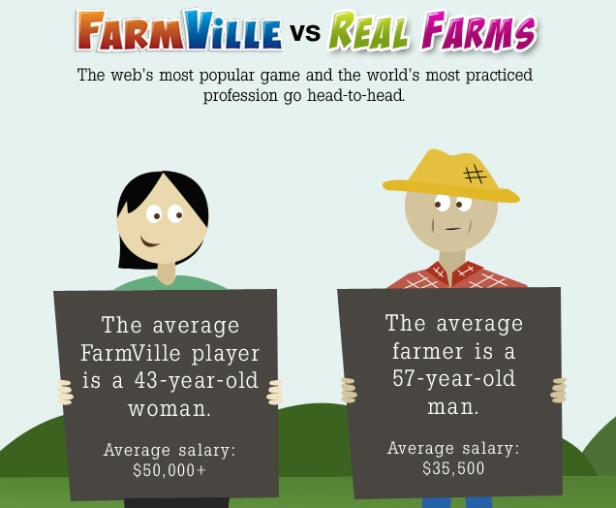
Why are people flocking to tend virtual sheep when so many real farmers are virtually barely scraping by? Social media blog Mashable sees how the two measure up when planted side-by-side:
 Graphic: Shane Snow
See the rest of the graphic here at Mashable.
The differences are stark. Few of the top crops grown on FarmVille (such as strawberries and peas) overlap with what’s actually most planted the world over (maize, oil palm fruit, etc.).
I think the most interesting discrepancy, however, is the gender difference: 60 percent of FarmVille tenders are female vs. 13 percent of real farmers. Does this portend some repressed desire of middle-aged females to participate in the food system? Or are they just really bored?
[Full disclosure: While in high school, I hoed more than a few virtual rows myself in the very similar Nintendo game, Harvest Moon. But hey! I now have my own large edible container garden, and at least one dedicated FarmVille player has been inspired to start his own tomato garden planted firmly in reality.]
A message from
Your support keeps our climate news free.
Grist is the only award-winning newsroom focused on exploring equitable solutions to climate change. It’s vital reporting made entirely possible by loyal readers like you.
At Grist, we don’t believe in paywalls. Instead, we rely on our readers to pitch in what they can so that we can continue bringing you our solution-based climate news. Donate today to keep our site free.