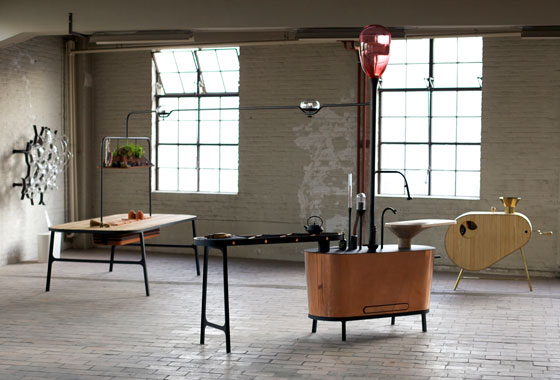

The kitchen of Philips Design's "Microbial Home" turns food waste into compost and cooking gas. Organic waste gets thrown in a "bio-digester," where specialized bacteria processes it into methane gas to fuel the range. Then the remaining solid matter is turned into compost. So the peelings from a potato might provide the heat to cook the potato and the fertilizer to grow more potatoes.
Philips calls it "an integrated cyclical ecosystem where each function’s output is another’s input." You could also call it cradle-to-grave-to-cradle food production. And it's an elegant, nature-inspired way of making home appliances sustainable.
The Microbial Home has other reasons you never need to leave your kitchen:
The connected “larder” includes a suspended vegetable garden and a terra cotta evaporative cooling unit built into the table, providing an alternative to energy-intensive refrigeration. Other elements of the Microbial Home include a beehive, a light powered by bioluminescent bacteria, and yes, a squatting toilet that captures “excreta” for the methane digester. There’s even a hand-cranked contraption for recycling plastic.
Too bad this is all theoretical, and likely to remain that way for the foreseeable future, because it's a really neat idea. It's not just that it would save energy and monetary spending on home utilities — Americans also waste a TON of food, though granted mostly not in the form of potato peelings. It'd be nice to have a way to harness that and turn it into a benefit.
A message from
Your support keeps our climate news free.
Grist is the only award-winning newsroom focused on exploring equitable solutions to climate change. It’s vital reporting made entirely possible by loyal readers like you.
At Grist, we don’t believe in paywalls. Instead, we rely on our readers to pitch in what they can so that we can continue bringing you our solution-based climate news. Donate today to keep our site free.