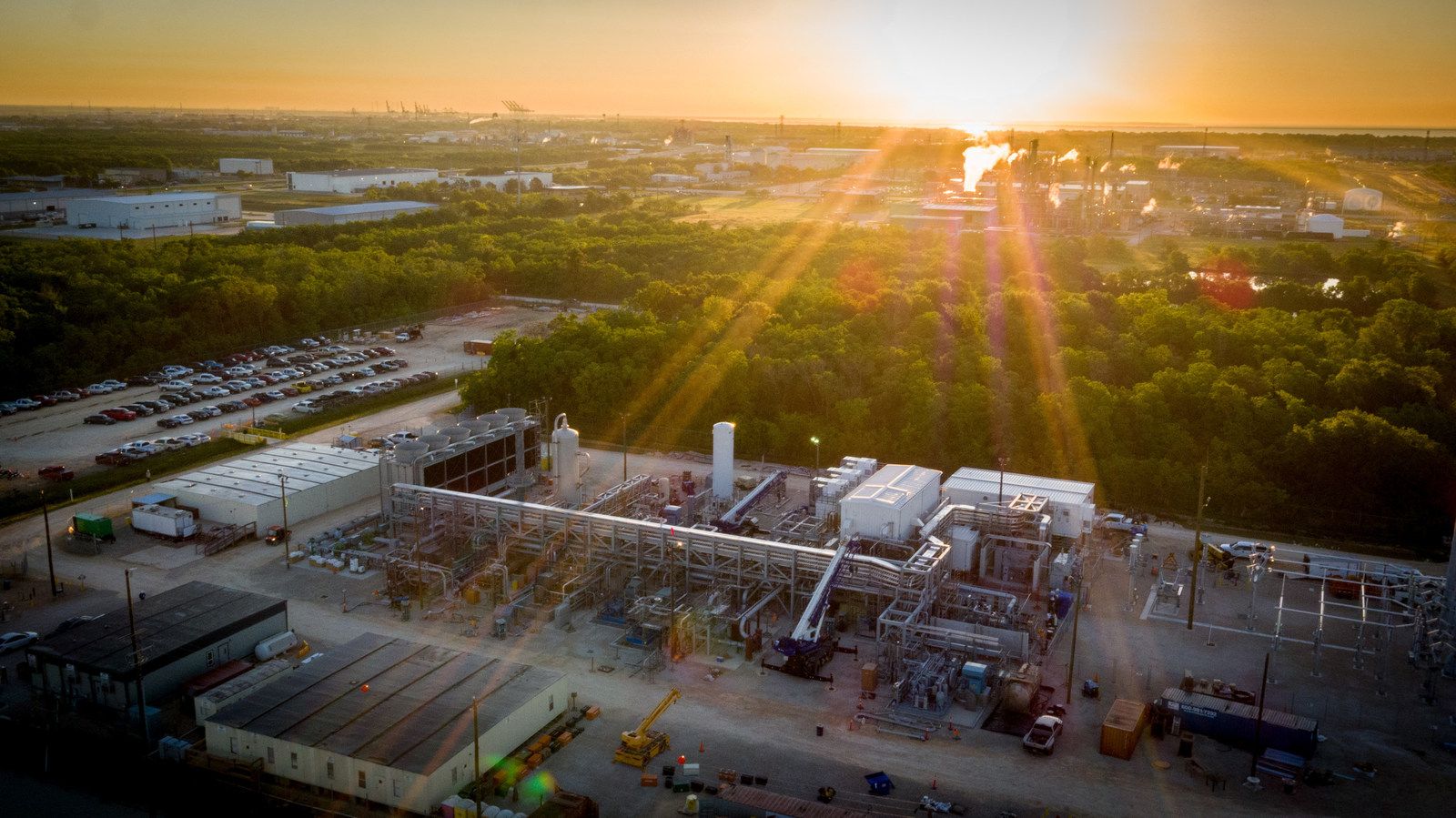
Yesterday, the startup Net Power switched on its 50-megawatt power plant, proving it could burn natural gas without releasing greenhouse gases. If this technology works at scale, it could be the flexible, emissions-free lynchpin the world needs to reverse climate change.
That’s a big “if” of course. After the engineering challenge comes the market challenge: We could make a laundry list of promising energy sources that launch to great excitement, then struggle for years to compete against the incumbent technologies (see cellulosic ethanol).
Net Power captures the carbon dioxide given off as gas burns. That’s the same thing done by carbon capture and sequestration plants already in existence. But the crucial difference here is that carbon capture and sequestration usually uses a lot of energy (and money) to separate the carbon molecules out of all the other gases and particles in a plant’s exhaust.
Net Power uses an elegant trick to simplify the process (David Roberts explains the basics here) so that its exhaust is nearly pure carbon dioxide, which it can capture in its entirety. And the company says it can do all that while operating more cheaply than the best existing gas plants.
The next step? The company is in the process of developing a 300-megawatt plant, which would start providing electricity by 2021 at the earliest.
As the United States has built solar panels and wind turbines, natural gas has expanded even more. The fuel’s ability to cheaply ramp up and down with fluctuations in electric supply and demand have made it an apt partner for renewable energy. If it could do that without adding insulation to the Earth’s heat-trapping jacket, it would provide us a much-needed reprieve.
A message from
Your support keeps our climate news free.
Grist is the only award-winning newsroom focused on exploring equitable solutions to climate change. It’s vital reporting made entirely possible by loyal readers like you.
At Grist, we don’t believe in paywalls. Instead, we rely on our readers to pitch in what they can so that we can continue bringing you our solution-based climate news. Donate today to keep our site free.