Latest Articles
-
![]()
![]()
Does the World Cup hold the key to climate policy?
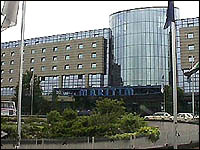
The Maritim Hotel. Photo: IISD. The Maritim Hotel in Bonn, Germany is the regular site of the bureaucrat-level United Nations climate change meetings that take place between the ministerial sessions known as Conferences of the Parties. The building has the air of the showpiece hotel in an impoverished third-world capital: a chandelier and mirror quotient […]
-
Wrecklamation
One hundred years ago, President Theodore Roosevelt signed the Reclamation Act, creating a new government agency charged with making the desert bloom. The goal of the act, which gave birth to the Bureau of Reclamation, was to bring water to family farms in the West and lift the region out of the depression of the […]
-
Mayor May Not
Weighing in on the debate over storing nuclear waste at Nevada’s Yucca Mountain, mayors from across the country stated over the weekend that they do not want high-level radioactive waste shipped through cities until the safety of communities along the transport routes can be assured. The resolution was drafted by the energy committee of the […]
-
Mush, Mush
In Alaska, some 4,000 miles from Capitol Hill, global warming is neither an abstraction nor up for debate. It’s simply a reality — and not, generally speaking, a pleasant one. High water is eating away houses and buildings, mosquitoes are invading where once they were unheard of, hunters are getting trapped on breakaway ice, permafrost […]
-
![]()
![]()
Citizens battle to keep Delta County from becoming the coal bed methane capital of Colorado
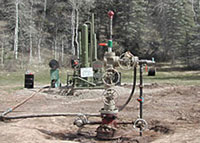
It started out as a simple item on a regional planning commission agenda in remote Delta County, Colo. A recently reworked natural gas well in Delta County. Photo: Jeremy Puckett, WSERC. But since that meeting on April 9, the possibility that up to 600 coal bed methane wells could be drilled here has whipped up […]
-
High-tailing it out of there
The Colorado River — the water source for 25 million Americans — is almost certainly on a collision course with a massive pile of uranium slag, according to a report released yesterday by the Department of Energy’s National Research Council. The 12 million tons of tailings, located near Moab, Utah, are left over from a […]
-
Hodging His Bets
The U.S. government could begin moving radioactive plutonium from Colorado into South Carolina’s Savannah River nuclear complex as soon as this weekend, following a federal judge’s refusal yesterday afternoon to block the shipments. Gov. Jim Hodges (D) has vowed to appeal the ruling, and maintains that he won’t allow the plutonium into South Carolina until […]
-
Old Suburbanism
Otay Ranch is the largest single subdivision in California — no small claim to fame, since California is the land of subdivisions. By virtue of its size, Otay has taken center stage in a debate about community planning. Its developers point to its multiple parks and shared community center to bolster their claim that Otay […]
-
![]()
![]()
An excerpt from Eco-Economy by Lester R. Brown
In 1543, Polish astronomer Nicolaus Copernicus published "On the Revolutions of the Celestial Spheres," in which he challenged the view that the sun revolved around the Earth, arguing instead that the Earth revolved around the sun. With his new model of the solar system, he began a wide-ranging debate among scientists, theologians, and others. His alternative to the earlier Ptolemaic model, which placed the Earth at the center of the universe, led to a revolution in thinking, and ultimately to a new worldview.