If you’ve ever been to a hot spring or geyser or volcano, you’ve seen the future of energy. Earth’s innards are hot — really hot — and that heat sometimes bubbles to the surface. If engineers dig holes in these geologically active places, then pipe water through rock, they can tap into this geothermal energy. Whereas solar and wind require sunlight and gusts to produce electricity, the Earth itself provides this constant source of fuel, which provides a powerful technique for bolstering the grid.
A new report from the energy think tank Ember underscores geothermal’s potential, finding that it could theoretically replace 42 percent of the European Union’s electricity generation from coal and natural gas — and at the same cost. New technologies could help Europe keep pace with the United States and Canada by opening new regions and exploiting this abundant, clean energy supply, the report adds. “We can’t really say that all of it will be utilized, but there is enough of it to get policymakers and investors more interested, even in Europe and even outside of traditional hot spots,” said Tatiana Mindeková, a policy advisor at Ember and lead author of the report.
About those hot spots. Historically, geothermal has been limited to geologically active places. That is, if the Earth isn’t hot near the surface, you’d have to dig farther to get at the energy. And the deeper you dig, the higher the costs and the harder it is to recoup that investment. In addition, the rock at these sites must be permeable: A facility pumps down liquid, which flows through the gaps and heats up, then returns to the surface to power a turbine.
But next-generation techniques are opening swaths of new territories to exploit. Engineers are drilling deeper, allowing them to tap into the constant heat emanating from the planet’s molten core. And they’re creating their own permeability by fracturing rock at depth, so the water has space to heat up. “With these new technologies, we actually can extend the scope of where geothermal makes sense economically,” Mindeková said.
This is not to say that these techniques, known as enhanced or advanced geothermal, are cheap or easy. As crews drill deeper, the equipment on the surface must scale up to handle the load. We’re talking depths of several miles. “Anytime you get deeper, it gets more difficult,” said Wayne Bezner Kerr, who manages the Earth Source Heat program at Cornell University but wasn’t involved in the report. “It gets more expensive, it gets more challenging.”
Oddly enough, tools and techniques developed by the oil and gas industry have helped massively here, opening pathways in a geothermal system. That creates more surface area for the water to move across and heat up. “It is a bit ironic,” Mindeková said, “and I feel like it’s also maybe one of the reasons why we don’t talk about [geothermal] in Europe as much.”
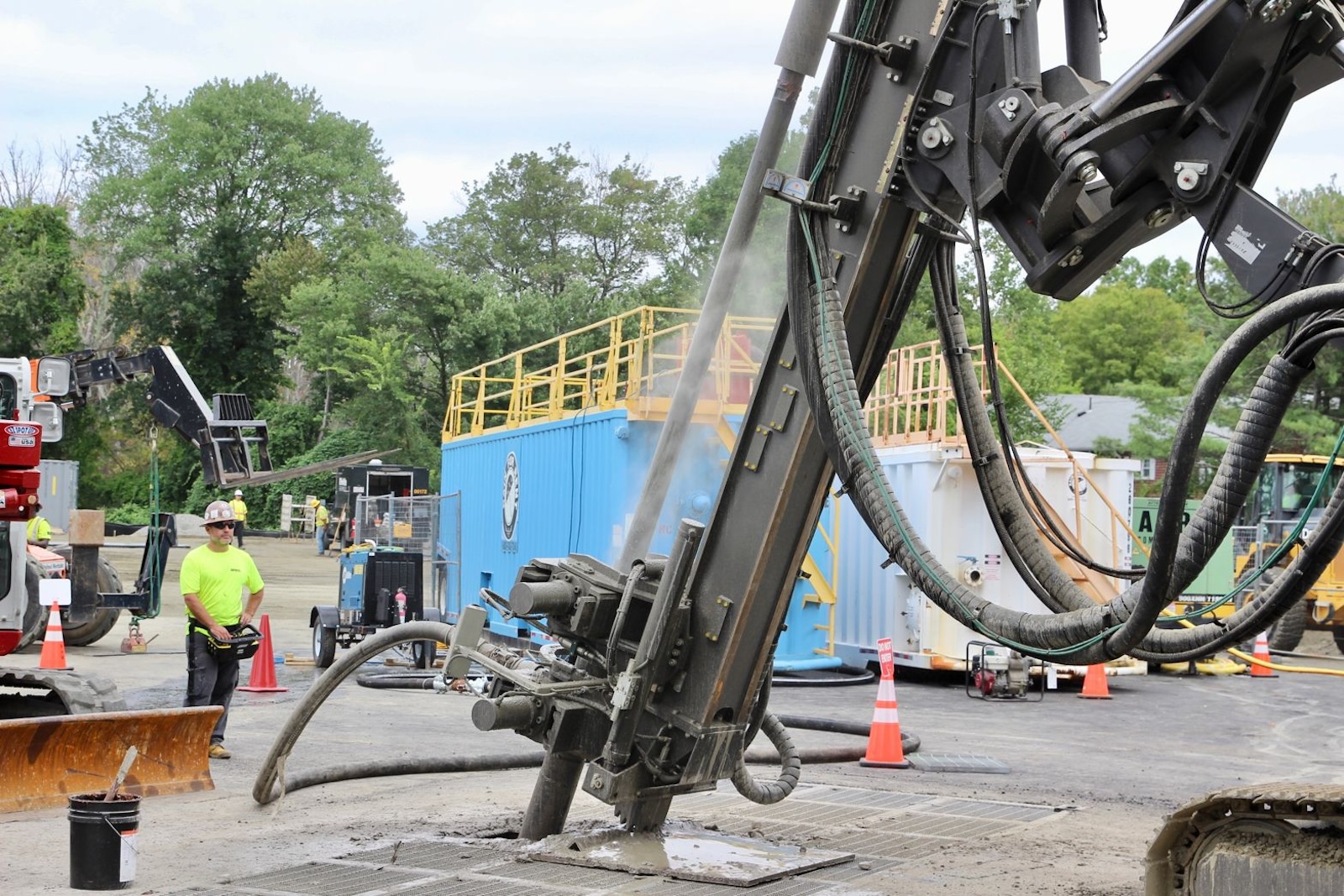
Which is not to say that geothermal can now be done economically everywhere. One major consideration is the geothermal gradient — how quickly temperature rises the deeper you go: Rock may be the desired temperature two miles below the surface in one place, but just one mile deep in another place. The cost and complexity of drilling fall if things are hotter near the surface. Geology also matters: Water can be lost as it’s pumped underground — which becomes a problem if you’re drilling in an area without access to a lot of surface water to replace. Certain types of rock also infuse that water with more minerals, which can interfere with the equipment aboveground.
Still, like any technology, efficiency will increase and expense will decrease as more geothermal comes online. “To the extent that we see more deployment of advanced geothermal in Europe, we’re going to see that bring down the cost of applying the innovation in lots of other places in the world,” said David Victor, co-director of the Deep Decarbonization Initiative at the University of California, San Diego, who wasn’t involved in the report.
Really, though, we don’t need to drill deep to get major energetic gains from the Earth. In the EU, the average household uses more than three quarters of its energy on home and water heating. A new geothermal project could generate electricity to meet that demand or, alternatively, a shallower project could heat and cool those homes more directly.
This is known as networked geothermal: A utility drills maybe 600 or 700 feet deep and pipes water through the ground, which maintains a fairly constant temperature at that depth throughout the year. That heated H2O flows to individual homes, where ultra-efficient heat pumps extract warmth from the liquid in the winter and inject the cooled water back underground to heat again. Then in the summer, the heat pumps pull warmth from indoor air and add it to the water, which is pumped underground once more. This heats up the subterranean rock, so it’s ready to provide warmth once winter rolls back around.
Similarly, geothermal can complement wind and solar by turning the ground into a giant battery. When the wind is blowing and the sun is shining, a facility uses that energy to heat water and pump it underground. Then when those renewables aren’t available, the hot water is pumped back up, discharging the subterranean battery.
The future for geothermal, then, is looking hot. And ironically enough, it’ll be advances from the oil and gas industry that will help the technology grow — in the EU and beyond. “We are trying to highlight,” Mindeková said, “that it’s also an opportunity for people working in these sectors to just transfer the knowledge, the skills, and find future employment in this new sector.”
A message from
Your support keeps our climate news free.
Grist is the only award-winning newsroom focused on exploring equitable solutions to climate change. It’s vital reporting made entirely possible by loyal readers like you.
At Grist, we don’t believe in paywalls. Instead, we rely on our readers to pitch in what they can so that we can continue bringing you our solution-based climate news. Donate today to keep our site free.