As the fast-moving blaze rolled toward Fire Chief Jason Schneider’s district in Cozad, Nebraska, he and his crew faced a literal uphill battle.
The Cottonwood Fire was tearing through the Loess Canyons, an area defined by steep slopes, narrow valleys, few roads, and pockets of invasive eastern red cedar trees, which can throw embers and ash and even explode when they burn.
“You think you would have it put out, and you keep on moving north, and you’d look back south and it’s just going again behind you,” Schneider said of the March blaze.
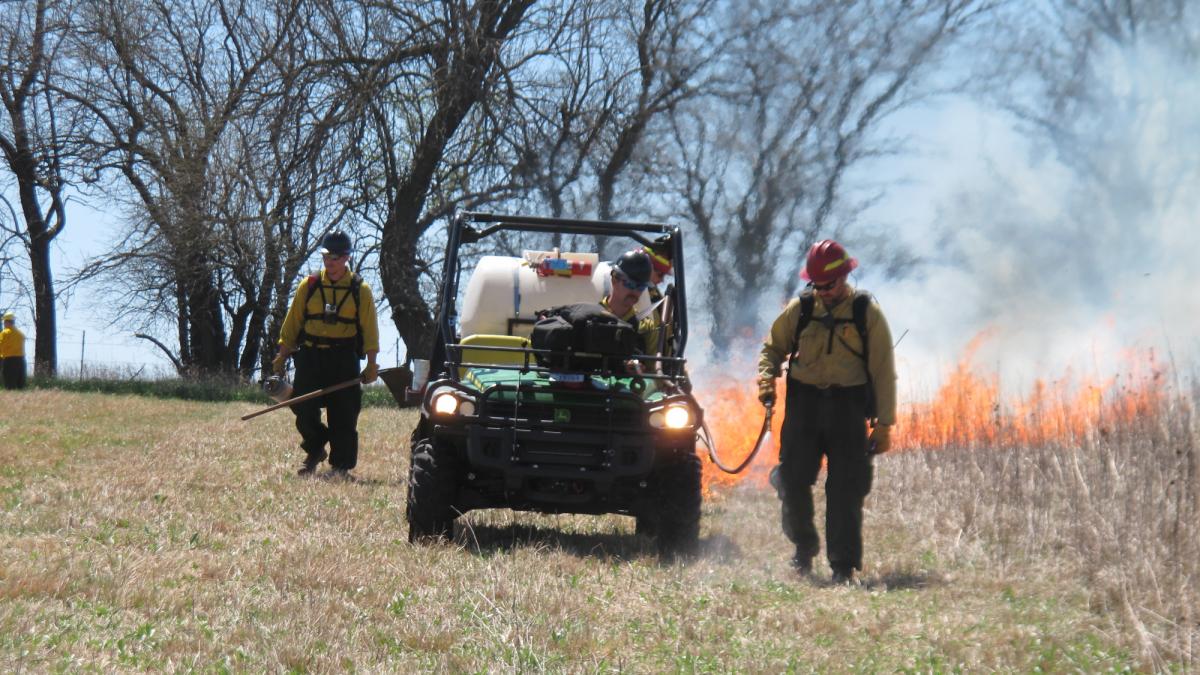
But the situation started to improve when Schneider’s crew connected with the South Loup Burn Association, a group of landowners and ranchers who were also fighting the fire. They showed Schneider and his volunteer crew how to do back burns — setting controlled, low blazes in the path ahead of the Cottonwood Fire to consume any flammable material — to contain the wildfire. About 92 percent of Nebraska’s fire departments listed with the National Fire Department Registry are volunteer-based.
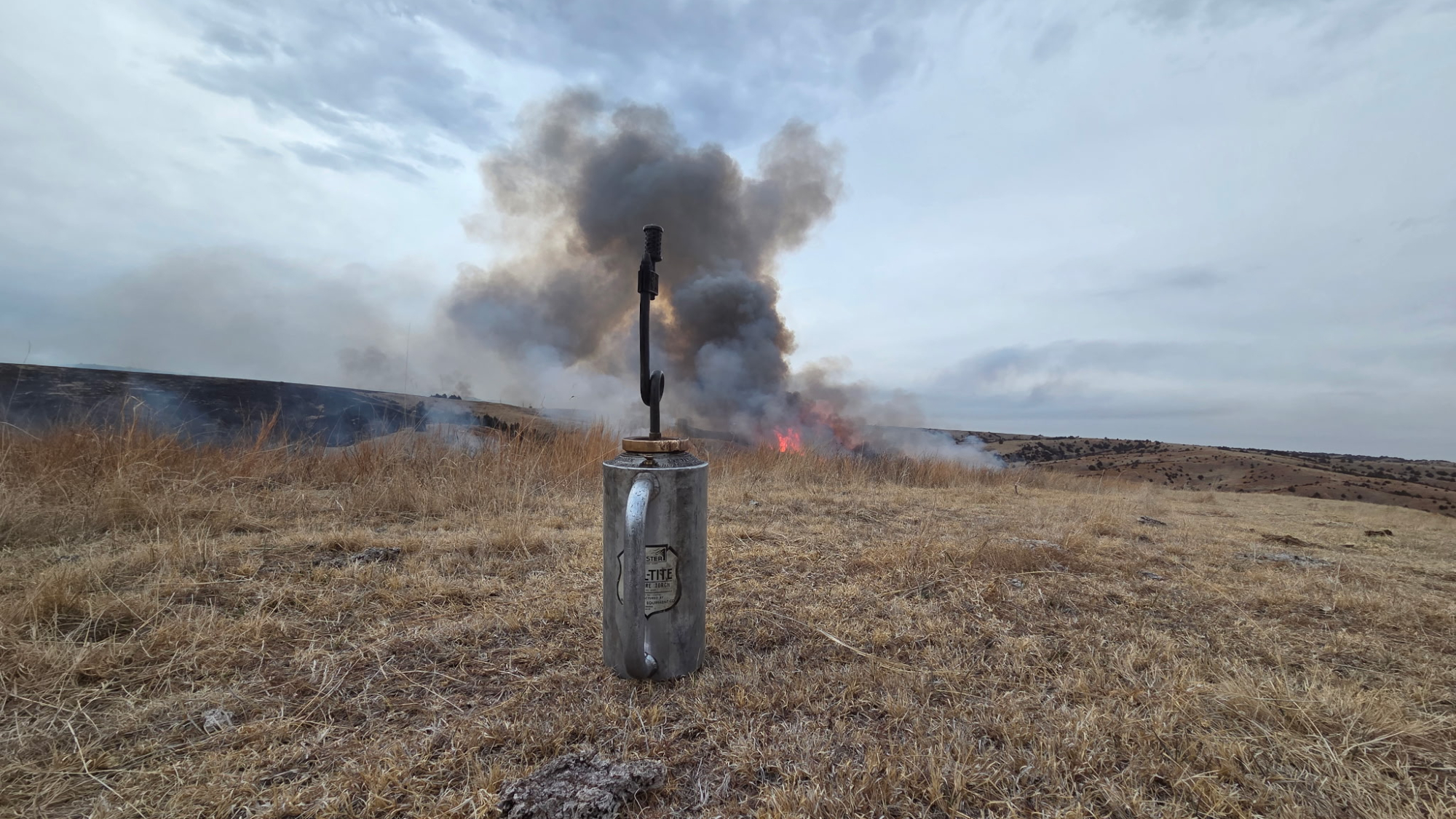
“It would have burned a lot more if they hadn’t showed up and helped us get it stopped where we did,” Schneider said.
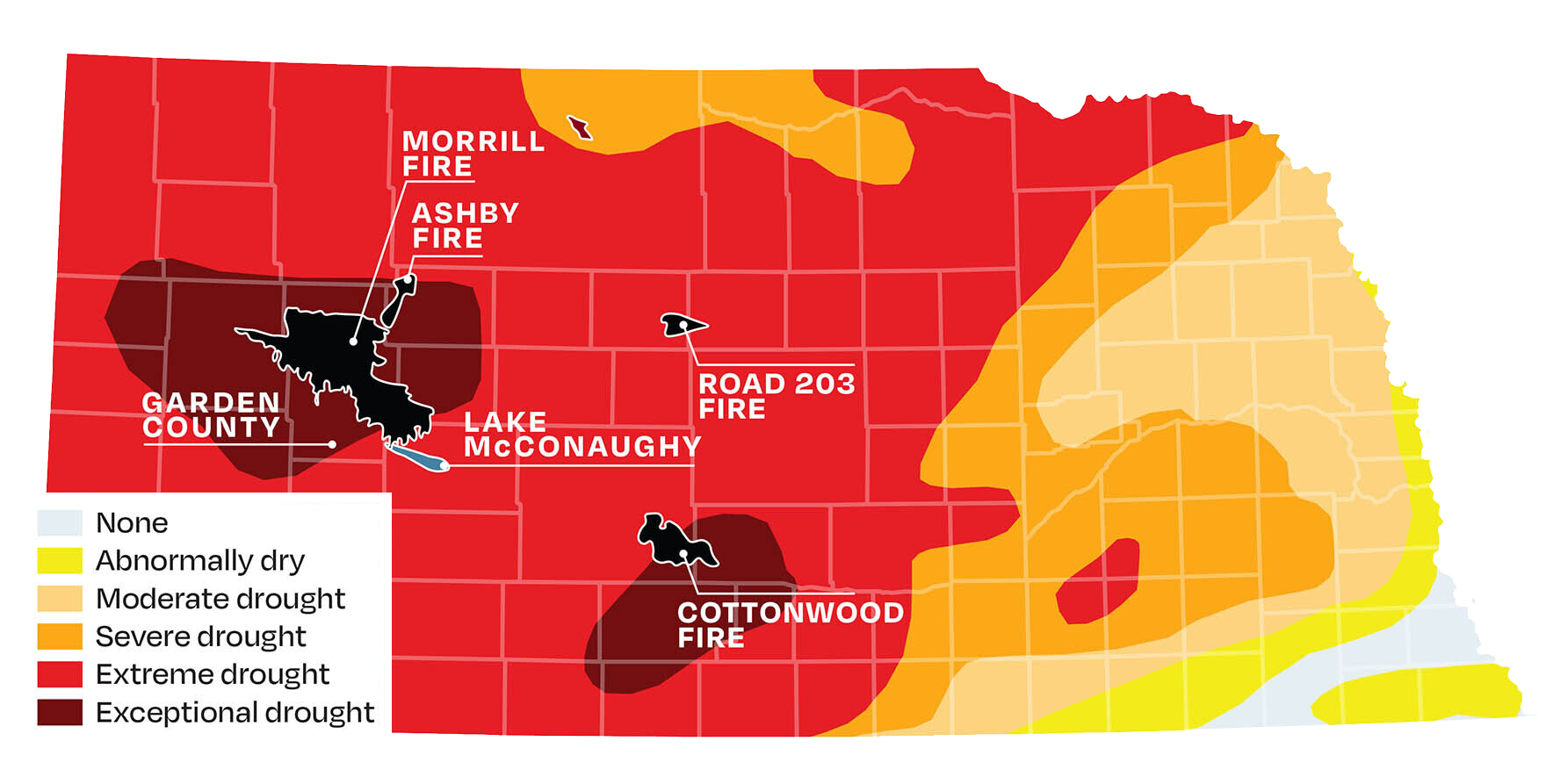
Unlike other parts of the country where wildfire season peaks in summer and late fall, Nebraska is set ablaze in the spring. This year has marked the state’s worst on record. As of May 6, conflagrations burned about 981,502 acres and dealt a blow to ranchers. They also brought to the forefront the growing debate over a controversial and centuries-old land management practice: using fire to fight fire.
The Cottonwood Fire, contained by prescribed burn techniques and past prescribed fires, made the case for the practice. But during the same month, separated by just a county, heavy winds turned the smoldering remnants of a prescribed burn in the Nebraska National Forest into the Road 203 wildfire, which devoured nearly 36,000 acres.
Decades of fire mismanagement and climate change have primed America’s landscapes to burn. Today, fire districts, land managers, and local authorities from California to Florida to New Jersey are increasingly embracing the use of prescribed burns to prevent the most severe blazes. According to the National Association of State Foresters and the Coalition of Prescribed Fire Councils, Mississippi, Alabama, Georgia, and South Carolina burned between 250,001 and 1 million acres, while California, Washington, Oregon, and Arizona burned between 50,001 and 250,000 acres, in 2020 alone. In the Great Plains, these burns are now common practice in states like Oklahoma, Kansas, and Texas, said Dirac Twidwell, a rangeland and fire ecologist at the University of Nebraska-Lincoln.
In Nebraska, too, particularly in east and central parts of the state. The Nebraska Prescribed Fire Council estimates that 2025 saw the most acres burned by prescribed fire in one year during recent times.
But in areas of the state like the western Sandhills, the practice has sparked backlash.
“There was a [prescribed burn] group that tried to establish a couple of years ago up around the Tryon, Mullen area up in there. And they almost lynched that group,” Keystone-Lemoyne Fire and Rescue Chief Ralph Moul said. “They said ‘No, we do not want fire in the Sandhills,’ because there’s nothing to stop it up here.”
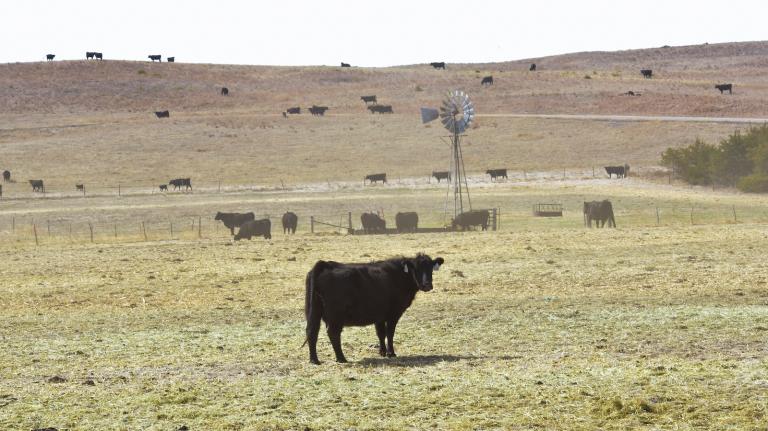
Despite the fear, there is overwhelming evidence that prescribed burns, when done correctly, can help prevent massive wildfires by burning up volatile fuels like cedar trees. They can also replenish nutrients in soils, making the land ecologically healthier, boosting plant and wildlife diversity and saving ranchers money. The grass that comes back after a burn is often preferred by cattle.
“The wildfires you’ve seen here in Nebraska the last few years are also a consequence of removing fire from the landscape,” said Kent Pfeiffer, program manager for the Northern Prairies Land Trust. “You don’t get rid of fire, you just change the nature of it … instead of having frequent low-intensity fires, you end up with infrequent, high-intensity fires.”
The issue is growing more urgent as the state faces dual threats. Suppression of natural fires has allowed cedar woodlands to creep into Nebraska’s native grasslands, with more large swaths at risk and an already costly headache for ranchers. Meanwhile, climate change is bringing more extreme conditions, including intense stretches of drier and hotter weather that can fuel more destructive, less controllable blazes.
“What we know is that overall, our fire management is not working,” Twidwell said.
Tucker Thompson was in his 30s back in the early 2000s when he first helped out on a prescribed burn on another person’s property near Gothenburg. The rancher, who summers cattle in the Loess Canyons, knew some neighbors would be upset, but cedar trees were starting to sprout across his land. He wanted to get ahead of the problem, and he was curious.
By today’s standards, the group’s equipment was basic and their knowledge limited. Even though everything went fine, Thompson left thinking the entire practice was insane. He went home and took a chainsaw to the cedar trees across about 400 acres of his property.
“I’m like, ‘I am never going to be responsible for another fire,’” Thompson said. “And then five years later, they all start coming back. Ten years later, it’s like, I have no choice. There’s no way of killing these dang things, so I burned them.”
Now, Thompson continues the practice and is a member of two burn groups. He helped firefighters contain the Cottonwood Fire, even as it ravaged his grazing lands.
Prescribed burns “decrease the fuel load in these canyons, so we can control these fires to some degree,” Thompson said.
The Loess Canyons area has one of the most advanced prescribed fire cultures in the entire country, Twidwell said. It has reduced the risk of catastrophic fire and made the land more suitable for grazing, which has boosted landowners’ profits.
Up until the last 150 years, fire was common in Nebraska. Wildfires would naturally control species like eastern red cedar, and Indigenous peoples would run prescribed burns to clear underbrush, remove dead biomass, replenish soil nutrients, and encourage new plant growth.
Prescribed burn associations, nonprofits, and state, federal, and municipal agencies burned more than 92,700 acres in prescribed fires in the first six months of 2025 alone, according to a survey by the Nebraska Prescribed Fire Council. It’s likely the most acres burned through prescribed fire in the state in one year during recent times, the council said.
But conducting these burns requires a lot of planning, monitoring, money, machinery, and manpower. And even when it comes together, a change in weather can cancel the whole operation on a moment’s notice.
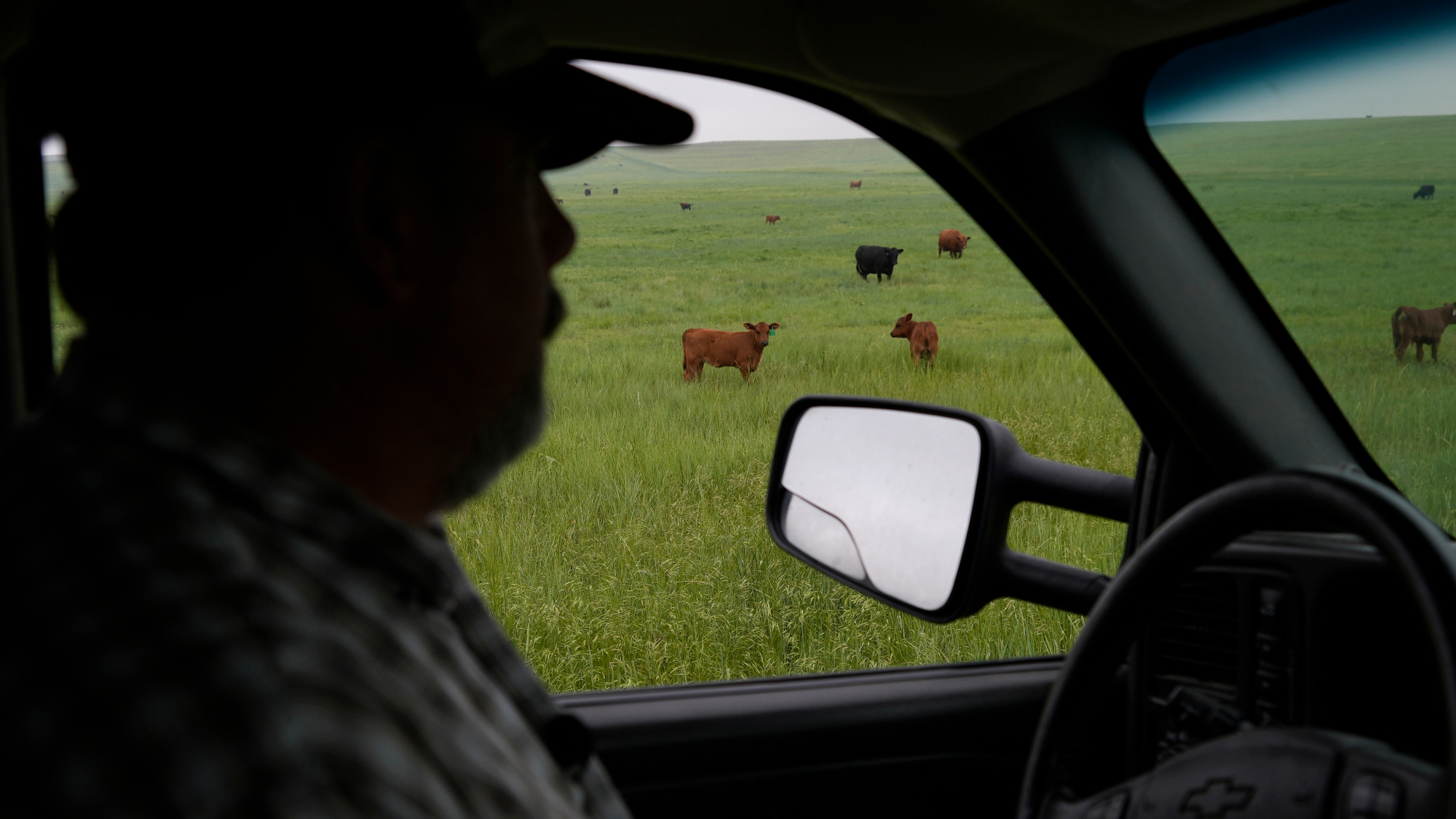
Semi-retired rancher Jon Immink coordinates burns across multiple landowners’ properties near the Nebraska-Kansas border to help manage cedar trees. He plans years ahead as he maps out which plots of land need to burn when, typically in the stretch from January to March.
“I do not sleep well in burn season. You wake up 4 o’clock in the morning and all you can think of is … you prepare for what could go wrong,” Immink said.
In order to conduct a land management burn, a landowner or tenant has to apply for a permit and submit a burn plan to their local fire chief, who decides whether to waive Nebraska’s standing open burn ban. By law, the plan requires a lot of documentation and forethought, including a list of on-hand equipment and a description of the weather conditions needed to burn safely.
Fairbury Fire Chief Judd Stewart’s jurisdiction is filled with landowners and managers who use prescribed burns. Stewart had to cancel 40 to 50 burn permits in March when Governor Jim Pillen ordered a temporary statewide halt in issuing due to the devastating wildfires. Stewart wishes the governor would have given more consideration to areas like southeast Nebraska, where fire danger was lower.
“These areas that people had this heavy vegetation, and now they still have that heavy vegetation, but they’ve got new grasses growing in it, and it makes it very difficult to burn,” Stewart said. “As we approach mid- to late summer, when we start getting high temperatures … that vegetation will carry fire again, and now we’ve got those heavy fuel loads that are going to be hard to contain.”
The governor’s order has impacted landowners and managers who have invested thousands of dollars, conducted years of planning, and deferred grazing for prescribed burns that might now have to wait another year, said Austin Klemm, board member of the South Loup Burn Association, the group that helped Schneider and others contain the Cottonwood Fire.
Right now, he is working with about six landowners who have invested roughly $250,000 to $275,000 to plan a burn that might not happen this year.
“Some of these guys have invested tens of thousands of dollars in prep work to be able to burn,” Klemm said. “These guys have deferred grazing, did not graze at all last year, had to go find a place to stick cows or feed cows all last year.”
Becky Potmesil doesn’t have to look far to see the devastation wildfire can cause. Potmesil raises cattle in the Alliance area of the Panhandle, on the western edge of the Sandhills. To the south, the Morrill Fire burned an estimated 642,000 acres, making it the largest on record in the state’s history. To the southeast, the Ashby Fire burned another 36,000 acres.
The winds have blown away the black, burnt grass, leaving behind only sand dunes. It looks like a moonscape, she said.
“Anybody who’d do a prescribed burn out here in the [western] Sandhills in western Nebraska is crazy, and it’s dangerous,” she said. While she sees how there could be benefits in some parts, like the meadows, she doesn’t think it would be worth the risk in her area.
Moul, the Keystone-Lemoyne Fire Chief, is cautious about issuing burn permits in his district, especially in the Sandhills. He likes for there to either be snow or green grass on the ground. Unlike in other parts of the state, the Sandhills have fewer fire breaks, less infrastructure, and more extreme weather conditions like high-speed winds and very little humidity, Moul and Potmesil noted.
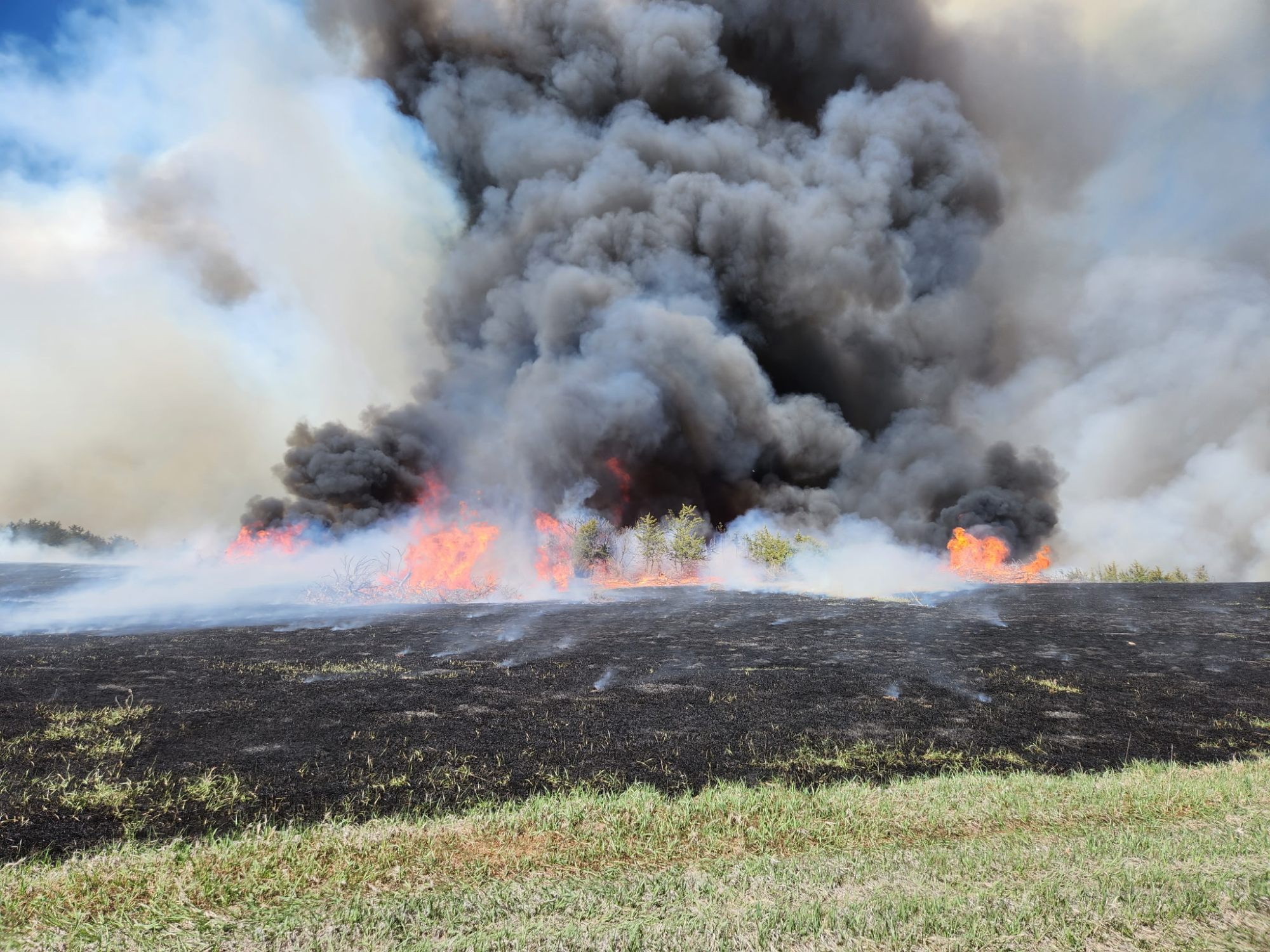
Courtesy of Austin Klemm
Moul, who was an incident commander on the Morrill Fire, understands that prescribed fire has its place if it is done safely. However, after seeing damages from prescribed burns escaping in his career, he said fire chiefs should not allow prescribed burns on or right before red flag days in their districts.
“Some of these burn groups, they’ve been burning for years and years and years. For the most part, they know what they’re doing out there, but there are a few, like I said, that have convinced these fire chiefs to write the permit on red flag days, because that’s when they get the best kill of the trees,” Moul said. “But it was my experience when I worked with the state that we went to a lot of escaped fires because of prescribed burns that got away.”
The Road 203 wildfire initially started as a prescribed burn in the Bessey Ranger District of the Nebraska National Forest. More than a day after the fire ignitions ended, heavy winds created a spot fire outside the original boundary as firefighters mopped up and patrolled the area, according to the Forest Service. The agency said 99.84 percent of its prescribed burns go according to plan. This one didn’t.
According to the Nebraska Prescribed Fire Council’s survey last year, 1.6 percent of burns surveyed escaped and required outside assistance, primarily from volunteer fire departments. Changing weather patterns and the spread of cedar trees are the primary reasons for escapes, the Fire Council said in an email.
“When the gap between prescribed fire acres and fuel load increases, it also increases fire behavior in both prescribed fire and wildfires, causing us to adapt to riskier burns with increased planning and equipment,” the Fire Council said.
When Twidwell came to Nebraska in 2013, he was told prescribed fire would never be used in the Sandhills. Since then, he’s seen multiple burns happen there as the culture continues to shift.
He knows some landowners will never be convinced, and he understands their concern. But beyond protecting the grasslands, Twidwell believes Nebraska needs to have more conversations on how to mitigate the large wildfires that have torn through the state.
“Everybody understands … the wildfire risk playing out. Fewer understand the benefits and why certain groups are using prescribed fire,” Twidwell said.