


What’s a winemaker to do on a warming planet? Much has been written about how climate change threatens viticulture around the globe — or at least, threatens to fundamentally change the practice. A long-lasting drought in Chile is forcing winemakers to rethink irrigation systems. Vintners in California must not only endure wildfires but also the smoke that comes with them and lingers, which can alter the taste of their grapes. Severe frosts in the Champagne region of France are also altering the acidity and flavor profile of vineyards’ grapes, although some growers are starting to lean into that.
A new study out of Cornell University looks at three techniques that winegrape producers can use to adapt to warmer temperatures, ranging from relatively simple and inexpensive to potentially existential: Install shade cloth to shield precious grapes from the harsh effects of the sun; grow new varieties of grapes better adapted to the heat; or relocate to cooler climates. The researchers found that, for all three cases, when these changes are communicated to shoppers, consumers are willing to pay a premium for these climate-resilient wines — even if it means some of the name-brand recognition of, say, California’s Napa Valley is lost in the process.
The idea behind the market study was both to help growers understand the climate adaptation strategies available to them, the costs associated with these decisions, and then finally, how consumers perceive them.
“A producer can make all the changes in the world — but if they don’t resonate well with consumers, then it’s moot,” said Alex Susskind, one of the study’s co-authors and a professor of food and beverage management at Cornell University’s school of hotel administration.
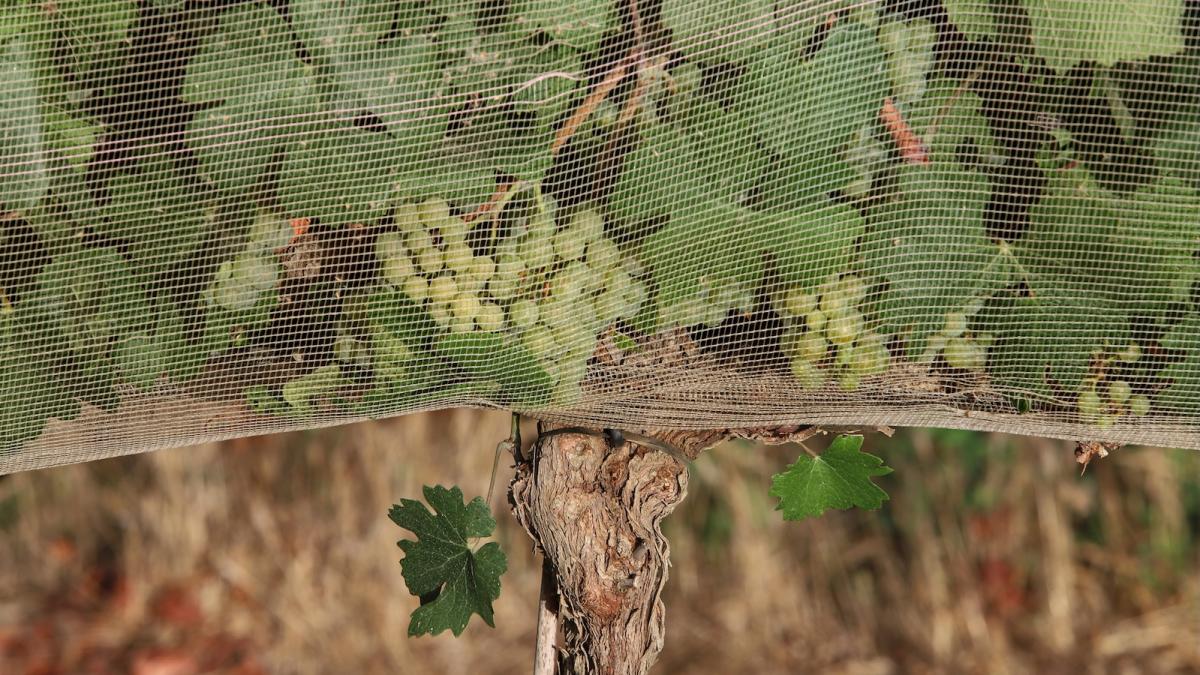
The challenge with the three strategies identified by the researchers — invest in new infrastructure, invest in new grapes, or get up and move — is that only two of them might be immediately obvious to consumers. If a vineyard in California installs shade cloths throughout its estate to protect grapes from sunburn, most shoppers would have no idea, unless it was somehow explicitly stated on the finished product, like on the wine label.
On the other hand, if a producer in Napa Valley known for cultivating Cabernet Sauvignon grapes switched to its focus to Carignane grapes — or if that same grower relocated to Lake County, just an hour or two north — consumers would likely notice. In the third option, for example, those grapes don’t end up producing a bottle of “Napa Valley Cabernet anymore, that’s a Lake County Cabernet,” said Susskind.
In other words, the touchpoints that guide many consumers’ choices — what winemaking region a bottle is from, what grape variety they use — change. Of all the options available to winegrape producers, Susskind said, relocating showed the “least desirability” among survey participants, meaning they were least willing to pay more for these wines. But crucially, respondents still said they would pay extra for wines made from these grapes.
There are limits to the study. For one, it only considers adaptation strategies for winegrape growers and doesn’t explore climate mitigation strategies, which would help growers to decarbonize production and have an overall lighter impact on the climate. Additionally, only 300 participants answered the survey, most of them college graduates under 40 years of age. Included in the survey respondents were people who reported to “care about environmental issues and read labels on food products,” according to the study — two things not everyone does, or does every time they go shopping. And the researchers acknowledged that there may be a novelty factor at play here — over time, wine-drinkers’ willingness to pay more for these bottles may fade.
Still, people in the industry feel that the results are promising. “This is genuinely valuable work,” said Jimena Balic, a winemaking researcher based in Chile. “The economics of climate adaptation in wine are badly under-documented, and putting real numbers to ‘go, stay, or change’ plus the finding that consumers will pay a premium for adaptation, is exactly the kind of evidence growers need.”
Balic believes that winegrowers are not likely to invest in any adaptation strategies unless they are likely to pay off. She added that for winegrape producers, adaptation is more likely to be implemented in a more piecemeal way rather than wholesale. Maybe producers plant different varieties of grapes in one part of their land and install shade cloth in another to maximize output. And heat isn’t the only climate threat facing vineyards: While some regions may face drought, others might see unpredictable rainfall, as well as hail, frost, and pests. “Wine risk is multifactorial,” said Balic, “and each hazard carries its own cost and its own adaptation choices.” She would like to see further research expand on these challenges.
Similarly, the results of the study didn’t surprise Greg Jones, a wine climatologist and CEO of a winery based in Oregon. “But there’s so many other caveats,” he added. From his point of view, much depends on educating the consumer around the viticultural process and how wine gets made — and then doing more education around how climate change is affecting growers. Whether consumers can perfectly hold all of those things in their mind is something the industry is still figuring out.
“We have a system where the consumer is hard to read,” he said.
Jones, who has spent the last 25 years studying the impacts of a changing climate on winegrape production, among other things, said he felt encouraged by the Cornell team’s research. “The research says something important, people would be willing to pay more for [these wines],” he added. He hopes it will lead to further studies on adaptation and consumer preference.


