Climate International
All Stories
-
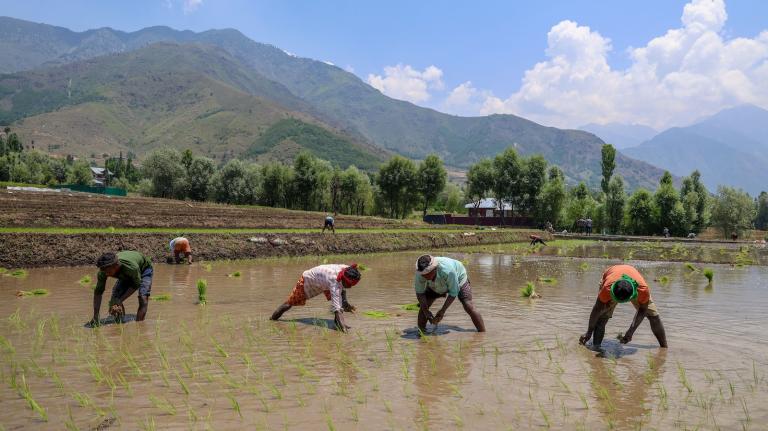
![Four men wading through ankle-deep water transplant rice seedling in a rice paddy in Kashmir, India]()
![Four men wading through ankle-deep water transplant rice seedling in a rice paddy in Kashmir, India]()
Why rice crops could be in for a weird year
Researchers explain how El Niño and global warming are combining to create "the haves and the have-nots."
-
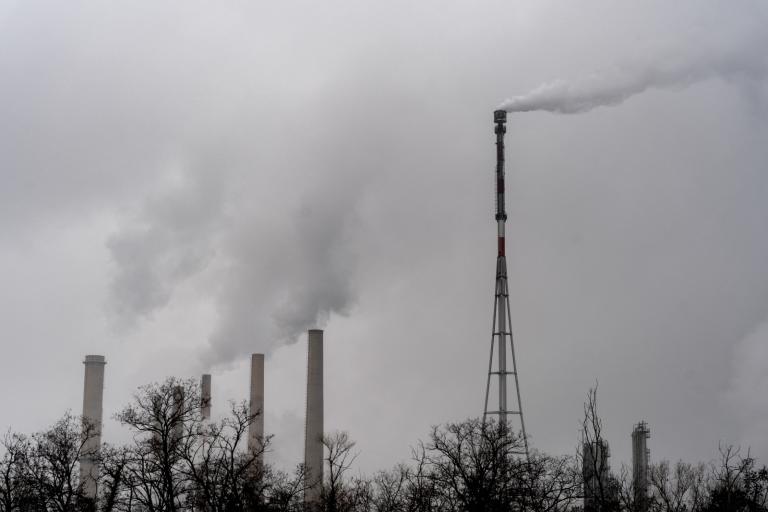
![Black-and-white photo of the chimneys at a refinery emitting thick white smoke under a cloudy sky]()
![Black-and-white photo of the chimneys at a refinery emitting thick white smoke under a cloudy sky]()
The EU might weaken its landmark climate law — the ‘most impactful’ in the world
Lawmakers in Europe have proposed rolling back the bloc's cap-and-trade program, long considered the gold standard for reducing companies' carbon emissions.
-
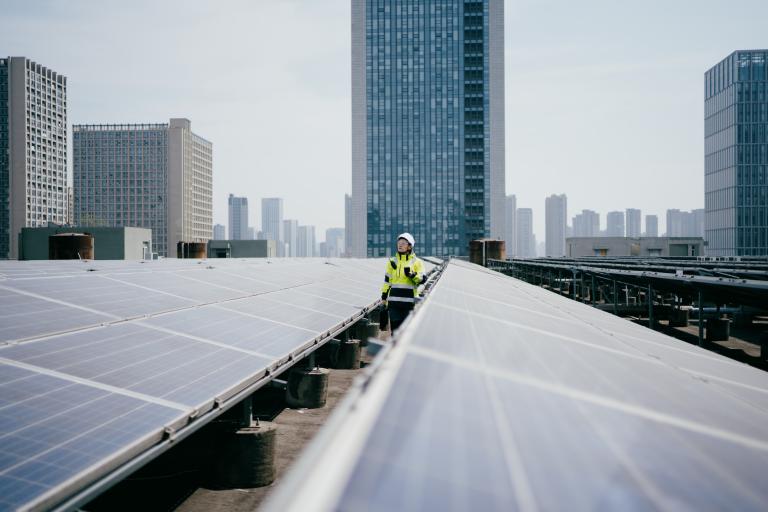
![A neon-vested technician walks among solar panels in China]()
![A neon-vested technician walks among solar panels in China]()
China’s solar industry is losing money. The country is doubling down anyway.
Brutal price wars among manufacturers have caused solar panel prices to plummet, making renewable energy cheaper than ever.
-
![]()
![]()
Indigenous leaders give the UN a roadmap for protecting their peoples
A new 12-point plan calls for stronger protections for Indigenous rights, lands, and voices as climate change, conflict, and other threats intensify.
-
![Collage of Myanmar mining site and soldier]()
![Collage of Myanmar mining site and soldier]()
How war in Myanmar is driving a deadly rare earth mining boom
Decades of conflict have left Myanmar vulnerable to a secretive industry that is polluting communities and endangering workers.
-
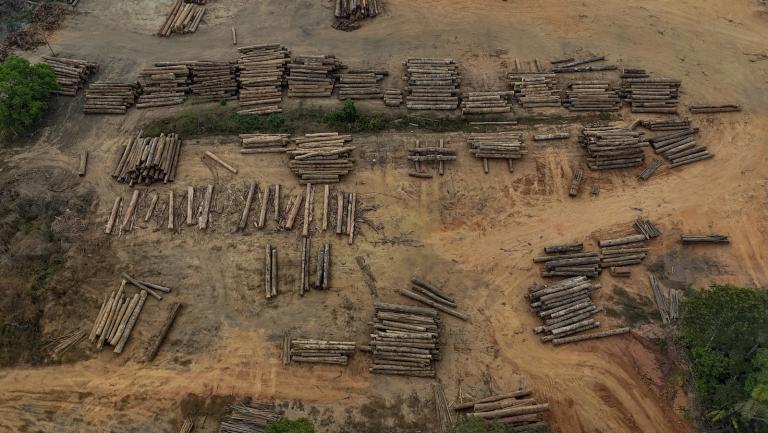
![Aerial view showing timber logs near the city of Humaitá, Amazonas state, northern Brazil, on September 4, 2024. Deforestation -- which helps reduce global warming by absorbing carbon dioxide -- is on the wane in Brazil's Amazon rainforest. President Luiz Inacio Lula da Silva has pledged to put a stop to illegal deforestation of the Amazon by 2030.]()
![Aerial view showing timber logs near the city of Humaitá, Amazonas state, northern Brazil, on September 4, 2024. Deforestation -- which helps reduce global warming by absorbing carbon dioxide -- is on the wane in Brazil's Amazon rainforest. President Luiz Inacio Lula da Silva has pledged to put a stop to illegal deforestation of the Amazon by 2030.]()
Without stronger government action, Brazil’s low deforestation in the Amazon is unlikely to last
Researchers say that the rainforest is at risk of losing the equivalent of about 2 million soccer fields over the next 10 years.
-
![an orange ship in front of a forested tropical island sihoette sits in front of a port area. its hull says Anuanua Moana in white paint and capital letters.]()
![an orange ship in front of a forested tropical island sihoette sits in front of a port area. its hull says Anuanua Moana in white paint and capital letters.]()
A Bay Area financial analyst wants a piece of this mineral-rich seabed surrounded by 3 Pacific nations
As President Trump pushes seabed mining, the bid by an American startup reveals the limits of island nations' control over their neighboring waters.
-
![]()
![]()
For Puerto Rico’s fishers, climate change isn’t the only challenge — being left to adapt alone is another
Even as Puerto Rico's fisherfolk navigate rising seas and monster storms, a maze of bureaucracy is proving to be their biggest obstacle.
-
![A woman dressed in a Ecuador mask and ecuador flag stands in front of a protest banner]()
![A woman dressed in a Ecuador mask and ecuador flag stands in front of a protest banner]()
Environmental defenders remain among world’s most targeted activists
A new report found that environmental defenders are increasingly encountering overlapping networks of government officials, corporations, criminal groups, and private security forces.
-
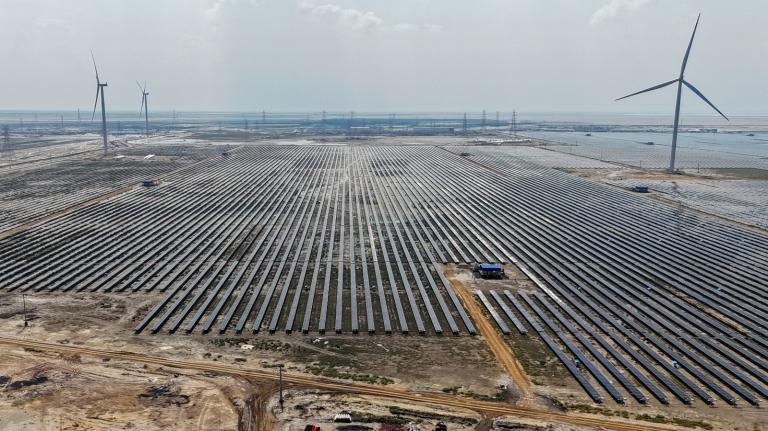
![An aerial view of many solar panels under a smoggy sky]()
![An aerial view of many solar panels under a smoggy sky]()
A first among major nations, India is industrializing with solar
India is increasingly turning to cheap solar to meet its booming energy needs. Its solar buildout could soon be a model for other emerging economies.