👋 Hi, everybody! This week, we’re looking at the boom and more recent bust of vegan (or “plant-based”) restaurants, brands, and products — from Impossible Burgers to Eleven Madison Park — and what these trends mean for the future of sustainable eating.
We’ve also got some news about electric buses, a pipeline battle in the courts, and a carbon-storing plant known as sea lavender.
This post originally appeared in Grist’s weekly solutions newsletter, Looking Forward. Not on our list yet? Subscribe here to get it in your inbox every Friday.
A new era for plant-forward cuisine
Kimberly Elliott / Grist
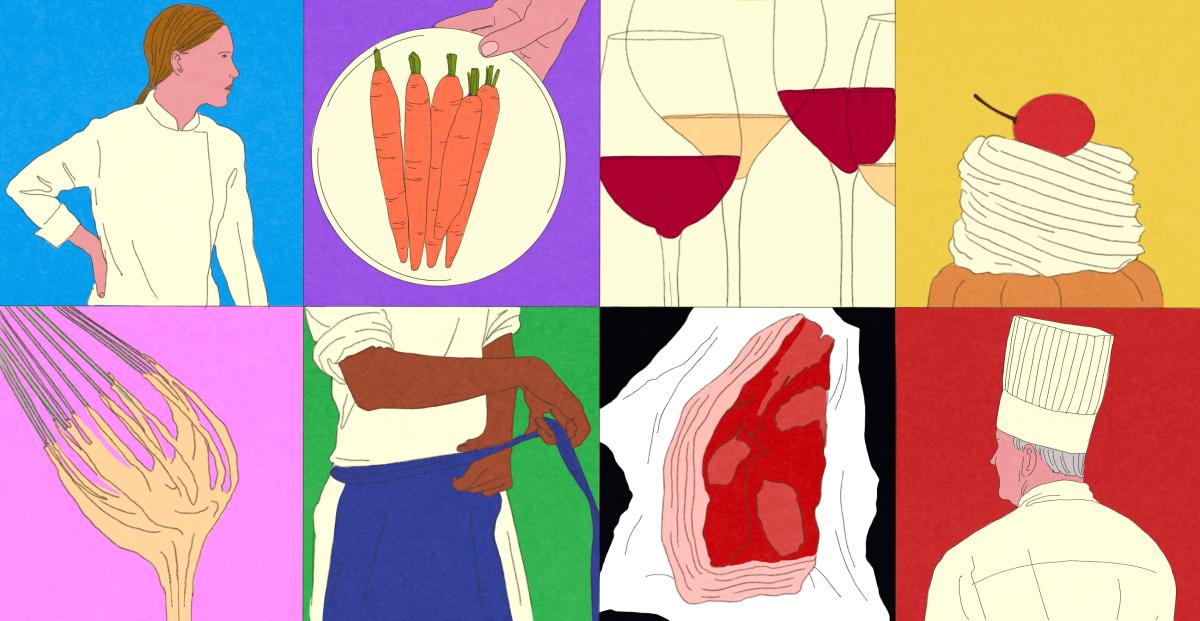
As a longtime vegetarian, I watched with some excitement when brands like Impossible Foods and Beyond Meat started hitting the scene in the late 2010s — their hearty burgers were a major glow-up from the lackluster veggie patties I’d grown accustomed to. Then again, I wasn’t really their target audience. The lofty goal of these plant-based meat companies was to create an offering so delicious, so comparable to real meat, that omnivores would happily choose it. And their products did get a lot of people excited initially, from curious eaters to investors. It seemed like maybe plant-based eating had entered a new era.
Now it seems that way again — but in the opposite direction. Following their initial boom, Beyond and Impossible have seen declining sales and stock prices in recent years, despite ongoing improvements in taste and texture. Vegan restaurants have also been closing, including right in my own neighborhood (RIP Plum Bistro).
As Caroline Saunders wrote for Grist earlier this month, the trend goes all the way to the top of fine dining. Eleven Madison Park, the world-famous, three-Michelin-starred restaurant in New York, added meat and dairy back to its kitchen in October, after four years of trailblazing with a fully vegan menu. The vegan chefs she talked to were feeling the loss of a top-tier proving ground for making vegan diets desirable and processing what felt like the end of a moment of possibility.
But there’s another underlying trend in all of this that reflects something more interesting going on. It’s not just that the “vegan business bubble” is bursting — plant-focused cuisine seems to be shifting to a softer, subtler approach than the kind of takeover that Beyond and Impossible once promised.
On a recent episode of the NPR podcast “It’s Been a Minute,” food writer Mark Bittman (whose cookbook How to Cook Everything Vegetarian was a staple in my family) put it like this:
“Americans set themselves up for failure by becoming puritans. … The culture doesn’t have to be all meat all the time or vegan. It needs to be on the spectrum, and the spectrum needs to move towards the plant-based end of things.”
In other words, what some call a “reducetarian” diet. Bittman reminded listeners that almost all people eat vegan or vegetarian foods at least some of the time. Spaghetti with tomato sauce, for instance, is a familiar dinner for many Americans that also happens to be meat-free (and dairy-free, unless you add a sprinkle of parm).
This may be the realistic middle ground between the old push toward hard-core veganism and the current pendulum swing toward “all meat all the time” — and its approachability could be its superpower in actually reducing the impact of meat. Reducetarianism makes more sense for people’s wallets. And it seems to be where the broader economics are winning, driving innovations like lab-grown meat or “blended proteins” that mix meat and vegetables together.
If there’s a face of this new era of “meat plus,” it may be this guy: Sam Cobb is a fourth-generation rancher in New Mexico who turned his family’s meat processing facility into the primary producer of Boca Burgers three decades ago. As Frida Garza reported last week, Cobb is a meat-eater and a pragmatist whose assessment is that the veggie burger is functionally dead. But he’s looking at other plant-based products more likely to appeal to consumers, like veggie chicken nuggets (indistinguishable from their poultry cousins, and you cannot tell me otherwise), blended proteins, and falafel. For Cobb, it’s all about good business.
“I used to put soy in hamburger patties. We used to do that for cost savings,” he said.
Personally, I still enjoy a good veggie burger — as does my omnivorous husband, although I’ve never seen him choose one when a meat patty was on offer. But in my personal life, I have seen other signs that good old-fashioned plants are winning a larger place at the center of people’s tables. A friend recently texted me saying that she’s been on a “bean kick,” and asking if I could share some favorite recipes. (In this economy, people are loving beans like never before.) I practiced great restraint and only sent 12 — but there are many more where those came from.
Dive deeper:
Share your thoughts
I’d love to know what you thought about our first Ask a Climate Therapist column last week. Did the question (and the advice) resonate with you? Do you have questions of your own about the emotional challenges of living through climate change? Email us to share, or submit a question through this form.
We’ve also got a request from our friends over at The 19th, a fellow independent, nonprofit newsroom with a special focus on the intersection of gender, politics, policy, and power:
The 19th’s climate reporter Jessica Kutz wants to hear from parents navigating a climate-changed world with children. From school closures due to extreme weather, to more frequent disasters that uproot family life, to rising health concerns, climate change is affecting many aspects of parenting. How is it affecting you and your family?
If you have 30 minutes to connect with Jessica during a one-on-one Zoom or phone call, please complete this short form. She’ll be in touch with more details!
More from Grist
🚎 The bus is still running
Historically, electric buses seemed to struggle in the cold. A study from Ithaca, New York, found that temperatures in the low 20s and 30s can cut their range by about half. But in Madison, Wisconsin, a new fleet of e-buses (with overhead “quick chargers” on key routes) is proving its mettle against winter temperatures as low as -4 degrees F. Read more
💧 A pipeline battle
The Supreme Court heard arguments this week on a question about the controversial Line 5 oil pipeline that runs through Michigan. Environmental groups, local politicians, and all 12 federally recognized Native tribes in the state have called for the pipeline to be shut down. This latest court case focuses on a procedural issue, but it will have implications for the future of the fight. Read more
🪻 Sea lavender
Researchers have discovered that a certain wetland plant in the Venetian lagoon is a carbon-storing powerhouse. The purple flower, known as sea lavender, also holds soil in place with its thick roots, reducing erosion. Protecting and restoring this habitat now offers an opportunity to protect the Italian coastline, its biodiversity, and its potential to be a carbon sink. Read more
In other news
- New Orleans aims to become a pioneer in ‘virtual power plants,’ using utility settlement funds to help residents buy home batteries (Canary Media)
- Thanks to a crackdown on illegal land clearing, Brazil has seen a drop in deforestation this year in the Amazon (Yale Environment 360)
- China plans to tighten air pollution standards that have already helped its cities reduce smog in the past decade (Bloomberg)
- Federal tax incentives are still available for leasing solar panels — but the process is more complicated than buying outright (NPR)
- This year’s ‘Great Backyard Bird Count’ saw record participation, mobilizing community members to help gather valuable data (Inside Climate News)
And finally, looking forward to …
… a future for our dinner plates that’s a lot more alluring than “a piece of chicken, a piece of broccoli, a corn tortilla, and one other thing.”
🥘🥗🥘
Potluck night is your favorite. For the conviviality, of course — but also the food itself.
You always eat too much, but you can’t help wanting to try everything. Your plate quickly fills up with lupini bean hummus, homemade sauerkraut, stuffed peppers, potatoes, a beautiful green pasta — you can’t quite tell what the sauce is, but it smells delicious. Kaden made arepas again, this time with the engineered mozzarella.
You never have room for dessert — not even the candied pawpaws you brought yourself, picked from the community food forest. But judging by the looks on everyone else’s faces, they’re a hit.
— a drabble by Claire Elise Thompson
🥘🥗🥘
A drabble is a 100-word piece of fiction — in this case, offering a tiny glimpse of what a clean, green, just future might look like. Want to try writing your own (and see it featured in a future newsletter)? We would love to hear from you! Please send us your visions for our climate future, in drabble form, at lookingforward@grist.org
👋 See you next week!