👋 Hi, everybody! In today’s newsletter, we’re taking a look at how people interact with and care for local nature — specifically, a cultural event in New England that turns out thousands of volunteers to protect amphibians during perilous spring migrations.
And speaking of nature, we’ve also got the FINAL LEADERBOARD for our Earth Month scavenger hunt! I’ll follow up with the leaders separately to get you your prizes, but big thanks to everybody who played!
We’ve also got news about rooftop gardens, lead testing, and pipeline victories.
This post originally appeared in Grist’s weekly solutions newsletter, Looking Forward. Not on our list yet? Subscribe here to get it in your inbox every Friday.
How a regional tradition became a gold mine for participatory science
Grace Benninghoff
One thing about me is that I hate cars. Full stop. They’re scary and smelly and loud and they kill many thousands of people in the U.S. alone every year, and injure millions more. And of course, it’s not just humans who are at risk on and around roads. Motor vehicles hit between 1 and 2 million large animals like deer every year. And there’s precious little data on smaller critters.
Enter “Big Night,” a New England phenomenon, which freelancer Grace Benninghoff wrote about for Grist this week.
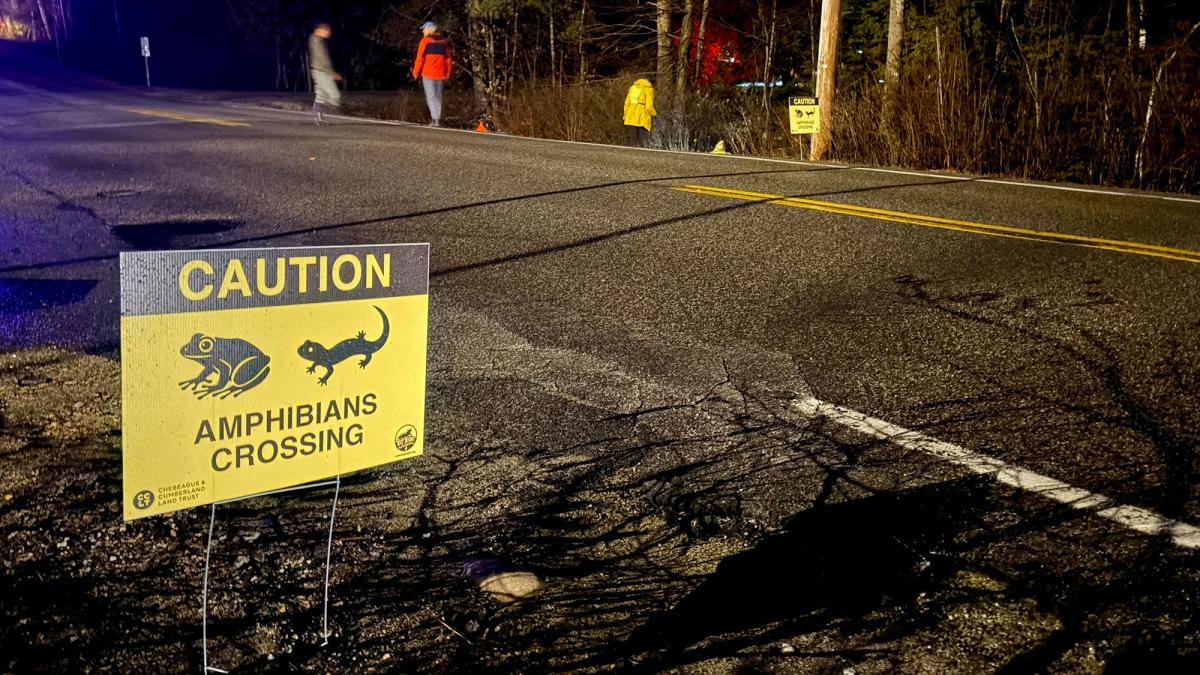
Big Night falls on the first warm, rainy night of spring — a seasonal shift that triggers a mass migration of amphibians from the woods to the vernal pools where they’ll lay their eggs. As they emerge, they sing, calling their peers to follow suit. Perhaps unbeknownst to them, their emergence also sends out a signal to throngs of human volunteers, who drop everything to show up and help these slimy friends — wood frogs, spring peepers, and spotted salamanders — cross the roads that have cropped up in their ancestral paths.
“The organizer was telling me, sometimes people drive by, and they’re like, ‘Oh my God, was someone murdered?’ Because it looks like this huge police scene,” Grace said. Picture 20 or so people wearing reflective vests and headlamps, wandering the woods on the side of the road, with a police cruiser on either side of the action to signal to drivers to slow down and use caution as they pass through.
Some events are much smaller — but the Chebeague and Cumberland County event in Maine, which Grace visited during the early April migration, garners so much interest that there’s actually a waitlist to volunteer.
What started out as a charming annual tradition throughout the region — Grace talked to one dad who’s been taking his kids for seven years — has taken on new importance as climate change and other human-related threats take a toll on wildlife. In 2018, a Maine resident (then a college student) named Greg LeClair started a centralized organization for his state, Maine Big Night, to turn the road-crossing parties into an opportunity to collect data on these understudied species.
“Anytime anyone has a collision with a deer or moose and an insurance claim is filed, a data point is collected, but nobody files an insurance claim when they hit a frog,” he told Grace.
As volunteers ferry frogs and salamanders from woods to pools in Tupperware containers, coordinators at each site make note of the timing of the migrations and mark down species counts, how many are found dead on the road or injured, and how many have conditions like edema, commonly caused by road salt. The data helps conservationists learn about amphibian migration patterns, identify changes (amphibians are particularly vulnerable to shifts in temperature and moisture), and advocate for protections.
“This was a solution that harnessed energy and excitement that was already there and just used it in a slightly different way to make it more effective,” Grace told me.
For instance, last year, volunteers in Orono observed more amphibians dead than alive. Their tallies showed that 8 in 10 were getting hit by cars as they tried to cross the road. Armed with that stark data, advocates from Maine Big Night worked with officials to install fencing that they hope will guide more of the hoppers and crawlers to an existing culvert under the road, along with wildlife cameras to help determine if the effort is successful.
“Ultimately, the best thing for these amphibians would be if the roads didn’t exist,” Grace noted. But removing the roads for the benefit of wildlife is not a solution that’s currently on the table. Compromises — like using pickle juice to deice roads instead of harsh salt, installing fencing, and making way for Big Night each year — show how humans can share the land with other living things with some pretty simple adaptations, and even a dash of fun.
Dive deeper:
- One night a year, humans command this march of frogs and salamanders
- The wildlife all around us is doing fascinating things. Are you noticing?
Earth Month scavenger hunt
Here it is — the moment you’ve all been waiting for. This is the final leaderboard for our Earth Month scavenger hunt:

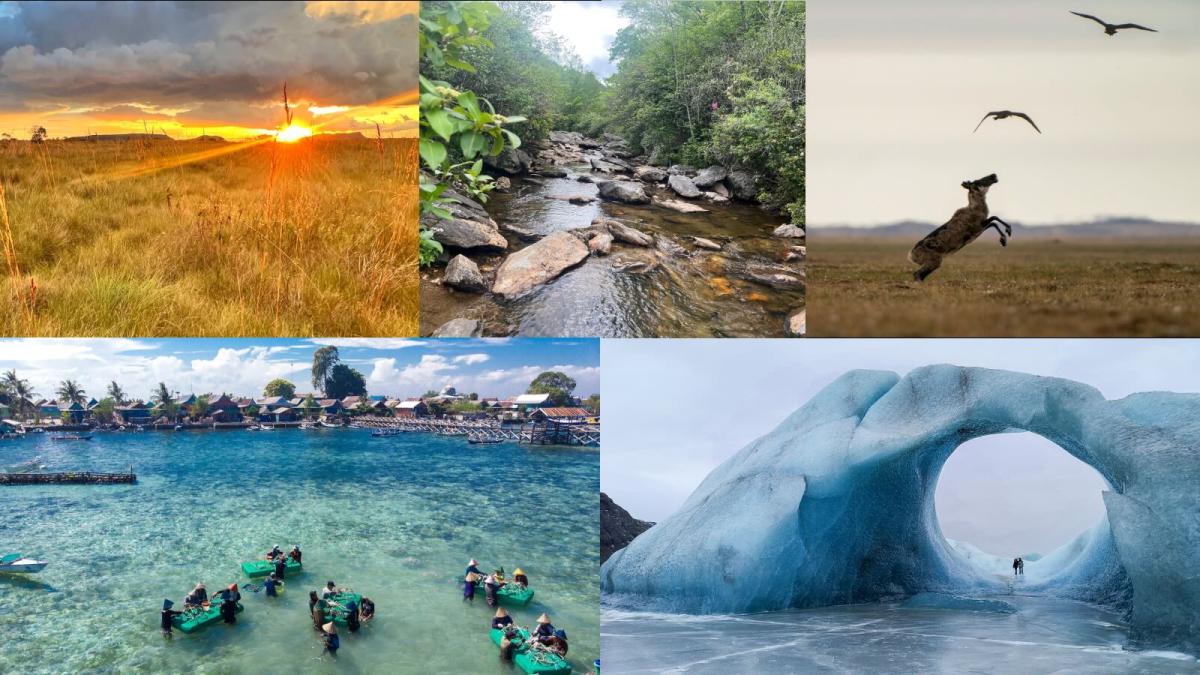
Congratulations to ALL who participated, had fun, and perhaps learned an interesting fact or two! Here are all the landscapes we admired throughout the month — from Brazil to Appalachia to Alaska to Indonesia to Iceland.
Rafael Oliveira; Katie Myers / Blue Ridge Public Radio / Grist; Carolyn Van Houten / The Washington Post via Getty Images; The Ocean Agency; Þorvarður Árnason
We would love to know what you thought about the scavenger hunt game! Would you like to see more stuff like this in Looking Forward (or beyond)? Would you have preferred a different format, or a different type of trivia? Please let us know what you thought, so we can keep bringing you new offerings that add a little something to your climate news diet.
More from Grist
🧪 Taking the lead
To protect themselves from lead exposure, people first need to know where it’s coming from — which can involve costly testing of soil, water, and paint. In Trenton, New Jersey, a single graduate student helped equip residents with that knowledge. Read more
⚖️ Another day in court
The Supreme Court decided (unanimously) last week that the battle over the controversial Line 5 pipeline will proceed in Michigan’s state court, rather than a federal court. The ruling itself is on a technicality, but the result is considered a win for pipeline opponents. Read more
🌱 Gardener on the roof
Cities are wasting a huge amount of square footage that could be turned into valuable green space: rooftops. Putting gardens on top of buildings can bring huge wins for reducing urban heat, capturing rainwater, and boosting biodiversity — and can even save cities money. Read more
🌎 And one more thing
Join Grist and Climate Mayors for Local Power, Global Impact: How Cities and States Are Leading on Climate Solutions — a special virtual conversation that explores how cities and states are stepping up as federal climate action stalls, by advancing bold, practical, locally-based climate solutions. The event features Mayor Lauren McLean from Boise, Mayor Justin Bibb from Cleveland, and Mayor Eileen Higgins from Miami, with Grist’s Jake Bittle moderating. We’ll dig into the ways that local governments are turning climate commitments into action. RSVP here!
In other news
- Why Maine’s governor decided to veto a pause on large data centers (Mother Jones)
- Frustrated with formal international negotiations, more than 50 countries convened in Colombia this week for a summit on transitioning away from fossil fuels (The Associated Press)
- Berkeley, California’s law banning gas in new buildings was struck down in court. But other similar laws are holding up. (Canary Media)
- Global deforestation declined in 2025, a report shows. But wildfires pose an increasing threat. (The New York Times)
- EVs are prevalent in rideshares — something that may matter more for younger generations less keen on car ownership (Heatmap News)
And finally, looking forward to …
… a future where all kinds of infrastructure is built to be more inclusive of the non-human world.
🐢🦌🦆
Watching the wind turbines relaxes you. Sometimes your eyes will focus on and follow the one blade painted black — the simple fix that makes them more visible to birds makes them almost hypnotic to you.
You lean against the railing of your little apartment balcony, just at the edge of the city. From here, you also have a great view of the massive wildlife bridge over the seldom-used highway. It was the biggest in the region when it was built. Now, the Corps is finally finalizing the newer one — over the high-speed rail line, where it will do more good.
— a drabble by Claire Elise Thompson
🐢🦌🦆
A drabble is a 100-word piece of fiction — in this case, offering a tiny glimpse of what a clean, green, just future might look like. Want to try writing your own (and see it featured in a future newsletter)? We would love to hear from you! Please send us your visions for our climate future, in drabble form, at [email protected]
👋 See you next week!