👋 Hey there, everyone. It’s not even summer yet, and already Seattle (where I live) is breaking heat records for this time of year. It got so toasty this past weekend that my husband and I considered busting our portable AC unit out of the closet — an appliance that was long unnecessary in this part of the country. Fittingly, this week’s newsletter is about a method some cities are trying to better prepare themselves for the cascading impacts of increasingly intense heat waves.
I hope you’re all staying cool, wherever you are in the world. We’ve also got some news for you this week about the shipping industry, the power of trees, and caring for vulnerable community members after disasters — plus a couple of events coming up.
This post originally appeared in Grist’s weekly solutions newsletter, Looking Forward. Not on our list yet? Subscribe here to get it in your inbox every Friday.
What cities can learn by rehearsing for extreme heat
Ludovic Marin / AFP via Getty Images
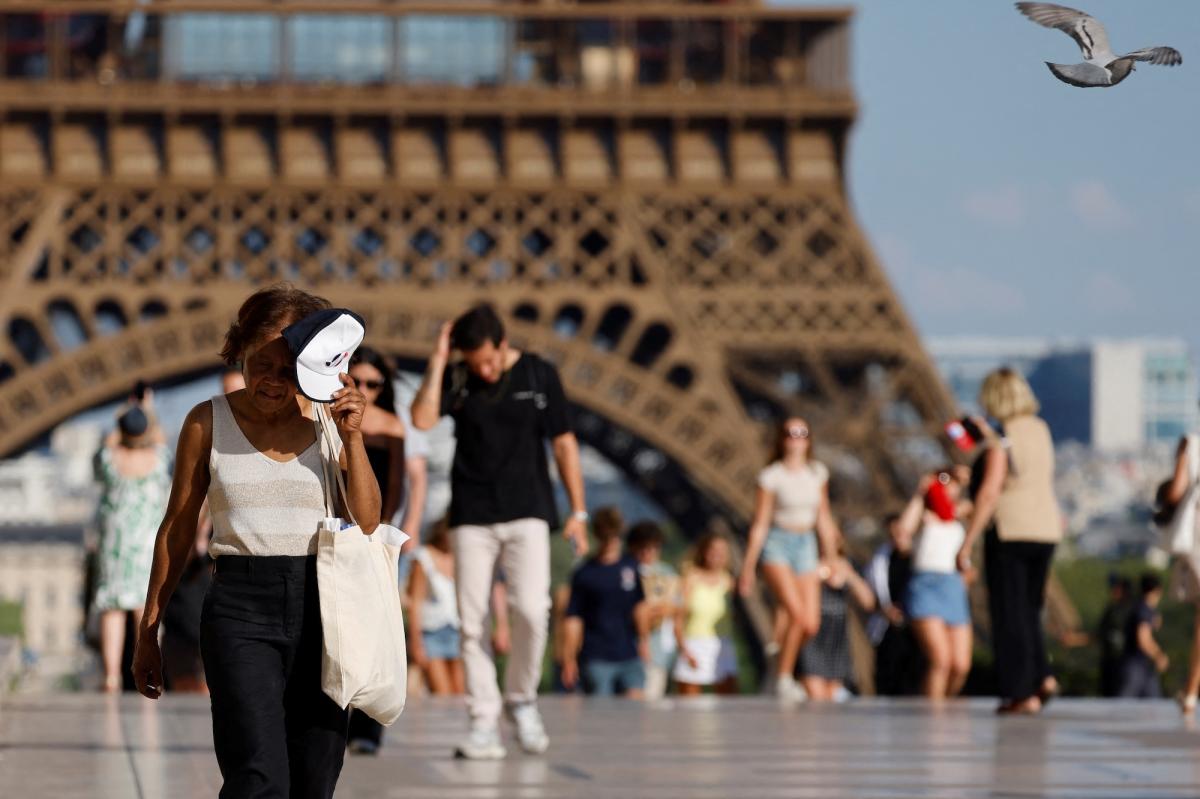
Extreme heat is one of the most obvious consequences of our warming planet — and also one of the most deadly. So, while we go about mitigating the causes of climate change that lead to ever-increasing temperatures, cities around the world are racing against time to protect residents from it. We’ve covered many such efforts right here in this newsletter — things like increasing the urban tree canopy, coordinating volunteers to check in on seniors, even developing and accelerating the adoption of more efficient air conditioners.
In many ways, we already know what a heat-resilient city could look like — a few years ago, Grist put together a project envisioning how that city would be built, combining several, largely low-tech strategies like maximizing green space, shade, airflow, water, and efficient buildings. “The challenge is in the implementation,” my colleague Naveena Sadasivam told me at the time. “A lot of these solutions have to be tailored to the geographic location — the specific city or community or neighborhood that you’re talking about.”
That’s where a new technique comes in. To learn more about their own unique needs, weak points, and advantages, a number of cities are trying out a new method to prepare for extreme heat events: rehearsing them.
Almost like a fire drill for a heat wave, cities like Paris, Barcelona, Melbourne, and Phoenix are running everything from live simulations to tabletop games to stress test their emergency response infrastructure before lives are on the line, as freelancer Natalie Donback wrote for Grist this week.
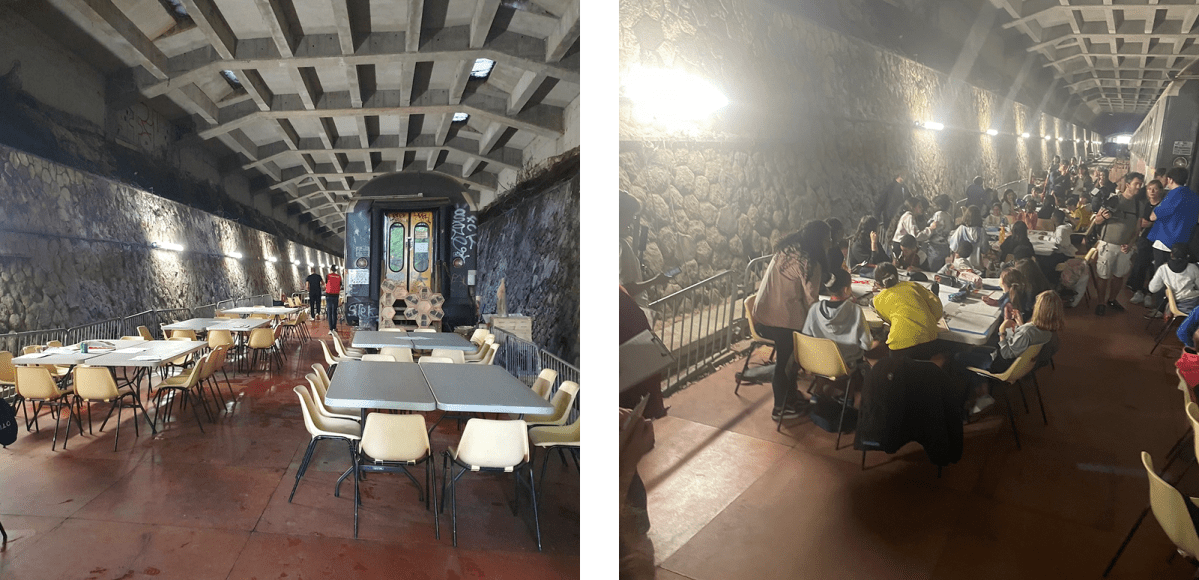
Part of Paris’ heat drill involved setting up a classroom in a former train tunnel. Crisotech
Natalie recounted a two-day simulation that took place in Paris in October 2023 — the first to include regular citizens as part of the drills. “I was really surprised by how complex it is to plan a heat simulation of this magnitude — it took Paris 18 months to plan it,” Natalie said. “I was also surprised by how much creativity it takes.” The event was dubbed Paris at 50°C, simulating a future summer when temperatures in the city could reach a whopping 122 degrees Fahrenheit (something predicted to become a reality by the end of the century — Paris’ current record is 108.68 degrees F, or 42.6 degrees Celsius).
The participants included around 70 children from two schools. In one exercise, the students evacuated to a makeshift classroom set up in a former railway tunnel — a useful piece of infrastructure in a heat wave, since it stays a comfortable 64 degrees Fahrenheit. The kids then acted out various maladies they might experience — and need help with — if the city did get hit with that kind of deadly heat for a prolonged period. For instance, what if kids came down with food poisoning because of power outages and high potential for spoilage in the heat? What if they suffered from carbon monoxide poisoning from leaky generators?
Having kids involved was especially useful, one of the organizers noted — not only because they’ll be the ones inheriting this hotter future, but because they ask so many questions.
Although city officials and first responders may have plans for how they would respond to these types of cascading impacts, actually practicing what’s on paper can reveal where additional infrastructure or resources may be needed. As Dr. Satchit Balsari, a professor of emergency medicine at Harvard Medical School, told Natalie, even something as simple as cooling down an individual overheated patient involves logistical questions. “How do you take a large human body and put it in ice? Is there a bucket that big?” Balsari posed. “The answer is no, so is it a body bag? Where do you get all this ice?” (In Phoenix, heat protocols do actually include ice-filled body bags to cool overheating patients.)
Overall, the event yielded 50 recommendations, some of which are already underway in Paris, like replacing asphalt parking lots and opening up new swimming spots on the Seine.
A role-playing exercise may seem frivolous in some ways. But as climate change pushes us further into uncharted territory, it makes sense that city officials and first responders would want to practice for some of its worst-case scenarios. (From my experience participating in a Wilderness First Responder course long ago, I can attest to the power of simulations. You don’t really know how to wrap a bandage until you’ve wrapped one on a real human, even if it is over fake blood.) More practice basically always leads to a better outcome.
And one of the central conclusions from the Paris simulation was just that: People need more practice. Not just officials, but residents. “In Paris, it revealed just how much more work the city has to do when it comes to making sure citizens have the information they need,” Natalie said. These splashy simulations themselves can be helpful with that, since they generate media attention and put the topic on people’s minds. And earlier this year, the city launched a new Campus of Resilience, which will continue to stage smaller drills as well as training opportunities and workshops open to all.
Dive deeper:
- Cities are rehearsing for deadly heat. Will it help when disaster comes?
- How to build a heat-resilient city
More from Grist
🌳 No tree, no shade
Speaking of shade — two new studies quantify just how much trees can do to reduce urban heat (even more than we thought). Although they won’t solve all our climate problems, some advocates view boosting tree cover as one of the most important actions cities can take. Read more
🚢 Bargaining ships
Last fall, the U.S. derailed plans to adopt a carbon tax to decarbonize the shipping industry. After a meeting of the International Maritime Organization last week, advocates are cautiously optimistic that the deal could hold up after all — though the delay may end up weakening it. Read more
🫂 Weathering the storm
Disasters upend the support systems and routines that people in recovery for substance use depend on. In the wake of Hurricane Helene, harm reduction groups, health care providers, and mutual aid networks sprung into action — and in some places, showed what a more compassionate system could look like. Read more
🌎 And one more thing
Are you prepared for a disaster? In a free workshop series hosted by Grist and City Bureau, you can learn to build your own disaster toolkit and connect with others who want their communities to be more resilient to climate change. Join us for our first session on May 19 to learn the basics of extreme weather and ways you can streamline and share information in an emergency. Sign up here.
📚 And one more thing
The Looking Forward book club is meeting next week (Thursday, May 14) to discuss The Great Transition! We’ll be joined by author Nick Fuller Googins for what promises to be a fascinating discussion. Even if you haven’t read the book, you’re welcome to join! Register here.
In other news
- The global fuel crisis lends new urgency to plugging methane leaks — which would not only cut emissions, but also conserve usable gas (Gizmodo)
- A number of women of color are running for seats on public utility commissions, bucking a longstanding lack of representation (The 19th)
- As Turkey negotiates a peace treaty with Kurdish fighters, UN experts see an opportunity to make environmental restoration part of the plan (Inside Climate News)
- Several European capitals have reduced cars in their city centers. A citizen-led campaign wants to do the same in Berlin. (DW News)
- To keep invasive species populations in check, chefs are building a movement for ‘invasivorism’ (Atmos)
And finally, looking forward to …
… well-prepared, well-practiced communities.
🎒🎒🎒
The heat advisory on your phone wakes you before your alarm. No surprise — it’s been in the forecast. But it still sucks. Mainly because you’ll have to take the air-conditioned bus instead of riding with the bike brigade.
Heat days used to be fun. You’d stay home from school and eat popsicles. But then the school got money for window awnings and the courtyard canopy and misters, which they set up days ago in preparation.
Oh well. Maybe, if it goes on for a while, they’ll bus you to the lake for PE, like you did in that one drill.
— a drabble by Claire Elise Thompson
🎒🎒🎒
A drabble is a 100-word piece of fiction — in this case, offering a tiny glimpse of what a clean, green, just future might look like. Want to try writing your own (and see it featured in a future newsletter)? We would love to hear from you! Please send us your visions for our climate future, in drabble form, at [email protected]
👋 See you next week!