👋 Hi, everybody! Today’s newsletter is all about change — the scary kind, and the good kind, that we need. If you’re familiar with the concept of planetary tipping points, you probably think of them (rightly so) as pretty terrifying. These tipping points — like the melting of the Greenland and Antarctic ice sheets, which will accelerate as the ocean and air get hotter and could lead to runaway sea level rise — are generally gates of self-perpetuating doom that we do not want to pass through. But in order to avoid these catastrophic changes to our climate and environmental systems, we need to make big changes ourselves.
We’ve got some encouraging news where that’s concerned. We’ve also got an upcoming Grist event to share with you all, and a drabble submitted by a reader.
This post originally appeared in Grist’s weekly solutions newsletter, Looking Forward. Not on our list yet? Subscribe here to get it in your inbox every Friday.
Some tipping points can be good for the planet
Lillian Suwanrumph / AFP via Getty Images
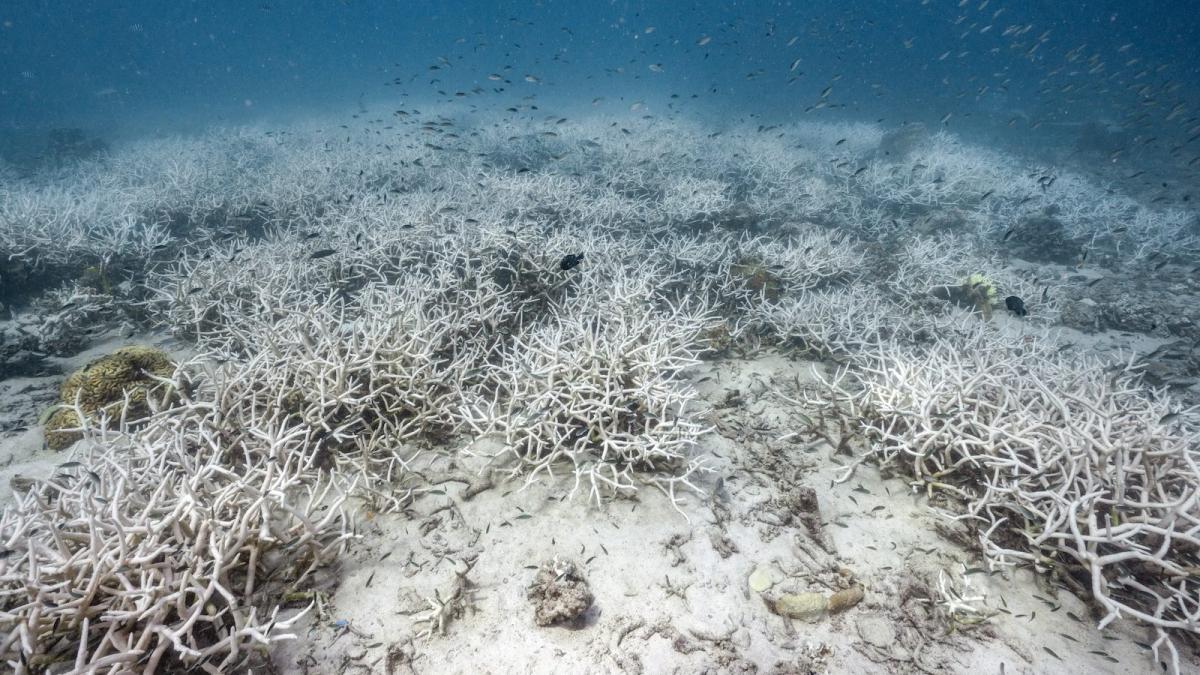
Earlier this month, my colleague Matt Simon wrote about some scary science news: The Earth has reached its first tipping point, a threshold of planetary change from which it’s difficult, if not impossible, to return. This first major tipping point has arrived in the form of widespread loss of coral reefs due to marine warming and ocean acidification.
Scientists have identified several such climate tipping points — estimates of just how many vary, but a recent Grist project explored seven major ones, including the loss of coral reefs. The science of tipping points reframes our understanding of climate change as not merely a slow and steady process, but a series of domino effects in which small changes cause feedback loops that can spiral into irreversible damage.
The news about coral loss followed a story Matt reported last month about “planetary boundaries” — a scientific framework that describes nine key interconnected Earth systems and the ways human actions are pushing them outside of safe operating levels.
“Think about driving down a road toward a cliff,” Matt said to me. “That cliff is a tipping point, and that represents an Earth system that suddenly and dramatically and often irreversibly changes. Along that road, a planetary boundary would be a big bold sign in all caps that says, ‘CLIFF AHEAD.’”
From a planetary health perspective, we don’t want to reach these boundaries at all, Matt said — if we do, it means that we’ve gone beyond what’s considered safe operating space. But when we encounter the warning sign, as we have for seven of the nine boundaries, there are still ways to hit the brakes and reverse course before we reach the metaphorical cliff.
And there’s reason to be optimistic about our chances. In the case of the two planetary boundaries that we have not crossed, air pollution and ozone depletion, it’s not simply good luck that we haven’t yet reached them — human intervention has kept us within safe bounds.
“Humanity got together and banned these chemicals that were causing ozone depletion,” Matt said, adding that this success story in some ways “makes it all the more frustrating that humanity can’t come together and reduce greenhouse gas emissions.” But it also shows that humans can in fact deal with the environmental problems that our species creates.
With that in mind, Matt’s next project is looking at the reverse side of this coin: positive tipping points. The adoption of new technologies and policies can have tipping points as well, and in some cases, Matt said, we may be nearing thresholds that could permanently change our systems for the better.
The biggest, he said, “is the precipitously falling price of renewables like wind and solar.” The grids that are investing heavily in renewable energy are reaping the benefits in terms of affordability and reliability. At a certain point, Matt said, the attractiveness of clean energy will make its continued growth unstoppable. “We’d be seeing a tipping point here, ideally in the near future, where it just becomes absolutely untenable to install any new fossil fuel power at all.”
Of course, as with negative planetary tipping points, human intervention is what will determine whether or not we cross the threshold. In the case of renewable energy, supportive policies would help to accelerate the transition and ensure it is implemented equitably. We’re currently experiencing the opposite in the United States — but Matt doesn’t see this roadblock reversing our course. “Even with the Trump administration declaring war on renewables, there’s only so much they can do,” he said. “They can try to slow it, but the market forces at play here are so powerful that we might be tipping into a new energy regime.”
Tipping points can happen on a smaller scale too, he said. Think, for instance, of the transformation that can come to a community when an empty lot gets turned into a garden. Maybe one person starts to volunteer there and loves it so much that they get their family and friends involved. They all start eating healthier because of the fresh food they have access to, they feel more connected to the land, and the ecosystem they steward also helps to catch stormwater and reduce urban heat. “These things tend to cascade,” Matt said — “like in the case of the energy system globally, once there’s a clear benefit, that tends to win out.”
Read more (and look out for a story from Matt on positive tipping points soon!):
- Corals are disappearing, pushing Earth to its first major ‘tipping point’
- The oceans just hit an ominous milestone
- He’ll try, but Trump can’t stop the clean energy revolution
More from Grist
🐟 An upriver battle
Illinois has been struggling to control invasive carp and prevent the fish from reaching the Great Lakes. Last week, the state announced it would move forward with a $1.15 billion barricade project that advocates hope could be a game-changer for the efforts. There is concern, however, that the land acquired for the project may be contaminated with coal ash. Read more
🎣 Down and trout
In Appalachia, communities are dealing with the opposite problem: the decline of a beloved keystone species, the brook trout. The fish are sensitive, and they can only thrive in healthy rivers. Can conservation efforts help protect the brookie, and the land and waters it depends on? Read more
🙊 Don’t say climate
A new poll from a Democratic think tank found that Democrats’ emphasis on climate change policies may be out of step with average voters’ priorities. Some politicians, and even climate advocacy groups, seem to have the same impression — changing up their messaging to focus on energy affordability. Read more
🌎And one more thing
Join Grist for The Water Remembers: A Conversation with Amy Bowers Cordalis, a powerful virtual event exploring Indigenous leadership, climate justice, and the historic Klamath River dam removal. Hosted by Grist’s Anita Hofschneider, this conversation offers insights into restoring lands, waters, and community. Register here to be part of the discussion. (This event is supported by Meyer Memorial Trust.)

In other news
- California is recruiting former federal workers — with a focus on beefing up environmental leadership (Politico)
- To make up for the loss of federal tax credits, Uber plans to offer grants for drivers to switch to EVs (The Verge)
- This startup is trying to reinvent the home battery, with a compact but powerful design (Canary Media)
- Frontline communities are suing the Trump administration for granting polluters a two-year exemption on tightened EPA rules (Inside Climate News)
- The environmental impact of meat depends a lot on where you’re getting it. Look up your city’s carbon hoofprint. (The Washington Post)
And finally, looking forward to …
… biophilic design! This drabble, sent in by reader Chantal Bilodeau, envisions a future where the structures we dwell in mimic the processes of nature.
🍄🏠🍄
My building has breathable walls. The windows change color like a squid’s skin to prevent heat from coming in during summer and escaping in winter. Out back is the food forest the previous dwellers planted, where I take daily walks and pick whatever is ripe.
I sit at my computer — powered by the solar panels on the roof. I love my new desk. I bought it last week from a company down the road that makes mycelium furniture.
I type the word “utopia.” When I read the definition, I think: Yes, it wasn’t easy, but we got there.
— a drabble by Chantal Bilodeau
🍄🏠🍄
A drabble is a 100-word piece of fiction — in this case, offering a tiny glimpse of what a clean, green, just future might look like. Want to try writing your own (and see it featured in a future newsletter)? We would love to hear from you! Please send us your visions for our climate future, in drabble form, at lookingforward@grist.org
👋 See you next week!