
👋 Hey everyone! First of all, WOW — thank you to the dozens of readers who responded to my note last week to introduce yourselves. I’m blown away. I met somebody who grew up in the same hometown as me (and even had my same calculus teacher, a decade later!), somebody who works with one of my former colleagues, a number of soup enthusiasts, an award-winning author, a handful of educators who mentioned using Grist and Looking Forward in their classrooms … and more interesting folks than I can even list off here. Y’all are so cool. (And the invite still stands, by the way — if you haven’t already reached out to tell me a little bit about yourself, I’d be pleased to meet you.)
On last week’s topic of community as a form of climate resilience, many of you also shared how you’ve gotten to know your neighbors. And I noticed a theme in your responses: How we get to know our communities often has a lot to do with how we move around within them, and the serendipity that can create. Whether that’s walking a dog, rolling up to a community garden, or shoveling snow together to clear the sidewalks. On the flipside, some of you shared the difficulties of forming community ties in a neighborhood that’s not very walkable — for instance, one transected by a highway.
This week’s main story is all about walkability, and what it means for healthy cities and healthy individuals. We’ve also got a thoughtful take on the aftermath of disasters, and some good news about state-level climate progress.
Where you live is affecting how much you walk
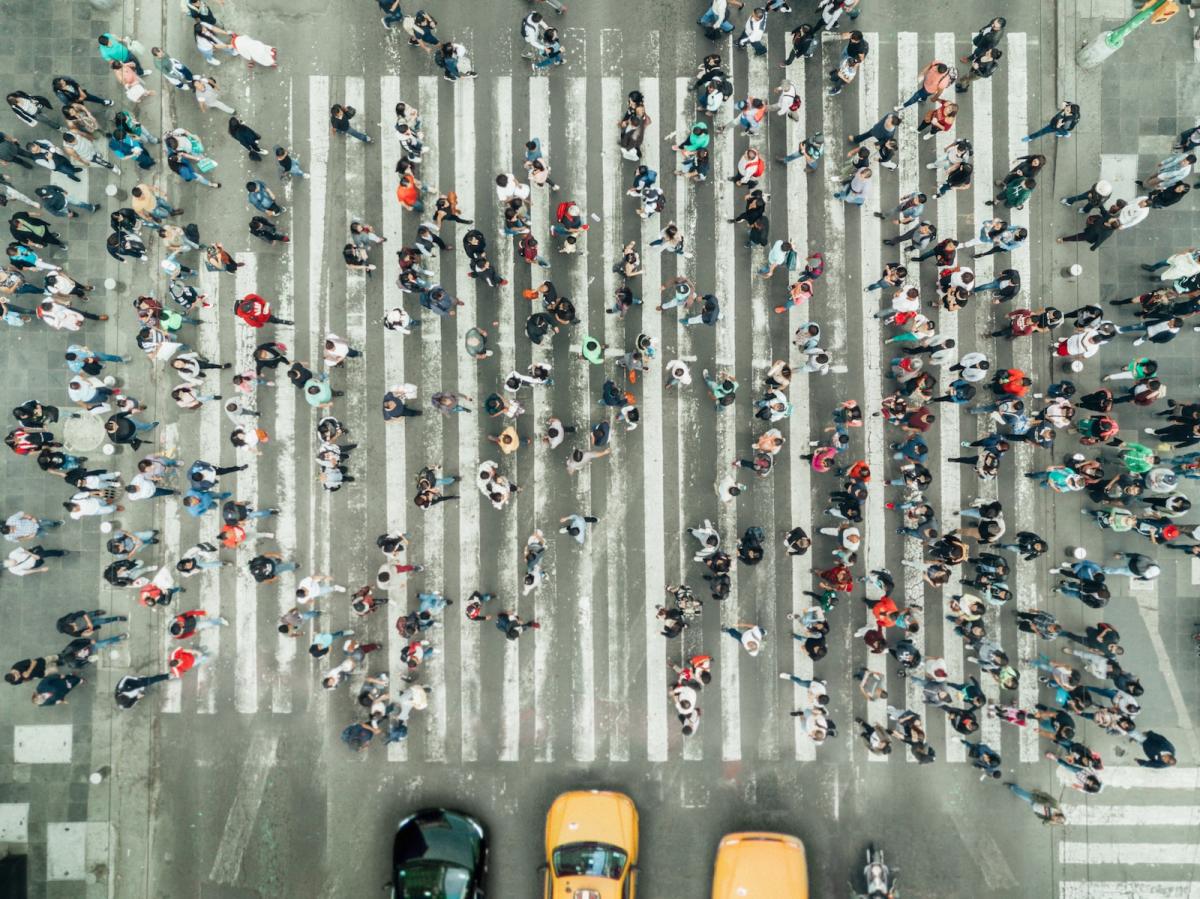
Picture, if you will, a city or town with outstanding walking infrastructure: nice spacious sidewalks, ramps for wheelchairs and other wheeled apparatuses, shade trees, pocket parks, and a plentitude of shops and other amenities clustered closely within reach. It stands to reason that a place like that would see people getting out and walking more, compared with a place that lacked those features. But while that may seem obvious, it has been surprisingly difficult to quantify.
This week, my colleague Matt Simon (whom many of you will remember from The Beacon days) wrote about a new study that put numbers to the difference that a walkable urban design can make.
In the past, Matt told me, researchers and urban planners have relied on methods like surveys that asked people in different cities how much they walk. But this new study used anonymous cell phone data from an activity-tracking app to actually trace it down to the steps — and to see what would happen when the same person relocated between cities with differing levels of walkability.
“If you’re moving, say, from Dallas — which has a relatively low walkability score, because there’s a lot of sprawl there — to New York City, you are actually going to be walking more just by default, just because there is much more density in New York City, there’s better walking infrastructure,” Matt said. The study results showed that, on average, people increased their daily steps by 1,100 when they moved from a less walkable place to a more walkable place — and the same in reverse. “It’s this really clever use of data to actually make these clear connections that, yes, the more walkable a city is, the more people are going to be walking.”
One major takeaway from all this, Matt noted, is that the built environment has a big influence on our actions. People might want to walk more — because it’s good for mental and physical health, it leads to reduced emissions from not driving gas-powered cars, it even contributes to social cohesion and a sense of belonging. But whether or not we actually do walk more depends a lot on the systems around us.
Collecting data, even when the results might seem to confirm the obvious, is an important step in changing those systems. City councils, for instance, which wield a good amount of power when it comes to the built environment, can draw on the results as reasoning for implementing improvements. And constituents can use studies like this as a launchpad to ask for changes — even seemingly small things can make a difference, like installing a few benches, making crosswalks more visible, or turning empty lots into mini parks.
Read more:
- Struggling to get in your daily steps? It may be your city’s fault.
- How ‘15-minute cities’ could save time, reduce emissions, and build community
Share your thoughts
If you live in the U.S. or Canada, you can find the walkability score for your own neighborhood here. My editor and I quickly turned this into a competition — while my Seattle neighborhood earns the title “walker’s paradise” at 91, she guessed that her spot in Washington, D.C., would score even higher. And she was right. Reply to this email to tell me about your score! (It doesn’t have to be a contest. But it also can be. If you want.)
More from Grist
👈 Blame game
Pointing fingers is a natural reaction in the immediate aftermath of a tragedy like last month’s Texas floods. But playing the blame game can get in the way of asking honest, hard questions in the weeks and months following a disaster — a crucial period for instituting changes. My colleague Kate Yoder explored this balance. Read more
🪨Mine, all mine
A study published yesterday in Science found that the waste generated from active mines in the U.S. is actually rich in critical minerals. And the potential for recovery is big — big enough to offset the demand for mining those minerals in other places. The study found, for instance, that there’s enough lithium in just a year’s worth of U.S. mine waste to power 10 million electric vehicles. Read more
🏖️Georgia beach
On one of Georgia’s barrier islands, a team is using a high-tech system (involving drones and the remote-sensing technology LiDAR) to map erosion. The detailed information that the research provides will help local leaders shore up the coastline. Read more
In other news
- Colorado has become the first state to require health-related warning labels on gas stoves (Fast Company)
- New York’s first hybrid-electric ferry, cutely named Harbor Charger, has begun service to and from Governors Island (Canary Media)
- From the East to the Gulf to the West, coastal communities are ramping up restoration and resilience projects (The Associated Press)
- Experts say that President Trump’s efforts to kill wind projects based on selective interpretation of migratory bird laws won’t hold water (Bloomberg Law)
- Urban food forests are taking root across the country, turning public land into edible oases (The Washington Post)
And finally, looking forward to …
… a super walkable, bikeable, and public transit-filled cityscape.
🚲🚶🚋
You sit up with a jolt and check your watch. You were so comfortable on the park bench, so tired from your urban hike, and so bored by the book you just started reading that you actually dozed off.
So much for your plan to walk along the waterfront to the town hall. Oh well — you won’t be late if you catch the trolley from here. Or you could grab an e-bike from the nearest sharestall. Or, you could pay to take the bullet train one stop, and maybe still have time to grab a slice of Waterfront pizza …
— a drabble by Claire Elise Thompson
🚲🚶🚋
A drabble is a 100-word piece of fiction — in this case, offering a tiny glimpse of what a clean, green, just future might look like. Want to try writing your own (and see it featured in a future newsletter)? We would love to hear from you! Please send us your visions for our climate future, in drabble form, at [email protected]
👋 See you next week!
