Climate Politics
All Stories
-
Drilling for fossil fuels and subsidizing nuclear power: McCain energy policy
McCain reveals the heart of his energy policy: McCain was more gung-ho about nuclear power and expanded domestic drilling for oil and natural gas. When a donor in Richmond summed up his advice as, “nuclear, and drill wherever we’ve got it,” McCain responded: “You just gave my speech. Thank you, my friend.”
-
Last, best hope for clean energy tax incentives
For the past six months, Congress has been squabbling over how to pay for a package of expiring clean energy tax incentives. These incentives, which will phase out in December, are bringing down the cost of manufacturing, building, and installing renewable energy systems and energy-efficient products. A multitude of bills have been introduced by both parties, in both chambers, and all have failed.
The last, best hope for this year is H.R. 6049. This bill passed the House on May 21 by a bipartisan vote of 263 to 160, and will be voted on in the Senate as early as Thursday. Partisan lines are being drawn in the Senate already, and the president has threatened to veto this bill. If you want to help end this stalemate, please consider sending a letter to the editor of your local paper. The more voices speaking out on this issue, the better our chance at ending this protracted impasse. Take action here.
-
U.S. Senate candidate Scott Kleeb and the clean energy roundup
Fresh from an overwhelming primary victory in Nebraska's U.S. Senate race, 32-year-old rancher, Yale Ph.D., and college history teacher Scott Kleeb spoke with me on the phone about his "brand of change" for a clean energy economy and the environment.
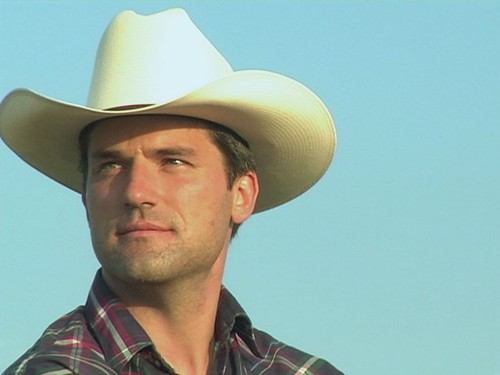
Kleeb shocked the political establishment in 2006 by getting 45 percent of the vote in Nebraska's 3rd Congressional District, one of the most Republican districts in the country. Then, as now, he ran as a clear progressive on most economic and environmental issues (while staying coy on some contentious social issues).
One of Kleeb's core concerns has been meeting the challenge of the climate crisis through a clean energy revolution on the prairie and through aggressive use of domestic and international forest and farm carbon credits. Through it all, Kleeb has been aided by a huge renewable resource of his own: megawatt good looks that won him "The Hot Rancher" award from Young Voter PAC.
Now Kleeb is hoping his unique combination of deep Nebraska roots, Ivy League cred, and movie star charm will help him overcome his opponent: President Bush's former agriculture secretary (and former Nebraska governor) Mike Johanns, who's based his career on support for Big Ag, free trade, and fossil fuels.
Q. Where do you see Nebraska's economic future, and what role do you think clean energy will play in it?
A. We've got to transform the way we produce and consume energy. There's a failure of leadership we've seen at all levels of government. We've got to figure out how to do more with less. That's true of our elected officials and true of ourselves as individuals. This is a generations-long process. We are on the cusp of it right now. Biofuels and wind energy and solar energy and algae-based energy is just the tip of the iceberg.
Nebraska's economy is going to be transformed by that revolution. Farmers will find new ways of feeding or, once we get to cellulosic ethanol, fueling the world.
Q. Recent studies have suggested that devoting American land to growing biofuels instead of food is causing massive deforestation in carbon-rich tropical forests. How can switchgrass and cellulosic ethanol be viable if it's just causing food to be grown in these highly sensitive ecosystems thousands of miles away?
-
Swing-vote Democrats explain why they oppose the Climate Security Act
On Friday, 10 Democratic senators wrote a letter [PDF] to Barbara Boxer (D-Calif.) and Majority Leader Harry Reid (D-Nev.) outlining the reasons why they would not have voted in favor of the Climate Security Act. Democratic leaders pulled the bill from the floor last week after it failed to muster enough votes to move forward. […]
-
The right comparison between Obama and McCain on climate/energy
In the Wall Street Journal, Stephen Power summarizes the difference between Obama and McCain on energy and environmental policies this way: Sen. Obama is pushing a bigger government role in fostering the development of technologies to reduce emissions and alternatives to fossil fuels. Sen. McCain, meanwhile, argues for a more hands-off approach, saying "unintended consequences" […]
-
McCain criticized during Florida trip for opposing funding for Everglades restoration
Visiting the Everglades has become de rigueur for presidential candidates hoping to shore up environmental cred in Florida, the nation’s most populous swing state. But Republican presidential candidate John McCain’s trip to the wetlands on Friday seemed to generate only bad publicity. Last year McCain opposed legislation that included funding for Everglades restoration and urged […]
-
Quick post-mortem on Lieberman-Warner
A quick post-mortem on this week's vote on the Climate Security Act, which was pulled from the Senate floor on Friday after its sponsors fell short of the 60 votes needed to proceed to final debate. I think I can safely sum it up in one word: progress.
-
Hillary Clinton
Hillary Clinton deserves enormous credit for this gracious, powerful speech: Especially since she and her supporters had to endure this:
-
McCain says Reid chose ‘to put politics above policy’
McCain's statement on Lieberman-Warner said this:
... it appears that for now, the Senate, at the direction of the Majority Leader, will choose to put politics above policy, and Congress will fail to act yet again on this critical issue.
You cannot be serious! The people who put politics above policy were McCain's fellow conservatives, who
- Forced 30 hours of pointless debate
- Forced a 9-hour reading of the bill
- Demagogued the gasoline and energy price issue over and over again
- Denied the reality of climate science
- Voted to block the bill from moving forward
That's why Congress failed to act. And, of course, Bush said he would veto the bill anyway. Where or when did the straight talk express derail?
This post was created for ClimateProgress.org, a project of the Center for American Progress Action Fund.
-
Post-post mortem on Boxer-Lieberman-Warner debate
 OK, so the long-dead B-L-W bill got propped up and dragged around for a few days. (Tagline: B-L-W may be dead, but it's the life of the party!) But I think the debate was quite useful for two reasons:
- The opponents of (even modest) action played and overplayed their cards. Now we know that the health and well-being of future generations is of no interest in them. Now we know what their primary arguments will be. This is the opportunity for progressives and moderates and hopefully President Obama to design a better messaging strategy -- and to get pro cap-and-trade businesses to weigh in.
- The many flaws in the bill (other than the fact it wouldn't actually save the climate) were exposed: not enough money returned to taxpayers, too much money given away to too many groups, too complicated, your flaw here -- I'd very much like to hear your ideas for how the bill could be simplified and improved.
I will be offering my recommendations for what a better bill would look like later this month. Clearly, the bill should be designed to achieve more reductions and to be easier to explain and defend.
After all, the original Weekend at Bernie's was kind of fun and made money. But did anybody actually see (and enjoy) Weekend at Bernie's 2? We don't want a lame remake next year.
