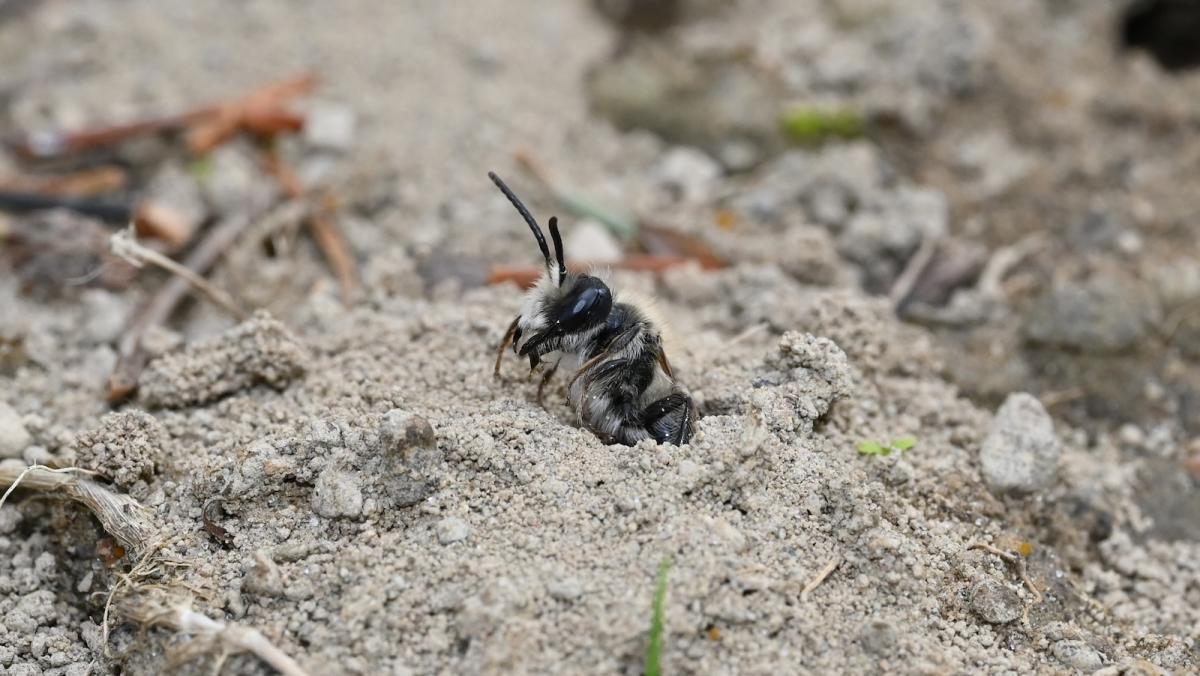
A miner haunts the East Lawn Cemetery in Ithaca, New York. It’s not the spirit of an interred workman, but Andrena regularis, also known as the regular miner bee. It’s black and tan and fuzzy, sometimes sporting patches of yellow as it collects pollen. The critter is at once peculiar to humans and highly regular in the natural world: We might expect it to form huge colonies like honey bees, but in fact it’s among the 90 percent of bee species that are solitary. Instead of building bustling nests in trees, it digs tunnels into the ground, hence the moniker.
Scientists at nearby Cornell University have discovered that this seemingly sterilized habitat — lots of tombstones and cropped lawn — doesn’t just support this wonderful insect. It hosts one of the biggest and oldest known communities of ground-nesting bees anywhere in the world.
Great for the miner bee, to be sure. But the findings also add to a growing body of evidence that cemeteries, of all places, provide essential habitats for all kinds of wildlife, from insects to mammals. Bees are al... Read more