Climate Food and Agriculture

Climate + Food and Agriculture
EDITOR’S NOTE
Grist has acquired the archive and brand assets of The Counter, a decorated nonprofit food and agriculture publication that we long admired, but that sadly ceased publishing in May of 2022.
The Counter had hit on a rich vein to report on, and we’re excited to not only ensure the work of the staffers and contractors of that publication is available for posterity, but to build on it. So we’re relaunching The Counter as a food and agriculture vertical within Grist, continuing their smart and provocative reporting on food systems, specifically where it intersects with climate and environmental issues. We’ve also hired two amazing new reporters to make our plan a reality.
Being back on the food and agriculture beat in a big way is critical to Grist’s mission to lead the conversation, highlight climate solutions, and uncover environmental injustices. What we eat and how it’s produced is one of the easiest entry points into the wider climate conversation. And from this point of view, climate change literally transforms into a kitchen table issue.
Featured
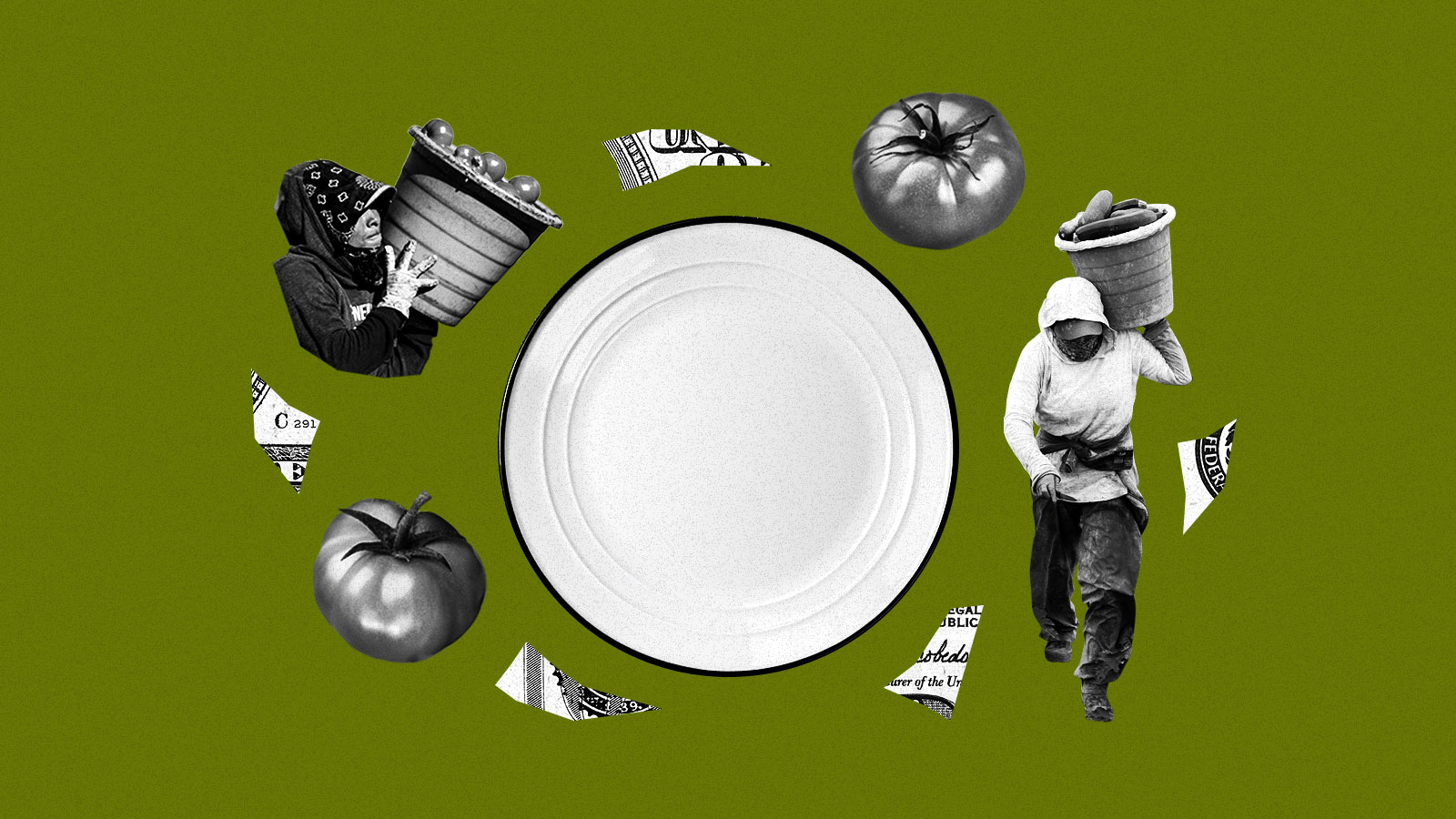
The people who feed America are going hungry
Climate change is escalating a national crisis, leaving farmworkers with empty plates and mounting costs.
Latest Articles
-
Tainted peanut butter and our troubled food system
An email from a PR person recently hit my inbox claiming that by high-school graduation, the average American has consumed 1,500 peanut butter sandwiches. I certainly did my bit to hold up the average; to this day I revere the unctuous paste of crushed, roasted peanuts.
Now, of course, comes news that a large producer of this protein-packed national treat (widely reviled, for reasons I can't fathom, by people in other nations) has been sending out product that's tainted by a particularly nasty strain of salmonella.
The New York Times' Kim Severson has a good piece on how the suspect peanut butter moved through the industrial food system, working its way into products as diverse as Clif Bars and Famous Amos Cookies.
News accounts don't typically mention that good old peanut butter has been tainted for a while now -- by sweeteners and dodgy industrial products. Look at Jif (not implicated in the salmonella outbreak), which is owned by Smuckers, which also owns Crisco, Pillsbury, and Hungry Jack. Merely roasting peanuts and pureeing them with a little salt isn't enough for the makers of Jif peanut butter. Its ingredients include: roasted peanuts and sugar, plus "2 PERCENT OR LESS OF: MOLASSES, PARTIALLY HYDROGENATED VEGETABLE OIL (SOYBEAN), FULLY HYDROGENATED VEGETABLE OILS (RAPESEED AND SOYBEAN), MONO- AND DIGLYCERIDES AND SALT." Yuck.
Come to think of it, the PR person whose email got me thinking about this issue was actually peddling a smart solution: a high-powerd kitchen contraption that allows you to make your own peanut butter (among many other things). As our famously fragmented food-oversight system continues to fail and our industrial-food purveyors continue to pump unnecessary crap into our food, do-it-yourself solutions make more and more sense.
-
Sustainable coffee, contaminants in the Columbia, and more
Every week, we compile a guide to the greenest goings-on in our hometown. We send it by email -- sign up here! -- and now it's available in Gristmill. (Not in Seattle? Not a problem -- we've got the inside scoop for you out-of-towners, too.)
-----
A stimulating exhibit
You may have asked your barista for a half-caf soy latte with sugar-free vanilla syrup, but according to a new exhibit at the Burke Museum, you've really got the whole world in your cup. Opening this weekend, Coffee: The World in Your Cup examines the environmental and social implications of the coffee industry through a variety of media including photographs, live plants, videos, in-gallery tastings, and a wall-to-wall display of coffee bags from local roasters. On Saturday, sip coffee from local roasters while hearing from caffeine-bean experts. Return Sunday for formal coffee cuppings that will teach you how to appreciate the variety of flavors and aromas in each mug.Plan it: The Burke Museum is open daily 10 a.m.-5 p.m. Special events Saturday and Sunday, Jan. 24-25, begin at 10 a.m. and continue throughout the day. See schedule for details.
Map it: The Burke Museum, 17th Ave. N.E. and N.E. 45th St., Seattle, Wash.
Not in Seattle? Not a problem: Though it's at the Burke until June 7, this is a traveling exhibit that could be hitting a cultural museum near you. Until then, read up on which fair-trade, organic, shade-grown Central American coffee got highest praise from Grist Food Editor Tom Philpott.Read on for more Seattle news ...
-
Organic farming beats genetically engineered corn as response to rising global temperatures
This week Science published research ($ub. req'd) detailing the vast, global food-security implications of warming temperatures. The colored graphics are nothing short of terrifying when you realize the blotches of red and orange covering the better part of the globe indicate significantly warmer summers in coming decades.
The implications of the article are clear -- we need to be utilizing agricultural methods and crops that can withstand the potential myriad impacts of global climate change, especially warmer temperatures. The article significantly notes, "The probability exceeds 90 percent that by the end of the century, the summer average temperature will exceed the hottest summer on record throughout the tropics and subtropics. Because these regions are home to about half of the world's population, the human consequences of global climate change could be enormous."
Whether you believe global warming is part of a "natural cycle" or a man-made phenomenon is irrelevant. The bottom line is that our earth is rapidly warming, and this is going to drastically affect our food supply. We must undertake both the enormous task of reducing our carbon emissions now to avert the worst, while at the same time adapting our society to the vast and multitudinous effects of unavoidable global climate change. Failing to do either will, as the Science article indicates, have dire effects on a large portion of our world's population.
Determining the best course of action for ensuring food security in the face of global climate change remains a challenging task. Recognizing that climate change is slated to affect developing countries and small-scale farmers the most is a crucial point. Such understanding enables people to realize that viable solutions must be accessible, affordable, and relevant to the billions of small-scale farmers in the developing world. Unfortunately, it appears that some of the solutions on the table fail to meet these criteria.
Last week, Monsanto made a big public relations splash by filing documents with the FDA regarding a drought-tolerant GM corn variety it is developing with a German company, BASF. Monsanto claims that in field trials, the corn got 6-10 percent higher yields in drought-prone areas last year, but the release is extremely short on details. Regardless of the reality, Monsanto is presenting the corn as a way to help improve on-farm productivity in other parts of the world, notably Africa.
Yet, absent from the media hype were the many technical and social problems with Monsanto's corn.
-
![]()
![]()
Why conventional popcorn sucks, and what you can do about it
Dear Lou,
What about popcorn? Is it safe, healthy, and free of pesticides? What exactly is in the artificial butter flavor?
Thanks,
Greenee Trailer Trash from Mississippi -
![]()
![]()
Maintaining healthy wild-oyster beds isn't quite as easy as oyster pie
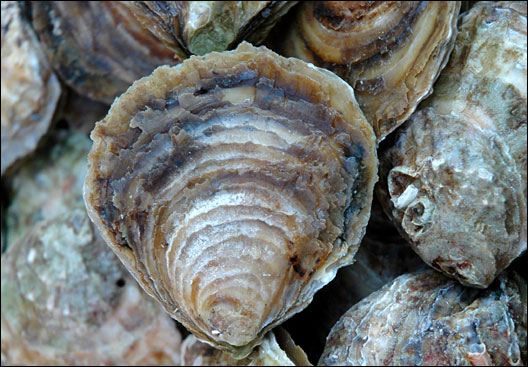
Pearl, interrupted. I have long been partial to oysters. But it wasn’t until a few years ago that I came to understand the environmental challenges they face. Many folks assume that water pollution poses the main threat to oysters. Turns out the real damage comes from water scarcity — specifically, a lack of freshwater draining […]
-
Jeremy Piven's sushi addiction: good for mercury awareness
Whether you believe the Hollywood rumor that Jeremy Piven dropped out of the Broadway production of Speed-the-Plow due to a heavy regime of partying and a subsequent rehab session, or his doctor's assertion that the star was ill due to mercury poisoning from a high dose of sushi (two servings per day, Pivs? Good Lord), the winner in this agent's nightmare is awareness of mercury contamination.
Piven went on Good Morning America on Thursday to explain himself, warn about excessive consumption of fish high on the food chain like tuna, and point people to BlueVoice.org. BlueVoice correctly pins the blame largely on coal-burning power plants and their propensity to sprinkle lakes, rivers, and oceans with emissions high in methylmercury that bioaccumulates up the food chain. I'd call that, um, a quicksilver lining.
-
An ode to the sea kitten
Today we give a tip o' the carp
To the bitterlings at PETA
Who've thought of yet another way
To make us better eatas.Agog at all our fishy friends
That on sharp hooks have bitten,
They've launched a cutesy-boots campaign
Called, yes, "Save the Sea Kitten!"If fish were "kittens," so they say,
You'd view them differently --
Your tuna would change if today's lunch
Were Kitten of the Sea. -
Does America have the food system that we deserve?
McDonald's is on a roll. Says the NYT:
Six years into a rebound spawned by more appealing food and a less aggressive expansion, McDonald's seems to have won over some of its most hardened skeptics.
The chain has managed to sustain its momentum even as the economy and the restaurant industry as a whole are struggling. Month after month, McDonald's has surprised analysts by posting stronger-than-expected sales in the United States and abroad.I've been won over all right. Won over to the argument that changing food policy in this country is a quixotic proposition. The article presents as progress that McDonald's responded to flattening beef consumption by going, quoth one executive, "at chicken hard."
Firstly, um, ew? And secondly, learning that McDonald's now sells more chicken than beef worldwide doesn't quite feel like the revolution is right around the corner.
-
Half of world's population could face climate-driven food crisis by 2100
"Ignoring climate projections at this stage will only result in the worst form of triage."
The headline is from the University of Washington news release on a study in Science, "Historical Warnings of Future Food Insecurity with Unprecedented Seasonal Heat" ($ub. req'd). The quote is the study's powerful final sentence. The release explains:
Rapidly warming climate is likely to seriously alter crop yields in the tropics and subtropics by the end of this century and, without adaptation, will leave half the world's population facing serious food shortages, new research shows ...
"The stresses on global food production from temperature alone are going to be huge, and that doesn't take into account water supplies stressed by the higher temperatures," said David Battisti, a University of Washington atmospheric sciences professor.Worse, the study must also be considered a serious underestimate of likely impacts since, as is common in such analyses, they based their simulations on "the 'middle of the road' emission scenario, A1B." In 2100, A1B hits about 700 ppm with average global temperatures "only" about 3°C warmer than today. In fact, on our current emissions path, we are going to get much, much hotter.

Figure. "Histogram of summer (June, July, and August) averaged temperatures (blue) observed from 1900 to 2006 and (red) projected for 2090 for (A) France, (B) Ukraine, and (C) the Sahel. Temperature is plotted as the departure from the long-term (1900-2006) climatological mean (21). The data are normalized to represent 100 seasons in each histogram. In (A), for example, the hottest summer on record in France (2003) is 3.6°C above the long-term climatology. The average summer temperature in 2090 [assuming A1B] is projected to be 3.7°C greater than the long-term climatological average."
The results are still alarming:
-
Grist cooks lunch for America’s leading food writer
Today Grist had the somewhat surreal experience of hosting Michael Pollan, the nation’s premier food writer, for lunch. And just to make it more stressful, we decided to do a potluck — each of us brought in a dish. Cooking for Pollan! Yikes! Happily, he enjoyed the food, and we had a nice conversation. We’ll […]