Climate Food and Agriculture

Climate + Food and Agriculture
EDITOR’S NOTE
Grist has acquired the archive and brand assets of The Counter, a decorated nonprofit food and agriculture publication that we long admired, but that sadly ceased publishing in May of 2022.
The Counter had hit on a rich vein to report on, and we’re excited to not only ensure the work of the staffers and contractors of that publication is available for posterity, but to build on it. So we’re relaunching The Counter as a food and agriculture vertical within Grist, continuing their smart and provocative reporting on food systems, specifically where it intersects with climate and environmental issues. We’ve also hired two amazing new reporters to make our plan a reality.
Being back on the food and agriculture beat in a big way is critical to Grist’s mission to lead the conversation, highlight climate solutions, and uncover environmental injustices. What we eat and how it’s produced is one of the easiest entry points into the wider climate conversation. And from this point of view, climate change literally transforms into a kitchen table issue.
Featured
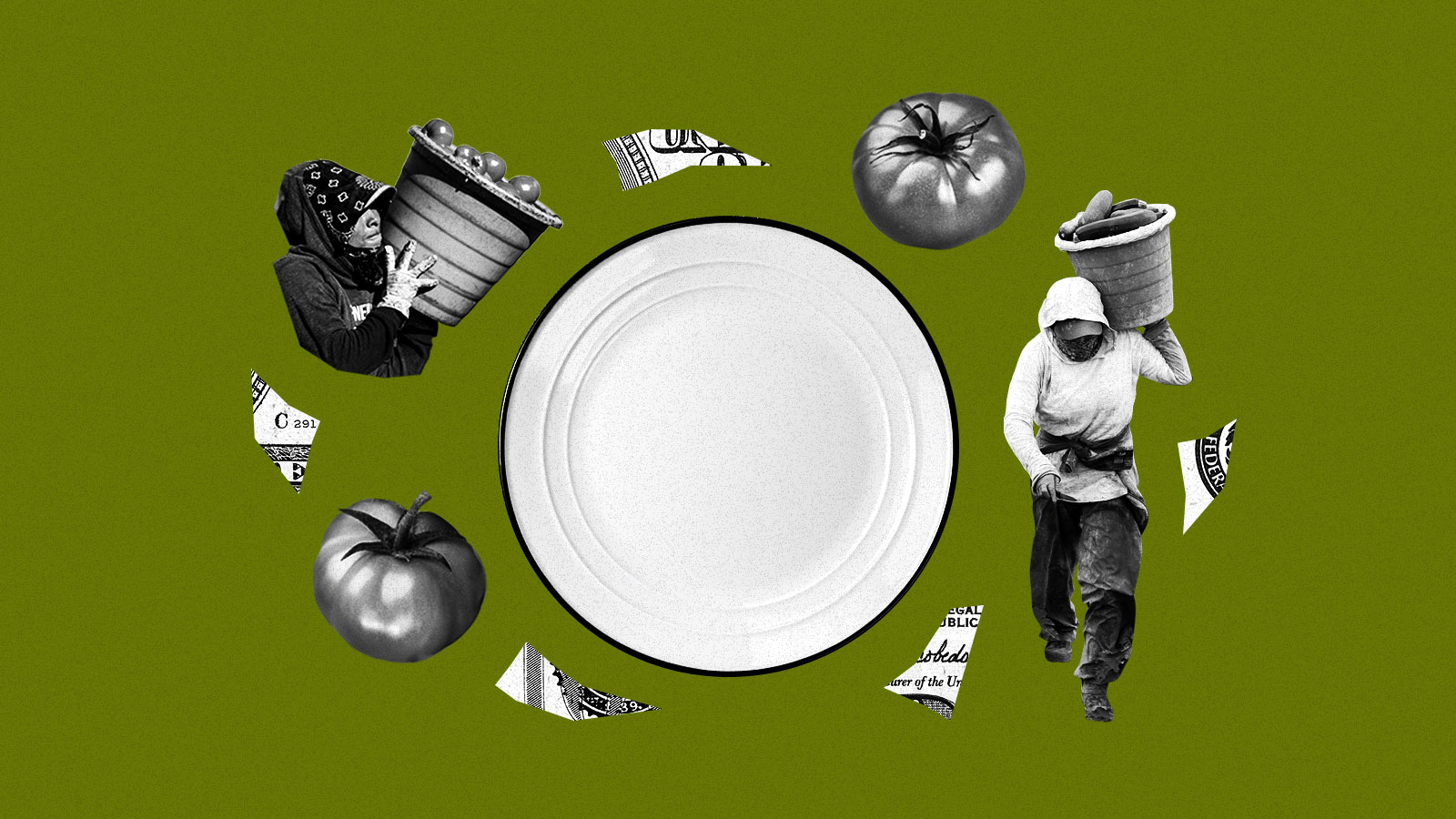
The people who feed America are going hungry
Climate change is escalating a national crisis, leaving farmworkers with empty plates and mounting costs.
Latest Articles
-
Where will biofuels and biomass feedstocks come from?
When it comes to biofuels we have choices. We can do it poorly, using short-run approaches with no potential to scale, poor trajectory, and adverse environmental impact. Or we can do it right, with sustainable, long-term solutions that can meet both our biofuel needs and our environmental needs.
We do need strong regulation to ensure against land-use abuses. I have suggested that each cellulosic facility be individually certified with a LEEDS-like "CLAW" rating, and that countries which allow environmentally sensitive lands to be encroached be disqualified from CLAW-rated fuel markets.
We think a good fuel has to meet the CLAW requirements:
C -- COST below gasoline
L -- low to no additional LAND use; benefits for using degraded land to restore biodiversity and organic material
A -- AIR quality improvements, i.e. low carbon emissions
W -- limited WATER use.Cellulosic ethanol (and cellulosic biofuels at large) can meet these requirements.
Environmentally, cellulosic ethanol can reduce emissions on a per-mile driven basis by 75-85% with limited water usage for process and feedstock, as illustrated later. Range, Coskata, and others currently have small-scale pilots projecting 75% less water use than corn ethanol, with energy in/out ratio between 7-10 EROI (though we consider this a less important variable than carbon emissions per mile driven).
Sustainable land use
The question about biomass production that arises first is about land use: how much will we need? What will it take? Is it scalable? For conservatism, I assume CAFE standards in the U.S. per current law, though I expect by 2030 to have much higher CAFE and fleet standards (hopefully up near 54mpg or a 100% higher that 2007 averages), which will dramatically reduce the need for fuel an hence biomass. Yes, this would include lighter vehicles, more efficient engines, better aerodynamics, low-cost hybrids, and whatever else we can get the consumer to buy that increases mpg.
-
Ecosystems are nonlinear
Here's a disturbing study that seems to mimic nothing so much as my mother-in-law's theory that small brownie pieces cut from the edge of the remaining mass of brownies left in the pan ("the efficient frontier," an economist might call it) don't have calories, because each little tiny mini-slice hardly changes the amount of brownie left at all.
On the one hand, the example cited is not particularly objectionable: Researchers claim to have found a mangrove where you can remove 20% of it with little reduction in flood control capacity -- meaning you can use that 20% for factory farmed shrimp and such.
The attitude of this article is in sharp contrast with that of Aldo Leopold and others, who would suggest that recognizing nonlinearity is a good first step, but that wisdom, or even an approximation of it, doesn't begin until you recognize that this ...
-
It’s not always just Monsanto screwing with the food system
Creating a food system that is "good, clean, and fair" involves more than the buy-local mantra and the anti-Monsanto-ADM-WalMart rhetoric I and so many others constantly chanting. Sometimes even more evil and insidious obstacles lie in our way.
Witness what's taking place in Kenya:
-
Notable quotable
“I like real food. Food that I can pronounce the name of.” — House minority leader John Boehner, protesting to the new, healthier menu offered at the House cafeteria thanks to Majority Leader Nancy Pelosi’s “Greening the Capitol” program (Background on opposition from ag lobbies here. Some rather … piquant comments from Chris Bower here.)
-
Pennsylvania will allow hormone labels on dairy products
A decision by Pennsylvania agriculture officials that dairy products sold in the state could not be labeled as synthetic-hormone-free sparked a consumer outcry and a review by Governor Ed Rendell. Yesterday, officials more or less reversed that ban: dairies will be allowed to advertise that their cows aren’t shot up with synthetic hormones, which increase […]
-
Scientist says biofuel boom endangers world’s largest rainforest
A fifth of the Amazon rainforest — the world’s biggest carbon sponge — has disappeared since the 1970s. The Brazilian government has succeeded in recent years in slowing the deforestation rate, but its efforts have recently been faltering. Bungle in the jungle. Photo: iStockphoto In the last four months, 2300 square miles of rainforest got […]
-
Notable quotable
"I really think the more I look at this whole cellulosic issue, there is a lot bigger problem to overcome here than people realize in terms of the feedstocks. We have a lot of work to do in that regard. I’m not sure cellulosic ethanol will ever get off the ground." — Rep. Collin Peterson […]
-
An Iowa chef takes issue with Time’s Joel Stein
Regarding the article Tom mentioned yesterday, Joel Stein's Time article, "Extreme Eating": while Mr. Stein is of course free to eat whatever type of food he chooses, I must take exception to his contention that "Dodd was basically telling the Iowans that every night they should decide whether to accompany their pork with creamed corn, corn on the cob, corn fritters or corn bread. For dessert, they could have any flavor they wanted of fake ice cream made from soy, provided that flavor was corn."
I am forced to question whether Mr. Stein has actually been to Iowa (outside of a presidential candidate's rally). While there is indeed a large amount of corn, soy, and pork grown here (more than anywhere in the world in fact), to say that this is all we can eat when we choose to eat locally is blindly absurd and typical of a bicoastal mentality that considers America's great heartland to be little more than "flyover states."
-
Cloned meat and milk just as safe as conventional, says long-awaited FDA report
In a nearly 1000-page report, the U.S. Food and Drug Administration has concluded that food from cloned animals and their offspring “is as safe to eat as that from their more conventionally bred counterparts.” The report effectively removes regulatory barriers to cloned food being offered to U.S. consumers, but practical barriers still remain, and it […]
-
Scientists unveil genetically modified calcium-boosting supercarrot
U.S. scientists have unveiled a new “supercarrot” genetically modified to provide extra calcium, which they hope could ultimately help ward off osteoporosis. Say what you will about genetic modification, but you can’t deny that picturing a carrot flying across the sky in a cape is funny.
