Climate Food and Agriculture
Climate + Food and Agriculture
EDITOR’S NOTE
Grist has acquired the archive and brand assets of The Counter, a decorated nonprofit food and agriculture publication that we long admired, but that sadly ceased publishing in May of 2022.
The Counter had hit on a rich vein to report on, and we’re excited to not only ensure the work of the staffers and contractors of that publication is available for posterity, but to build on it. So we’re relaunching The Counter as a food and agriculture vertical within Grist, continuing their smart and provocative reporting on food systems, specifically where it intersects with climate and environmental issues. We’ve also hired two amazing new reporters to make our plan a reality.
Being back on the food and agriculture beat in a big way is critical to Grist’s mission to lead the conversation, highlight climate solutions, and uncover environmental injustices. What we eat and how it’s produced is one of the easiest entry points into the wider climate conversation. And from this point of view, climate change literally transforms into a kitchen table issue.
Featured
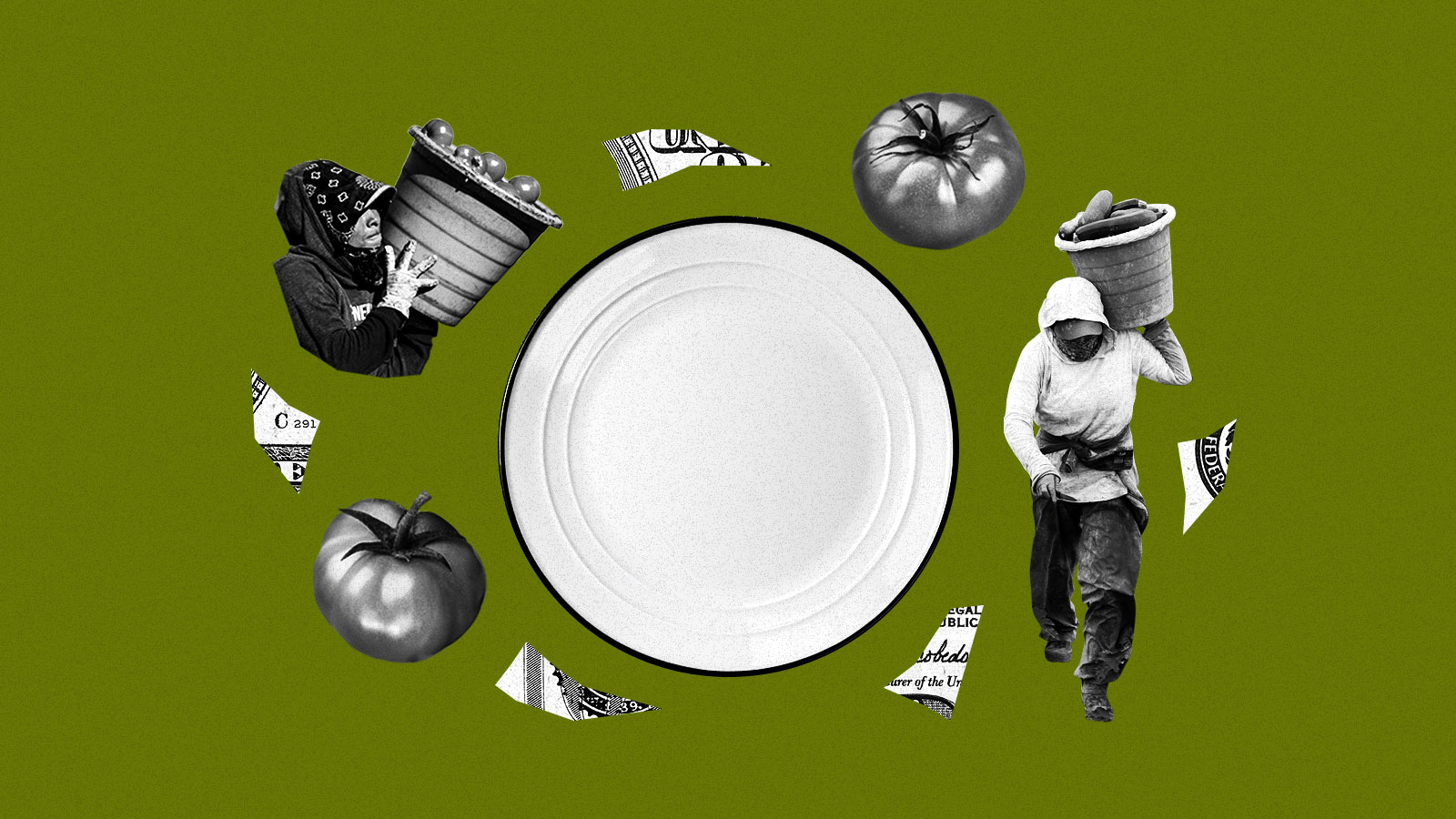
The people who feed America are going hungry
Climate change is escalating a national crisis, leaving farmworkers with empty plates and mounting costs.
Latest Articles
-
Extreme weather wipes out pumpkin crop
 Global warming threatens our 4th of July celebrations with droughts that have forced communities to scrap plans for fireworks displays. And it threatens our White Christmases with winter heat waves. And our Arbor Days with record wildfires. Now it imperils our Halloweens.
In a story headlined, "Rain, Drought, Wipe Out Pumpkin Crops Across U.S.," Fox News reports the frightening news:
Scorching weather and lack of rain this summer wiped out some pumpkin crops from western New York to Illinois, leaving fields dotted with undersized fruit. Other fields got too much rain and their crops rotted.
Pumpkin production is predicted to be down for the second straight year.One expert ominously predicts a run on pumpkins: "If you've got to have them for your 5-year-olds, I certainly would not wait a long time to get them."
Even Stephen Colbert has reported on what he calls the War on Halloween (though, characteristic of his out-of-the-mainstream politics, he doesn't make the obvious link to global warming).
The bottom line, however, is clear: Pumpkins (like most people) hate extreme weather. Sadly, global warming means more droughts and more deluges.
What exactly does extreme weather do to pumpkins?
-
A plea for higher food consciousness from My Name Is Earl
Here’s a new anthem for all the veggies and vegans out there. It’s from My Name Is Earl, a couple weeks ago. Darnell is a gentle soul who’s in witness protection; his cover requires him to cook at the Crab Shack and … kill crabs.
-
Does this Halloween skepticism make me a curmudgeon?
In a few days doorbells will ring and door-knockers will clack all over America. Our neighbor's children will appear in and out of costume with a bag pulled open or an upturned hand outstretched. Our reputations will be on the line, but what's the right thing to do?
Shopping for treats to give the future of America has turned into a lose-lose proposition, in my humble opinion. Most of the stores are promoting bite-sized candy. These so-called treats come in tamper-evident packages -- from the point of view of the health and welfare of those little tykes, that's the only good thing about them.
-
Interview with filmmakers behind corn expose
Xeni Jardin of BoingBoing interviews the filmmakers behind King Corn:
-
A couple of additions to this week’s Victual Reality column
In this week’s Victual Reality, we ran an interview I did recently with officials from the National Corn Growers Association and the American Farmland Trust. I edited the transcript in a certain amount of haste (it was right during the chaos of our Sow What? series on food and farming) — and I left out […]
-
Dialing local ag up from its very source
Here's a way to save for the future, one that may prove just as important as cash: a community farm, Red Gate Farm, in my town has started a grassroots seed bank to develop and disseminate local vegetable varieties, and it depends on its members to help grow the seeds out and contribute new ones. It's a great (and replicable) community project, with fingers deep in the area's history and culture. And with a climate on the fritz, indigenous seeds will likely play an increasingly important role in sustaining local agriculture.
-
A conversation with a spokesperson for the National Corn Growers Association and his friend from the
The productivity of U.S. corn farmers should inspire awe. According to the U.S. Grains Council, the U.S. produces about 44 percent of the globe’s corn crop — that’s more than China, the European Union, Brazil, Argentina, and Mexico combined. Iowa alone, which produces a sixth of U.S. corn, produces about as much as the European […]
-
U.K. organic certifier says air-freighted organics must meet “ethical standards”
Britain’s main organic certifier, the Soil Association, has decided not to deny the organic label to air-freighted food, instead opting to require producers of flown-in fare to meet ethical standards similar to “fair trade” certification. The association decided that denying organic status to all flown-in food would unfairly hurt farmers and workers in poor countries. […]
-
$5 could be yours
It’s morning in St Louis, and we’re getting ready to talk with some of the movers and shakers in the world of riverfront greenways. While preparing, we ate at a greasy spoon where Jimmy Kimmel was on the teevee talking about his daily cross-country flights for this week’s double-hosting duty. Yikes. On a side note, […]
-
Soup bleg
So, it happens that a number of Gristies are having soup-based lunches today. Me, I’m having chili. Which prompted a comment from a colleague: “Well, that’s a kind of soup, right?” Me: “Or is it a kind of stew?” Other colleague: “Or is stew a kind of soup?” So, a few seconds googling some intense […]
