Climate Food and Agriculture
Climate + Food and Agriculture
EDITOR’S NOTE
Grist has acquired the archive and brand assets of The Counter, a decorated nonprofit food and agriculture publication that we long admired, but that sadly ceased publishing in May of 2022.
The Counter had hit on a rich vein to report on, and we’re excited to not only ensure the work of the staffers and contractors of that publication is available for posterity, but to build on it. So we’re relaunching The Counter as a food and agriculture vertical within Grist, continuing their smart and provocative reporting on food systems, specifically where it intersects with climate and environmental issues. We’ve also hired two amazing new reporters to make our plan a reality.
Being back on the food and agriculture beat in a big way is critical to Grist’s mission to lead the conversation, highlight climate solutions, and uncover environmental injustices. What we eat and how it’s produced is one of the easiest entry points into the wider climate conversation. And from this point of view, climate change literally transforms into a kitchen table issue.
Featured
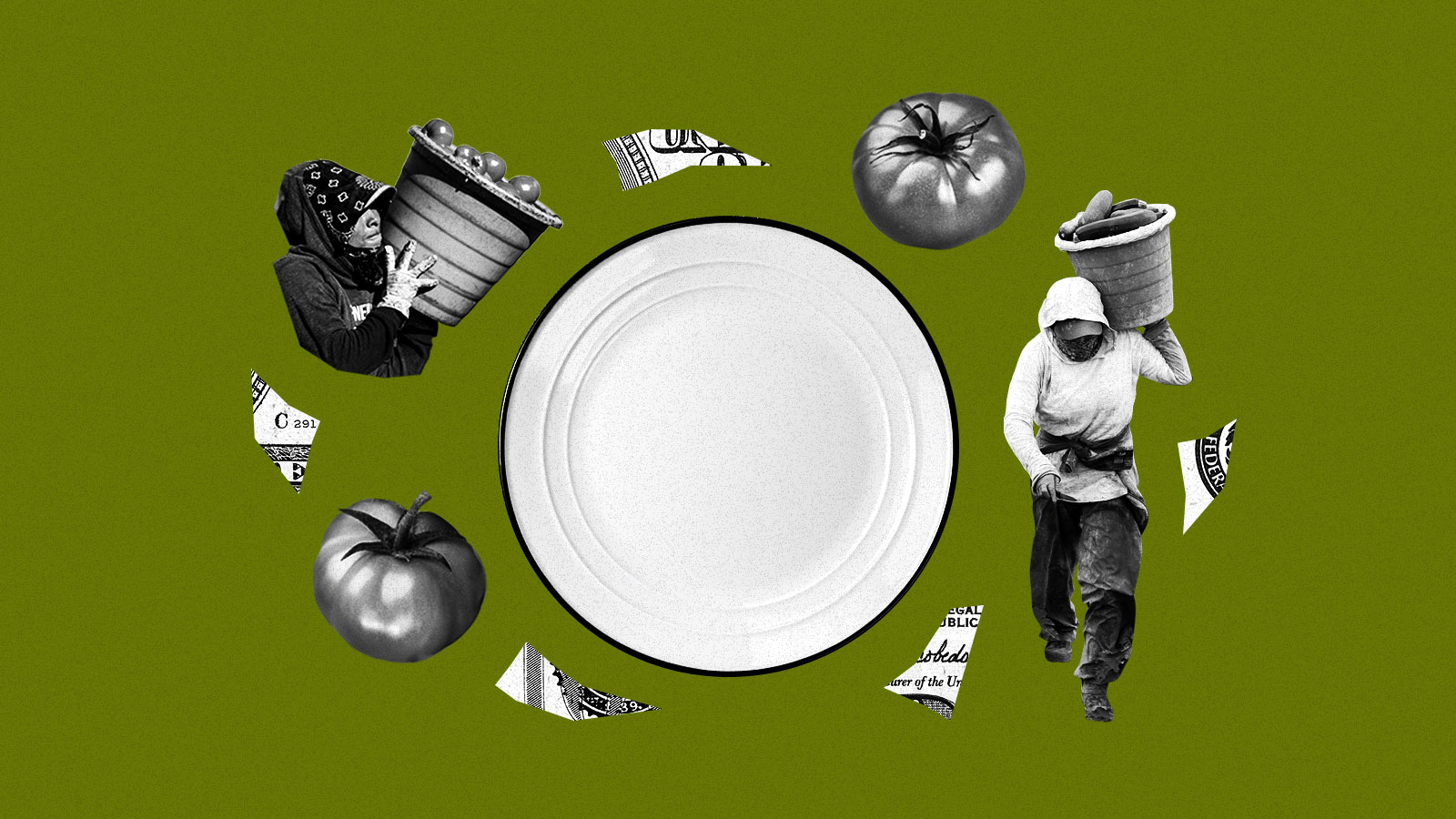
The people who feed America are going hungry
Climate change is escalating a national crisis, leaving farmworkers with empty plates and mounting costs.
Latest Articles
-
Twice in one week!
Monsanto has barreled its way toward dominance over the global seed market with strong-arm tactics and friends in high places. As evidence of the former, the roguish company once threatened to sue me — then a neophyte blogger with 30 readers — on the most trivial grounds possible. As for the latter, software monopolist Bill […]
-
So far, small-scale, local-minded beekeepers have dodged hive collapse.
This post marks the launch of Fork it Over, in which I (attempt to) answer questions inspired by my Victual Reality column. Got a question about food and the politics that surround it? Fork it over, by emailing it to victuals(at)grist(dot)org. Reader Brooklynolmec writes in to inquire: are organically managed bees faring any better these […]
-
![]()
![]()
Savor your flavors with the slow-food movement
This is the fourth in a series of articles about connecting with people over food. Read others on setting up a dining co-op, celebrating Passover, and hosting an Earth Dinner. When I told a friend that I was writing an article about slow food, she said, “What’s that? The opposite of fast food?” In a […]
-
No more compromise
This is one issue where there can't be any compromise at this point: the demand for shark fin soup is decimating shark populations and marine ecosystems, and must stop. Whereas most forms of animal consumption put strains on ecosystems, this practice is extreme and environmentalists should continue to wage a "zero tolerance" campaign against it. It's not cultural imperialism or Big Brother, it's common sense and respect for life.
-
A guest blog from farmer’s rights legend Hope Shand
In the global fight to preserve what’s left of agricultural biodiversity from the ravages of the multinational chemical/seed giants and their government lackeys, no civil-society organization stands taller than the ETC Group. Among other projects, ETC documents the growing dominance over the global seed market by a handful of firms: Monsanto, Syngenta, and Dupont. The […]
-
How food processing got into the hands of a few giant companies
Two years ago, dairy giant Dean Foods shuttered a milk-processing facility in Wilkesboro, a town at the eastern edge of North Carolina’s Appalachian Mountains. Photo: iStockphoto Dean processes 35 percent of the fluid milk in the U.S. and Canada — roughly equal to the combined market share of its three biggest rivals combined. In my […]
-
Some miscellaneous but connected items
The daily news is never short of articles on biofuels these days, but these three caught my eye today.
-
Now that I’ve actually read the book …
When I caught up with 100-mile dieters Alisa Smith and James MacKinnon a few weeks ago, they were just kicking off their book tour with a stop in Toronto, and I hadn’t even had a chance to read Plenty, in which they recount a year of local eating. Sure, I had the basic info — […]
-
Feeding the world sustainably

(Part of the No Sweat Solutions series.)
If heaven was a pie it would be cherry
Cool and sweet and heavy on your tongue
And just one bite would satisfy your hunger
And there'd always be enough for everyone
-- Gretchen Peters, "If Heaven"Agriculture for food and fiber represents another significant category of environmental impact. Before we worry about how to farm, we should consider how much agriculture we need. If you read the technical news, when this subject comes up it always centers on how to increase food production for a hungry world.
This is completely misleading. There is enough food produced (including meat and fish) worldwide not just to feed everyone on the planet, not just to make everyone fat, but to make everybody morbidly obese. Counting grain, beans, roots, fruits, vegetables, nuts, and other plants and fungi (not including animal feed), plus livestock, dairy, fish, eggs, and other animal products raised for human consumption, we produced nearly 2,800 calories per person per year in 2001[1] -- including 75 grams of protein. 2,200 calories per day is generally accepted as the average needed to keep a person healthy -- neither losing nor gaining weight[2]. 56 grams of protein is the U.S. RDA for adult men[3].
Many people have higher requirements than this -- most grown men, pregnant and lactating women, athletic women. (As one instance, Lucy Lawless used to perform gymnastics and horseback riding in fairly heavy armor ten or more hours per day while starring in "Xena - Warrior Princess," and probably burned 6,000+ calories daily at the peak of her schedule.) Children, and median-height adult women, generally need less. Below 2,200 calories, and 56 grams on average, is considered an absolute shortage; if we allow a comfort and safety margin, that would mean we want at least 2,300 calories on average per person available worldwide.
How big an increase do we need to keep up with population growth? According to the U.S. Census[4], if you assume the same production with projected increases in population we will still average ~2,500 calories per person per day in 2010, ~2,300 per day in 2020. Without no cultivation of more acreage or increase in production per acre, we then approach absolute scarcity, falling to 1,900 in 2050. We need no increase in total food production before 2020, and only a 21 percent increase by 2050.
Moreover, in one sense the problem of getting that increase is already solved.
-
![]()
![]()
Earth Dinners keep cuisine and conversation flowing
This is the third installment in a series about connecting with friends and family over specific meals; the first was an introduction to dining co-ops, the second a celebration of Passover. At a recent dinner party, I pulled out my deck of Earth Dinner cards. The first one asked, “Who in your life really understands […]