Higher gas prices are bringing some Americans back to public transit.
The increase in ridership comes as the war in Iran has disrupted oil shipments through the Strait of Hormuz, pushing the national average price of gasoline beyond $4.50 per gallon. In California, drivers are paying more than $6.15 per gallon on average.
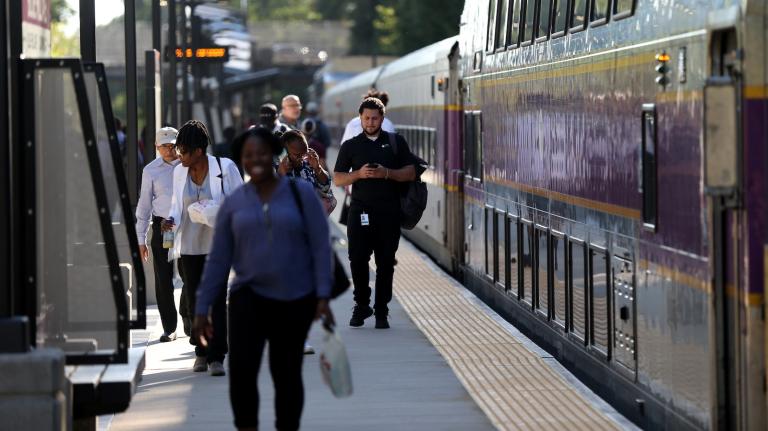
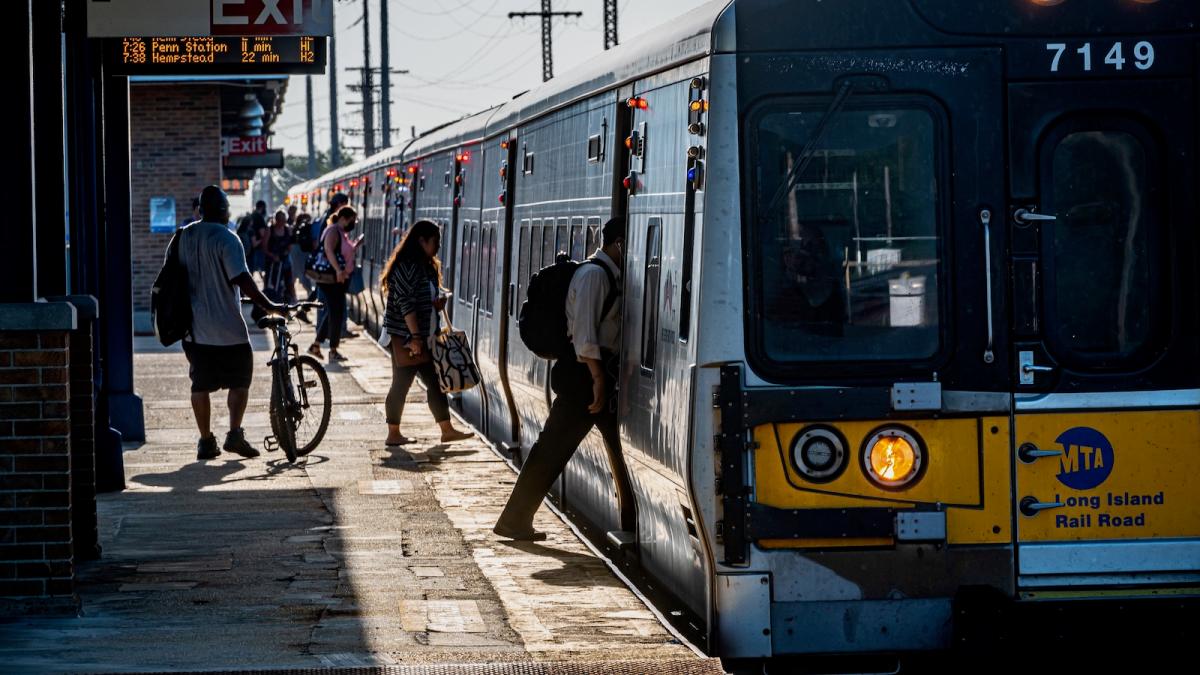
Rising fuel prices have historically pushed at least some Americans toward buses and trains, particularly commuter rail. But experts caution that decades of car-oriented development and inconsistent transit funding still leave most people with few practical alternatives to driving.
For those reasons, ridership is rising most sharply in places with robust transit systems and steep fuel prices.
California is a clear example. Transit agencies in San Diego, Los Angeles County, and the San Francisco Bay Area have seen ridership jump in recent weeks. The San Francisco Municipal Transportation Agency –– which, like others in California, received an emergency loan from the state in February –– saw its highest ridership totals since the pandemic in March.
Mark Olson, a spokesman for the San Diego Metropolitan Transit System, said gas prices probably drove the 6.5 percent jump in ridership it experienced in March compared to the previous year. Until the agency surveys riders, however, that remains an educated guess.
“A lot of our riders are low-income, and certainly gas prices can be much more sensitive to lower-income residents and riders,” Olson said. In an effort to court riders, the agency, which faces a $500 million budget deficit over the next four years, has launched a commute calculator that compares the cost of driving and public transit.
Michael Roccaforte, a spokesman for the San Francisco MTA, said it is too early to link higher gas prices to ridership increases but called the return of riders to Muni — which has undergone speed and reliability upgrades in recent years — “a promising sign.”
“It’s a service that really matters to everyone here in San Francisco,” he said.
The ridership gains aren’t limited to California. The Washington Metropolitan Area Transit Authority in the Washington, D.C., region and Valley Metro in Texas also reported increases. Intercity passenger rail operators Amtrak and Brightline have seen a boost, too.
The trend mirrors past research showing that sustained increases in fuel costs can push some people toward public transit. Hiroyuki Iseki, an urban studies and planning professor at the University of Maryland, co-authored a study on how gasoline prices affected public transit in 10 cities between 2002 and 2011. He found that when gas prices climbed 10 percent over the course of 13 months, light rail ridership increased by 1.2 percent and bus ridership by 0.8 percent.
Iseki’s study also found psychological effects as gas prices passed different thresholds. For example, when gas prices rose by 10 percent and topped $3 per gallon, ridership of all forms of mass transit increased by about 1.2 percent. A 10 percent increase that pushed prices beyond $4 led to a 9.3 percent jump for light rail.
“Usually the people who use commuter rail take rail only for commuting, just one round trip between home and their work location,” Iseki said. “Commuter rail, the travel distance is longer than other transit trips, so the longer the distance of travel the more pricey the gasoline cost.”
Some people are better positioned to leave their cars at home, said UCLA urban planning professor Michael Manville. Those with access to commuter rail, which tends to be time competitive with driving, might make a change. But the more likely outcome is people continue driving to work and make shorter or fewer trips or even cut back on other expenses, he said. That’s because of the cognitive hurdle often required to make a switch to mass transit.
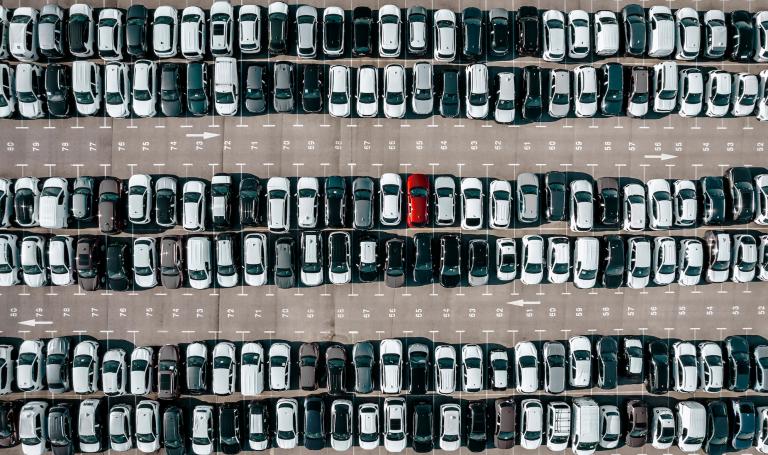
“It’s one thing to say, ‘Look, I’m just not going to drive quite as much as I used to,’ in a discretionary way,” Manville said. “It’s quite another for the typical person to then say, ‘I’m not gonna drive to work. I’m gonna figure out how the bus works.’”
There is a societal challenge as well. The U.S. has since the end of World War II made cars the focal point of city planning. “We made a bunch of policy decisions that turned them into bad masters, but they are also good servants,” Manville said of automobiles. “You throw the family in them, and you don’t have to worry about the chaos of your kids and all their stuff.”
A fundamental shift from car travel to public transit would require better-funded systems that offer greater reliability and convenience. Transit has accounted for less than a third of federal transportation funding since 1956. As of 2017, 87 percent of trips in the U.S. were taken by car.
Federal policy has an enormous impact on who does and does not have access to something like commuter rail. Elisa Ramirez, who works on policy for Transportation for America, would like to see the federal government treat mass transit as a core priority with consistent funding. Until that happens, car travel will likely continue to be the dominant mode of transport.
“Time is money, and even though people can afford a $2 fare, they can’t afford to be late for work or miss doctors appointments,” she said. “For most Americans, driving is not optional, and that’s my big thing. How much does gas impact people moving to transit? First we need to have reliable transit.”