Skip to content
Grist home
All donations doubled!
  • $10/mo
  • $15/mo
  • Other
  • Donate Donate
25 Years on the Climate Beat
Grist home
  • Follow
    • Follow us on Facebook
    • Follow us on Twitter
    • Follow us on Instagram
    • Follow us on YouTube
    • Follow us on Bluesky

    Get a weekly dose of climate inspiration in your inbox

  • Donate
  • Donate

Menu

A nonprofit, independent media organization dedicated to telling stories of climate solutions and a just future.

Search

Go To

  • About
  • Support Us
  • Newsletters
  • Advertise
  • Become a Member
  • Events
  • The Grist 50
  • Imagine 2200 Cli-Fi
  • Pitch Us
  • Local News

Topics

  • Politics
  • Energy
  • Equity
  • Solutions
  • All Topics

  • Follow us on Facebook
  • Follow us on Twitter
  • Follow us on Instagram
  • Follow us on YouTube
  • Follow us on Bluesky

Get a weekly dose of climate inspiration in your inbox

Biden is canceling fossil fuel subsidies. But he can’t end them all.

A new executive order targets handouts to oil, gas, and coal.

Grist / Oddphoto / alacatr / Getty Images
Shannon Osaka Reporter
Published
Jan 28, 2021
Topic
Climate + Politics
Share/Republish
Copy Link Republish
Copy Link Email Email SMS SMS X Facebook
Republish
Reddit LinkedIn Bluesky

President Joe Biden signed an order directing federal agencies to eliminate subsidies for fossil fuels on Wednesday, amid a bonanza of climate-focused executive orders. “Unlike previous administrations,” he said at a press briefing, “I don’t think the federal government should give handouts to Big Oil.”

Climate activists have been waiting to hear those words for years. Fossil fuel subsidies, they argue, keep oil and gas companies in business and help them spew planet-warming carbon dioxide into the atmosphere.

Your support powers solutions-focused climate reporting — keeping it free for everyone. All donations DOUBLED for a limited time. Give now in under 45 seconds.
Secure · Tax deductible · Takes 45 Seconds

Stories like this don’t tell themselves.

Make others like it possible. Your support powers solutions-focused climate reporting — keeping it free for everyone. Give now in under 45 seconds.
Secure · Tax deductible · Takes 45 Seconds

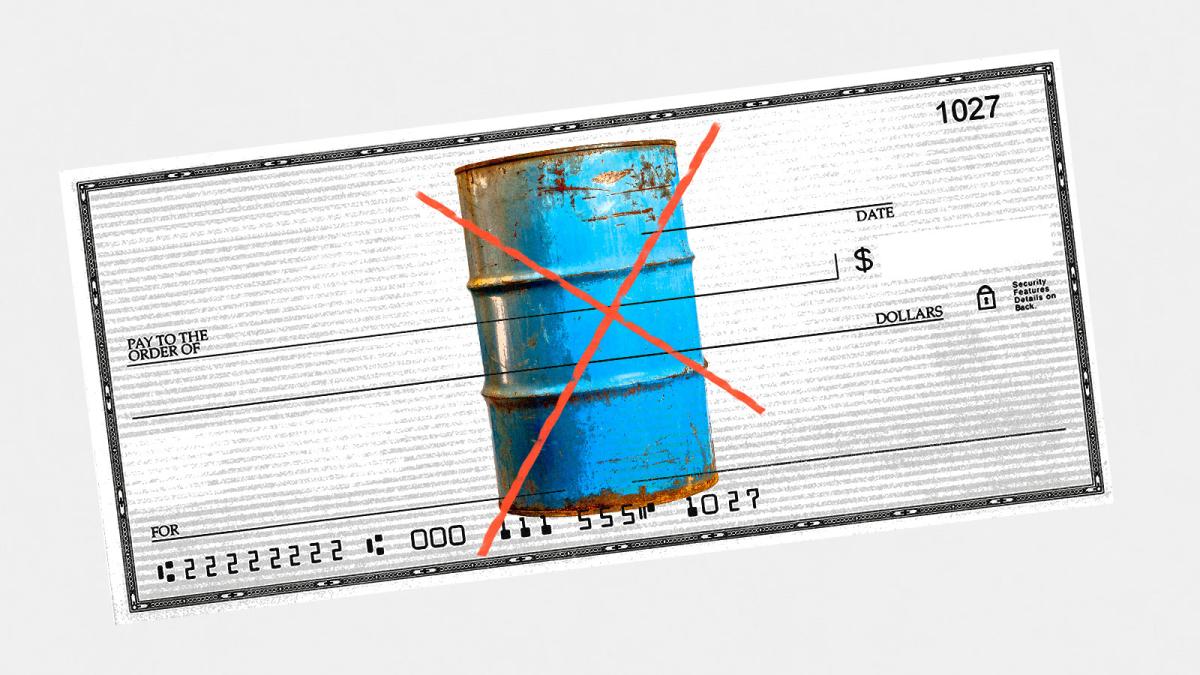
The problem is that not everyone agrees on what counts as a fossil fuel subsidy and what doesn’t. Subsidies aren’t blank checks from the government: They usually take the form of tax breaks, regulatory loopholes, or anything else that gives a particular industry a leg up. The estimates for the U.S. run from around $20 billion to as much as $650 billion a year, if you think fossil fuel companies should be paying the government for all the damages from their pollution.

One of the best available analyses comes from the research and advocacy organization Oil Change International, which calculates that the federal government funnels a whopping $15 billion every year into the production of fossil fuels, thanks in part to the energetic efforts of fossil fuel lobbyists. (That doesn’t account for the $14.5 billion in subsidies to bring down gas prices and utility bills, making fossil fuels more affordable, or the roughly $2 billion spent investing in oil, gas, and coal projects overseas.)

Grist thanks its sponsors. Become one.

To support our nonprofit environmental journalism, please consider disabling your ad-blocker to allow ads on Grist. Here's How

But only a fraction of those subsidies are within Biden’s purview as president. A substantial portion of that $15 billion a year comes from tax breaks or other financial incentives that are set and managed by Congress, so getting rid of those would require passing legislation. “My understanding is that he’s going to essentially direct federal agencies to eliminate the subsidies that are under their control,” said Collin Rees, a senior campaigner at Oil Change International. That could amount to “a few billion dollars” a year, or around 20 percent of all federal subsidies for extracting and producing fossil fuels.

That’s why Biden’s order contains a key phrase: The government is only ordered to cut out subsidies “as consistent with applicable law.” The president can’t touch Congress’ fossil fuel budget, but there are a few places where federal agencies — like the Department of Justice or the Department of Energy — could make a huge difference.

First, the Biden administration could make sure that fossil fuel companies have to pay up when facing government penalties. In 2015, for instance, the Justice Department reached a settlement with BP over the Deepwater Horizon oil spill, promising that the company would have to pay $20.8 billion in damages for leaking oil all over the Gulf of Mexico. But the settlement turned out to be tax-deductible, meaning that BP could write off $15.3 billion of the penalty. Under a Biden administration, the Justice Department could close that kind of loophole, Rees said.

The federal government also spends upwards of $700 million every year maintaining and constructing shipping lanes on rivers around the U.S., often for the transport of oil and coal. That, Rees says, could also be cut down if the Biden administration moves to eliminate support of fossil fuels. The government could also stop new low-cost leasing in publicly owned lands in the Powder River Basin of Wyoming and Montana, where coal companies are getting a big financial break on mining.

Grist thanks its sponsors. Become one.

To support our nonprofit environmental journalism, please consider disabling your ad-blocker to allow ads on Grist. Here's How

The biggest effect of Biden’s new order might not be the money itself. “The dollars at stake here are not going to hurt the industry,” said Andrew Logan, the senior director of oil and gas at Ceres, a sustainability nonprofit. While a few billion dollars looks big in the aggregate, spread across the entire U.S., it probably isn’t enough to hurt a particular company or project. But the executive order could damage the industry’s image. “What they really don’t want to do is become the next tobacco,” Logan said. Dwindling support for fossil fuels could lead banks and investors to steer clear of oil and gas companies in the future.

Rees says that environmental activists have pushed the elimination of fossil fuel subsidies from a niche cause to a voter demand. Last year, the Democratic National Committee faced backlash after quietly removing mention of oil and gas funding from its party platform. (At the time, Biden’s press secretary confirmed that the candidate still supported canceling government support for fossil fuels.)

Biden’s orders are also a big shift from the Obama years, when the name of the game was an “all of the above” energy strategy that didn’t specifically target fossil fuels. Now, pressured by activists, the federal government is much more openly hostile to oil and gas. As part of the same executive order on Wednesday, for example, Biden also promised that the U.S. would work to end international financing of fossil fuel projects. There’s “this increasing recognition that the fossil fuel industry is not our friend,” Rees said.
A message from   

Your support keeps our climate news free. All donations DOUBLED!

Grist is the only award-winning newsroom focused on exploring equitable solutions to climate change. It’s vital reporting made entirely possible by loyal readers like you.

At Grist, we don’t believe in paywalls. Instead, we rely on our readers to pitch in what they can so that we can continue bringing you our solution-based climate news. Donate today to keep our site free. All donations DOUBLED for a limited time.

Grist is the only award-winning newsroom focused on exploring equitable solutions to climate change. It’s vital reporting made entirely possible by loyal readers like you.

At Grist, we don’t believe in paywalls. Instead, we rely on our readers to pitch in what they can so that we can continue bringing you our solution-based climate news. Donate today to keep our site free. All donations DOUBLED for a limited time.

Donate Now Not Now

A message from

Your support keeps our climate news free. All donations DOUBLED!

Grist is the only award-winning newsroom focused on exploring equitable solutions to climate change. It’s vital reporting made entirely possible by loyal readers like you.

At Grist, we don’t believe in paywalls. Instead, we rely on our readers to pitch in what they can so that we can continue bringing you our solution-based climate news. Donate today to keep our site free. All donations DOUBLED for a limited time.

Nikhil Swaminathan
Nikhil Swaminathan
CEO, Grist
DONATE NOW
Not Now
Next Article

Big Tech says it wants to solve climate change. Its lobbying dollars say otherwise.

Zoya Teirstein Politics

Grist thanks its sponsors. Become one.

Grist thanks its sponsors. Become one.

To support our nonprofit environmental journalism, please consider disabling your ad-blocker to allow ads on Grist. Here's How

Politics

a hot sun with heat blur over a landscape also blurred

How the planet fared in 2025 — the good, the bad, and the ugly

Matt Simon
  • Under Trump, the National Renewable Energy Lab is losing ‘renewable’ from its name

    Sophie Hurwitz
  • 2025: The year the US gave up on climate, and the world gave up on us

    Naveena Sadasivam
  • The EPA website got the basics of climate science right. Until last week.

    Kate Yoder

Latest

A display of shoes with a neon sign that reads 'You deserve new shoes' in the shop window of a New Look fashion retail store on November 10, 2025 in London, United Kingdom.

What your cheap clothes cost the planet

Sachi Kitajima Mulkey & Rebecca Egan McCarthy
  • The EPA was considering a massive lead cleanup in Omaha. Then Trump shifted guidance.

    Chris Bowling, Flatwater Free Press
  • Top Interior Department official has ties to Thacker Pass lithium mine

    Jimmy Tobias, High Country News & Chris D'Angelo
  • A huge cache of critical minerals found in Utah may be the largest in the US

    Leia Larsen

Modal Gallery

/

The only newsroom focused on finding solutions at the intersection of climate and justice. Donate today to help keep Grist’s site and newsletters free. 

Support Grist

Topics

  • Energy
  • Politics
  • Solutions
  • Accountability
  • Extreme Weather
  • The Grist 50

Company

  • About
  • Team
  • Contact
  • Careers
  • Fellowships
  • Pressroom

More

  • Newsletters
  • Events
  • Become a Member
  • Advertising
  • Republish
  • Accessibility

© 1999-2025 Grist Magazine, Inc. All rights reserved. Grist is powered by WordPress VIP. Terms of Use | Privacy Policy

  • Follow us on Facebook
  • Follow us on Twitter
  • Follow us on Instagram
  • Follow us on YouTube
  • Follow us on Bluesky
Share This Video: