Climate Food and Agriculture

Climate + Food and Agriculture
EDITOR’S NOTE
Grist has acquired the archive and brand assets of The Counter, a decorated nonprofit food and agriculture publication that we long admired, but that sadly ceased publishing in May of 2022.
The Counter had hit on a rich vein to report on, and we’re excited to not only ensure the work of the staffers and contractors of that publication is available for posterity, but to build on it. So we’re relaunching The Counter as a food and agriculture vertical within Grist, continuing their smart and provocative reporting on food systems, specifically where it intersects with climate and environmental issues. We’ve also hired two amazing new reporters to make our plan a reality.
Being back on the food and agriculture beat in a big way is critical to Grist’s mission to lead the conversation, highlight climate solutions, and uncover environmental injustices. What we eat and how it’s produced is one of the easiest entry points into the wider climate conversation. And from this point of view, climate change literally transforms into a kitchen table issue.
Featured
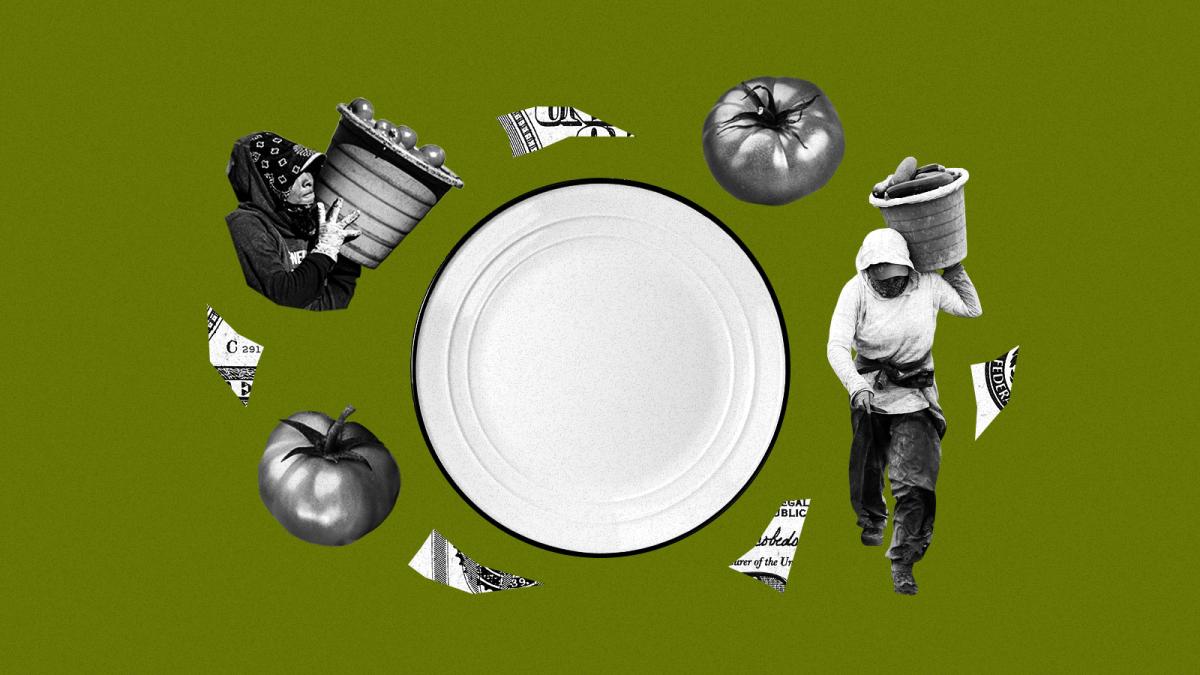

The people who feed America are going hungry
Climate change is escalating a national crisis, leaving farmworkers with empty plates and mounting costs.
Latest Articles
-
Big Oil [hearts] biofuels
Update [2009-3-19 12:37:25 by Tom Philpott]:Also on the theme of Big Oil loving biofuels: Valero Energy, the largest U.S. oil refiner, just snapped up seven ethanol plants from bankrupt ethanol maker Verasun for $1 billion. To get the plants, Valero beat out corn-processing giant Archer Daniels Midland, which had bid $700 million. ——————- From Reuters: […]
-
Following USDA dietary guidelines can be hazardous to your health
Jill Richardson flagged this op-ed in the San Francisco Chronicle co-authored by a nutritional biochemist and a doctor. In their commentary, they indicate that current government dietary guidelines might be an eensy bit flawed: Here is a daily diet that meets those nutrition guidelines: Breakfast: 1 cup Fruit Loops; 1 cup skim milk; 1 package […]
-
Farmers markets need rules if we want them to help the food system
Daniel Duane in Mother Jones warns you about farmers markets becoming “farmers markets”: In 1994, there were 1,755 farmers markets in the United States; by 2008, there were 4,685. In the big scheme of things, this is terrific news; it means Americans are learning to feed themselves properly. But not all parts of the country […]
-
New legislation would make the meat industry ‘just say no’ to antibiotic abuse
As debate around food safety regulation heats up — some might say, overheats — sublimely named Louise Slaughter (D-N.Y.) has introduced a House bill that would significantly affect farming practices in the United States. Called the Preservation of Antibiotics for Human Treatment Act, the bill would effectively prevent CAFOs (confined animal feedlot operations) from dousing […]
-
African ethanol producers accepting employment applications
Wanted: Young cane cutters for part time seasonal work. Must be willing to work ten hours a day swinging a machete in tropical sun while wearing gloves, long sleeved shirt, and hat — no retirement benefits (because you won’t live that long). Apply within. The comment below ElMarto’s photo on Flickr titled “Truck Shadow Escape” […]
-
The city that ended hunger did it by going local
What struck me in Frances Moore Lappé’s piece at Yes! on Belo Horizonte, Brazil — the city that ended hunger — was how simple the solution was: [The city] offered local family farmers dozens of choice spots of public space on which to sell to urban consumers, essentially redistributing retailer mark-ups on produce — which […]
-
The National Pork Board tries to spin Nick Kristof's MRSA column
In the wake of Nick Kristof's column on MRSA infections among hog farmers, Obamafoodorama found evidence of Big Pig (the National Pork Board) conspiring with the CDC in prepping its response. And after all that, this is the best they could come up with:
"They are making a huge leap attributing MRSA in these people to hogs," says Angela DeMirjyn, science communications manager for the National Pork Producers Council (NPPC). The pork organization has been researching MRSA for some time, says DeMirjyn, and supports the CDC's statement that most community acquired MRSA infections are caused by a different bacteria than is commonly associated with pigs or pig farms.
There. Now don't you feel better? They're all over it like flies on, well, you get the point. They have, as that nameless intelligence bureaucrat assured Indiana Jones as regards research into the Ark of the Covenant, "top men working on it right now." Top men, indeed.
But wait, there's even more rhetorical emptiness waiting for you:
"We also know that MRSA is not just staph bacteria that can be found in pigs, it also can be found in horses, dogs and even marine animals. It is not a problem that is solely related to pigs," DeMirjyn says.MRSA, in fact, can be found anywhere in nature, according to Paul Ebner, a livestock microbiologist at Purdue University. While he says there has been an increase in the number of these infections and that pigs and other animals can be carriers, the vast majority of infections come from skin-to-skin contact with infected humans.
File that under "Beside The Point."
You know, I think these folks just might be panicked. Funny, Tom Philpott and I (at Ezra Klein's blog) covered the "MRSA in pigs" issue recently - it didn't get quite this reaction. I guess the Gray Lady has life in her yet.
-
In industrial-tomato country, workers suffer squalid living conditions and even slavery
Note: Last week, I visited Immokalee, Fla., with nine other food-politics writers and activists. We were there to check out conditions in the area where 90 percent of winter tomatoes consumed in the U.S. originate. Part I of my diary is here. ——— Update [2009-3-13 15:3:13 by Tom Philpott]: After refusing for two years, Florida […]
-
Would new food-safety legislation 'criminalize organic farming'? No
The Internets are abuzz with accounts of a House bill, allegedly sponsored by Monsanto and pushed through Congress by its lackeys, that would "criminalize organic farming" and even backyard gardening. The object of frenzy: H.R. 875, known as the Food Safety Modernization Act of 2009, a bill that attempts to bolster the broken food-safety system.
Here's how one critic, whose work circulates widely on sustainable-food listservs, characterizes it:
The bill is monstrous on level after level -- the power it would give to Monsanto, the criminalization of seed banking, the prison terms and confiscatory fines for farmers, the 24 hours GPS tracking of their animals, the easements on their property to allow for warrantless government entry, the stripping away of their property rights, the imposition by the filthy, greedy industrial side of anti-farming international "industrial" standards to independent farms -- the only part of our food system that still works, the planned elimination of farmers through all these means.
Wait, did she just say "the planned elimination of farmers"?
I've been reading hysterical missives about H.R. 875 for weeks. I could never square them with the text of the bill, which is admittedly vague. For example, the bill seeks to regulate any "food production facility" which it defines as "any farm, ranch, orchard, vineyard, aquaculture facility, or confined animal-feeding operation."
But then again, the USDA already regulates farms. And "24 hours GPS tracking of ... animals"? Not in there. "Warrentless government entry" to farms? Can't find it.
More recently, reading around the web, I found more reasoned takes on H.R. 875. The bill may not be worth supporting -- and from what I hear, it has little chance of passing. But it hardly represents the "end of farming," much less the end of organic farming. The Organic Consumers Association, an energetic food-industry watchdog, recently called the paranoia around H.R. 875 the "Internet rumor of the week."
