Climate Food and Agriculture

Climate + Food and Agriculture
EDITOR’S NOTE
Grist has acquired the archive and brand assets of The Counter, a decorated nonprofit food and agriculture publication that we long admired, but that sadly ceased publishing in May of 2022.
The Counter had hit on a rich vein to report on, and we’re excited to not only ensure the work of the staffers and contractors of that publication is available for posterity, but to build on it. So we’re relaunching The Counter as a food and agriculture vertical within Grist, continuing their smart and provocative reporting on food systems, specifically where it intersects with climate and environmental issues. We’ve also hired two amazing new reporters to make our plan a reality.
Being back on the food and agriculture beat in a big way is critical to Grist’s mission to lead the conversation, highlight climate solutions, and uncover environmental injustices. What we eat and how it’s produced is one of the easiest entry points into the wider climate conversation. And from this point of view, climate change literally transforms into a kitchen table issue.
Featured
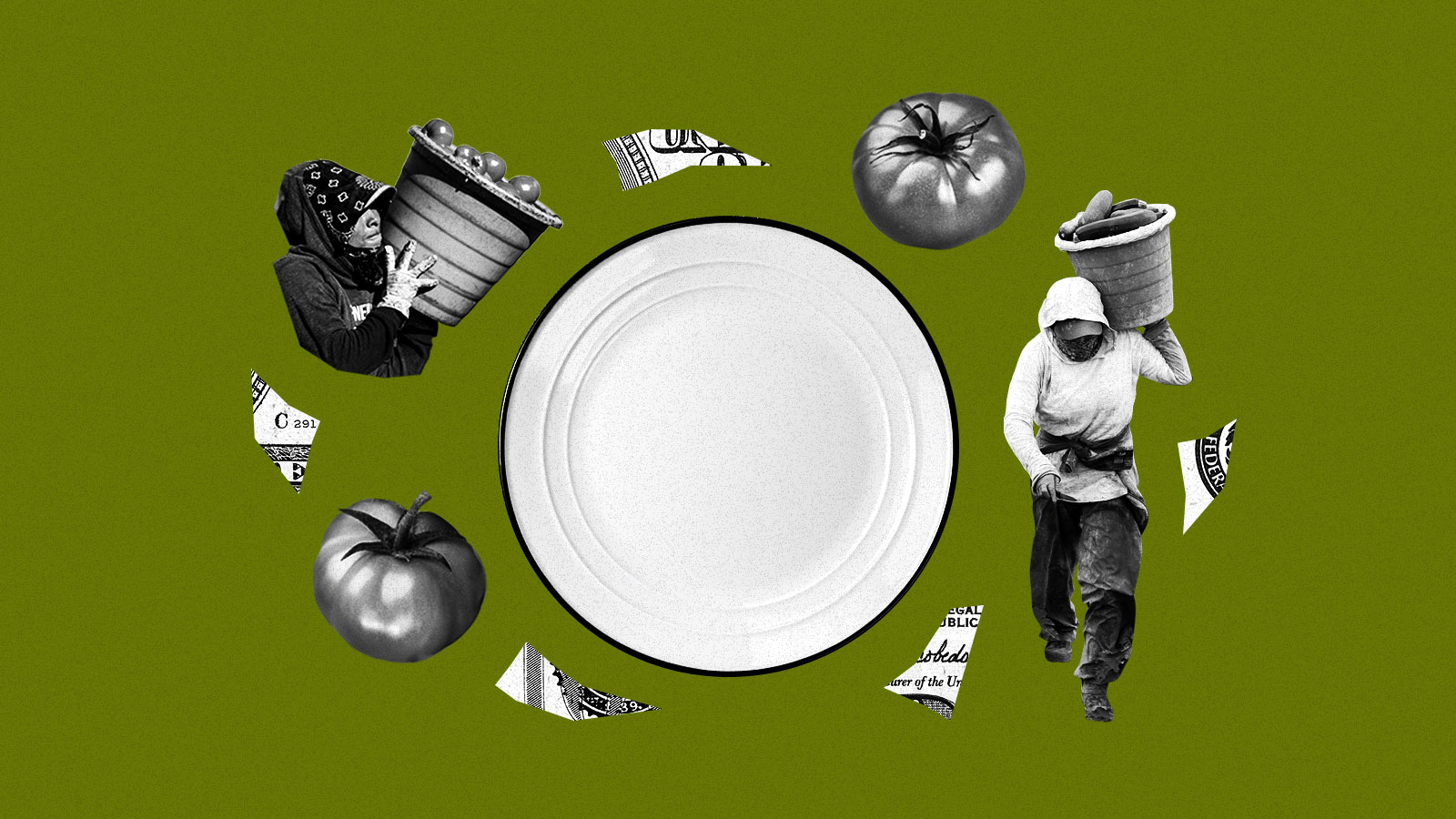
The people who feed America are going hungry
Climate change is escalating a national crisis, leaving farmworkers with empty plates and mounting costs.
Latest Articles
-
Global warming, agriculture, and fossil fuels
 In the article "A Perennial Search for Perfect Wheat" in yesterday's New York Times science section, writer Jim Robbins highlights one of the slow-moving global disasters of our age: the destruction of the world's soils. This in turn is part of a wider problem: global ecosystem destruction, including depleted oceans, cleared forests, and overgrazed grasslands.
As for erosion, Robbins writes:
-
Umbra on seltzer bottles
Dear Umbra, I love drinking fizzy water, especially in the summer, but I am appalled to learn that the plastic bottles use petroleum in their production. Plus, hauling them home from the supermarket burns gas. I’ve been looking at seltzer bottles, also known as soda siphons, the original source of carbonated water, and also much […]
-
Got to Get Ourselves Back to the Pesticide-Free Garden
Pesticide exposure increases risk of Parkinson’s disease, study says A new study from researchers at the University of Aberdeen in Scotland concludes that pesticide exposure increases the risk of getting Parkinson’s disease, a degenerative condition affecting the nervous system. Patients from five European countries participated in the study, published in the Journal of Occupational and […]
-
Pesticide efficacy is decreasing
If you've ever colored Easter eggs -- I mean the old-fashioned way, with food-coloring, not with those plastic wraparounds -- then you know that when you mess up, you have two options: rinse them off with some white vinegar and start over, or forge ahead, layer even more color on top, and hope that something presentable emerges.
Okay, so that metaphor's a bit of a stretch, but that's what came to mind when I read, earlier this week, that scientists at the University of Nebraska, Lincoln, have engineered a new category of transgenic crops. The new plants -- which include broad-leafed greens such as soybeans, tomatoes, and tobacco -- harbor a bacterial gene that makes them resistant to an herbicide called dicamba.
"But we have Roundup!" you cry. "Why do we need anything else?" Well, because Roundup (active ingredient: a chemical called glyphosate) isn't working as flawlessly as it used to. According to the story in Science (sorry, subscription only), 24 percent of farmers in the northern Midwest and 29 percent in the South say they have glycophate-resistant (GR) weeds. Crop scientists in Argentina, Brazil, and Australia report GR grasses popping up too.
-
On summer memories and politically correct peanut butter
The cool, sunny mornings this time of year always remind me of setting off to work each day during the first few months that I spent living in Boston. It was the summer between my junior and senior year of college, and I was working for a feminist newspaper located in an old factory near […]
-
World grain supplies tanking
Once again, a prediction is panning out(PDF):
The world is consistently failing to produce as much grain as it uses.
Every six years, we're adding to the world the equivalent of a North American population. We're trying to feed those extra people, feed a growing livestock herd, and now, feed our cars, all from a static farmland base. No one should be surprised that food production can't keep up.
The USDA projects global grain supplies will drop to their lowest levels on record. Further, it is likely that, outside of wartime, global grain supplies have not been this low in a century, perhaps longer ...(Another hat tip to KO.)
-
Interesting juxtaposition of stories
Interesting juxtaposition of stories:
First, an essay on what has become of organics, as it turns into what Fromartz calls "Organic, Inc."
Then, Energy Bulletin links to a story suggesting that some Brits might deny the organic label to food flown in from abroad.
And, of course, there's the post right here on Gristmill about labeling as an attempt to help consumers understand the effect of their purchases.
The issue boils down to the fact that our prices don't help consumers understand anything about food; in our perverse system, the food that has traveled the furthest at the greatest energy expense may often be the cheapest. As a smart man put it:
"Socialism collapsed because it did not allow prices to tell the economic truth. Capitalism may collapse because it does not allow prices to tell the ecological truth."
-- Oystein Dahle, former vice president of Esso for Norway and the North Sea
-
Umbra on returnable bottles
Hi Umbra, I’ve been wondering lately what happened to the returnable bottles that were so common up until some point in the ’70s. Why did the legislation go away? Does reusing bottles use less energy? It seems like it would, but I haven’t found info on advocating for bottle reuse in any of the green […]
-
Schwarzenegger to California farmers: Considuh this a divorce
There’s a fair amount of debate on Gristmill about how much green cred to give the Governator — that A-list action hero of enlightened Republicanism. I don’t follow California politics closely enough to venture an opinion. But I do know that promoting a policy that will result in yet more suburban sprawl and evict small- […]
-
On moving to New Orleans, a city defined by water
Wayne Curtis is a freelance writer who’s written for The New York Times, Atlantic Monthly, American Scholar, Preservation, and American Heritage, and is the author of And a Bottle of Rum: A History of the New World in Ten Cocktails. He recently traded Maine winters for New Orleans summers. Thursday, 24 May 2007 NEW ORLEANS, […]
