In the weeks after Hurricane Helene hit western North Carolina, people had to rely on their neighbors for everything. They shared two-way radios so they could contact loved ones, chainsaws so they could cut their way out of their hollers, as well as food and supplies. Community centers, churches, and schools became central meeting places and venues for storing and distributing resources.
These spaces, often called disaster resilience hubs, provide a central location for accessing food, water, supplies, shelter, and Wi-Fi (or other communication if internet and cell service are down) during a disaster. And two years after Helene, the network of resilience hubs has grown.
To showcase the work of the people and organizations continuing to provide resources and build community in western North Carolina, Grist worked with the Buladean Community Resource Center, an integral resource in the rural mountain area near the Tennessee border, and our partners at Blue Ridge Public Radio, or BPR, to organize a “resilience festival” in mid-October.
Lyndsey Gilpin / Grist
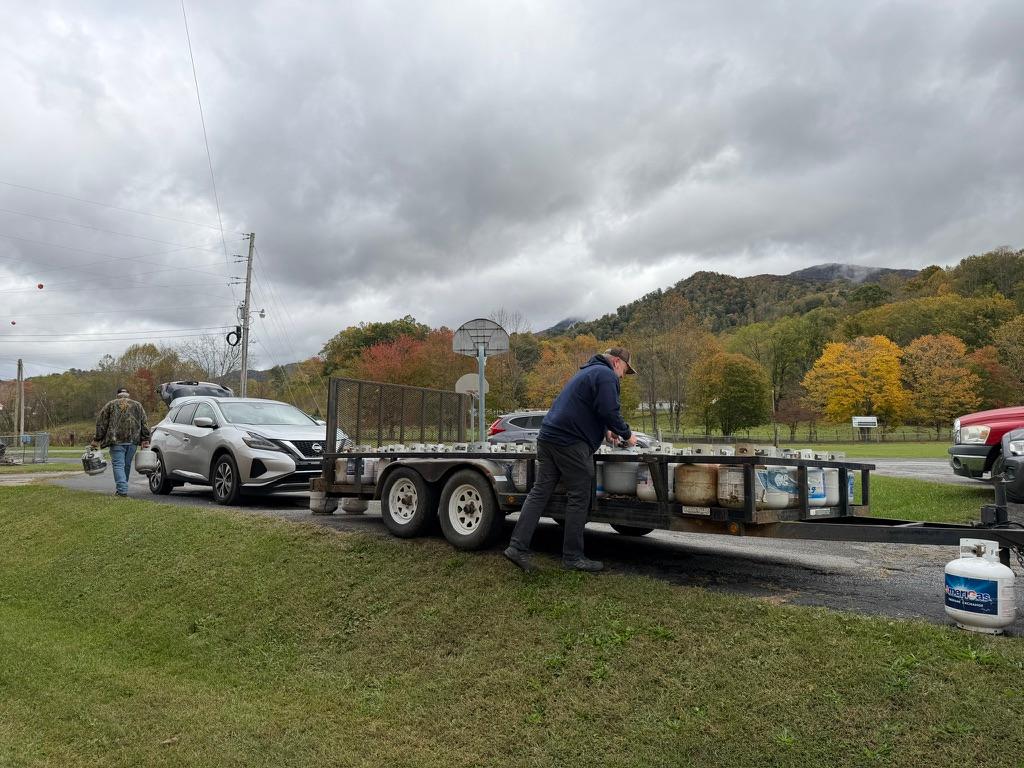
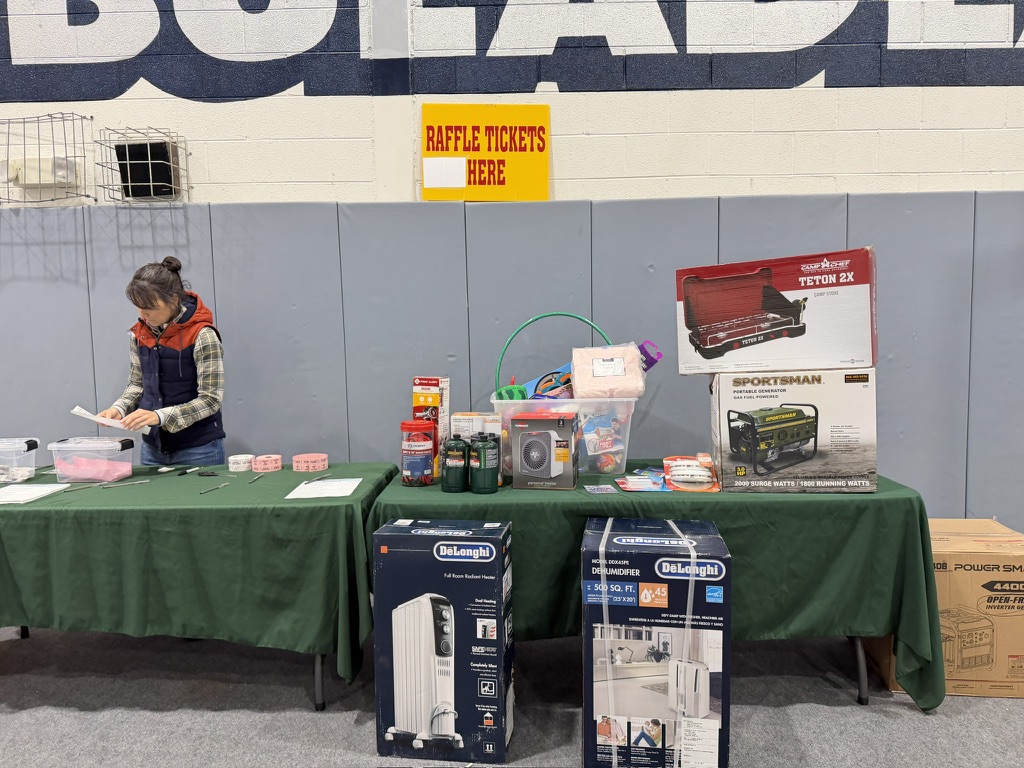
On a chilly, windy Saturday morning, more than 80 people showed up to get information from nearly a dozen local and regional groups, including a counseling center, legal aid, county emergency management, an environmental group, the clean energy center at Appalachian State, and more. Appalachian Navy, a relief organization, exchanged propane tanks for free and gave out blankets; the Beacon Network, which does environmental restoration, gave out free native plants; the county long-term recovery group handed out emergency kit supplies. We raffled off generators, heaters, gift cards, and more to folks preparing to hunker down for winter in the mountains. Almost two dozen people, including some youth, attended a two-way radio workshop to learn about ham and GMRS radio.
A couple of days later, Grist and BPR hosted a similar event in Asheville at the Linwood Crump Shiloh Community Center. Nine organizations joined us there, including Appalachian Community Relief, a food pantry and communal space that sprang up after the storm; WNC Radio Project, which teaches people how to use two-way radio; and WNC Repair Cafe, which travels around the region to host repair workshops and meetups. Event attendees said they enjoyed the opportunity to stock up their emergency kits, meet new people, and learn something new. One man mentioned that he had no idea so many resources were still available this long after the storm.
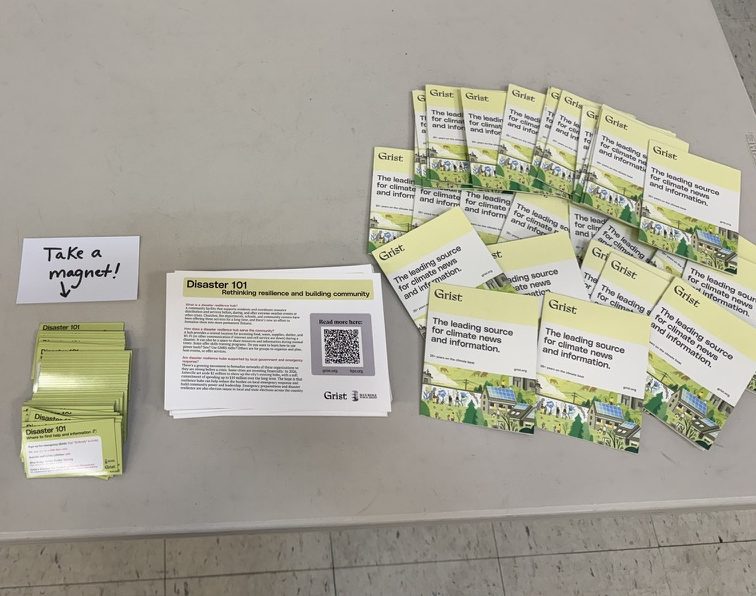
At both events, Grist handed out magnets with need-to-know information for emergency alerts and mental health resources, as well as BPR’s website and a link to Grist’s Disaster 101 Toolkit. We also distributed a postcard-sized flyer with the contact information of the organizations that tabled at the event, plus context on disaster resilience hubs and links to reporting on the issue by Katie Myers and Laura Hackett of BPR.
“Right now, everyone I talk to in my work is craving more in-person time with their friends, neighbors, and larger community,” said Lyndsey Gilpin, senior manager of community engagement at Grist. “Meeting people at their local community center, offering free food, swag, prizes, and space to talk — and asking nothing in return — is such a joyful way to build trust and get information out. I feel really grateful we were able to facilitate that experience for folks.”
For more information about our work around disaster resources, check out our media kit. Contact us if you’d like to collaborate on a disaster-related community engagement project: [email protected].