Latest Articles
-
Commuting can drive you crazy — no, literally
Think your commute drives you crazy? Well, you might be right. In a culture so accustomed to being on-the-go, sitting immobile in traffic for hours each day can take a toll on mental health, researchers say. “If you’re stuck in traffic, there’s a feeling of being out of control,” says psychologist Laura Pinegar, who says […]
-
Drilling for fossil fuels and subsidizing nuclear power: McCain energy policy
McCain reveals the heart of his energy policy: McCain was more gung-ho about nuclear power and expanded domestic drilling for oil and natural gas. When a donor in Richmond summed up his advice as, “nuclear, and drill wherever we’ve got it,” McCain responded: “You just gave my speech. Thank you, my friend.”
-
Drilling in ANWR still isn’t the solution to high gas prices
George Will is at it again. His latest bit of inane demagoguery can be found here, in which he excoriates everyone who has ever opposed drilling in the Arctic National Wildlife Refuge:
Also disqualified from complaining [about oil prices] are all voters who sent to Washington senators and representatives who have voted to keep ANWR's oil in the ground and who voted to put 85 percent of America's offshore territory off-limits to drilling.
Naturally, Will ignores the flip side of the coin. What about people who have opposed investing in renewable energy, increasing fuel efficiency standards for cars, or encouraging conservation a decade ago? Those people have done far more long-term damage. If we'd begun to work on the oil problem ten years ago, we would be in much, much better shape than we are today.
But is drill, drill, drill a solution? Will writes:
-
There is such a thing as a free lunch
You frequently hear that “there’s no such thing as a free lunch,” particularly when it comes to climate and energy policy. It’s a mark of “seriousness” to solemnly proclaim that it’s all going to cost a lot of money and be very, very difficult. But the free-lunch canard is just another way of restating the […]
-
Last, best hope for clean energy tax incentives
For the past six months, Congress has been squabbling over how to pay for a package of expiring clean energy tax incentives. These incentives, which will phase out in December, are bringing down the cost of manufacturing, building, and installing renewable energy systems and energy-efficient products. A multitude of bills have been introduced by both parties, in both chambers, and all have failed.
The last, best hope for this year is H.R. 6049. This bill passed the House on May 21 by a bipartisan vote of 263 to 160, and will be voted on in the Senate as early as Thursday. Partisan lines are being drawn in the Senate already, and the president has threatened to veto this bill. If you want to help end this stalemate, please consider sending a letter to the editor of your local paper. The more voices speaking out on this issue, the better our chance at ending this protracted impasse. Take action here.
-
China bank offers draft plan to reduce nation’s emissions
China’s central bank has taken a first stab at a national emissions-reduction plan that could apply to various pollutants. A draft emissions-trading proposal unveiled to top officials on Friday suggests that China determine a national goal for reducing pollution, have regional authorities determine quotas for businesses, and put in place a system with controls at […]
-
One mother’s tips for managing summer eco-dilemmas
It’s painful for you both, but still better than a day inside with SpongeBob. Photo: Tom Twigg When the last school bell rings and summer gets into full swing, we modern parents simply can’t do as the previous generation did: turn our kids loose onto the chemically manicured neighborhood lawns for unsupervised games of kick-the-can, […]
-
U.S. Senate candidate Scott Kleeb and the clean energy roundup
Fresh from an overwhelming primary victory in Nebraska's U.S. Senate race, 32-year-old rancher, Yale Ph.D., and college history teacher Scott Kleeb spoke with me on the phone about his "brand of change" for a clean energy economy and the environment.
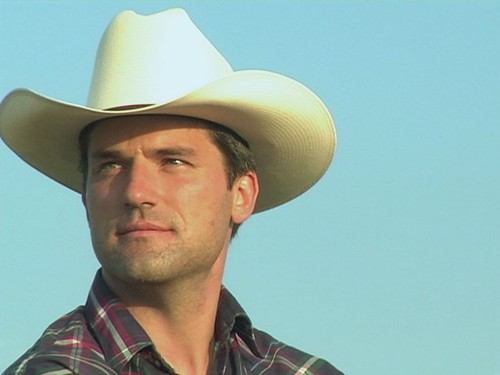
Kleeb shocked the political establishment in 2006 by getting 45 percent of the vote in Nebraska's 3rd Congressional District, one of the most Republican districts in the country. Then, as now, he ran as a clear progressive on most economic and environmental issues (while staying coy on some contentious social issues).
One of Kleeb's core concerns has been meeting the challenge of the climate crisis through a clean energy revolution on the prairie and through aggressive use of domestic and international forest and farm carbon credits. Through it all, Kleeb has been aided by a huge renewable resource of his own: megawatt good looks that won him "The Hot Rancher" award from Young Voter PAC.
Now Kleeb is hoping his unique combination of deep Nebraska roots, Ivy League cred, and movie star charm will help him overcome his opponent: President Bush's former agriculture secretary (and former Nebraska governor) Mike Johanns, who's based his career on support for Big Ag, free trade, and fossil fuels.
Q. Where do you see Nebraska's economic future, and what role do you think clean energy will play in it?
A. We've got to transform the way we produce and consume energy. There's a failure of leadership we've seen at all levels of government. We've got to figure out how to do more with less. That's true of our elected officials and true of ourselves as individuals. This is a generations-long process. We are on the cusp of it right now. Biofuels and wind energy and solar energy and algae-based energy is just the tip of the iceberg.
Nebraska's economy is going to be transformed by that revolution. Farmers will find new ways of feeding or, once we get to cellulosic ethanol, fueling the world.
Q. Recent studies have suggested that devoting American land to growing biofuels instead of food is causing massive deforestation in carbon-rich tropical forests. How can switchgrass and cellulosic ethanol be viable if it's just causing food to be grown in these highly sensitive ecosystems thousands of miles away?
-
Swing-vote Democrats explain why they oppose the Climate Security Act
On Friday, 10 Democratic senators wrote a letter [PDF] to Barbara Boxer (D-Calif.) and Majority Leader Harry Reid (D-Nev.) outlining the reasons why they would not have voted in favor of the Climate Security Act. Democratic leaders pulled the bill from the floor last week after it failed to muster enough votes to move forward. […]
-
Umbra on kiddie pools
Dear Umbra, Regarding your obsession with vinyl, as pertains to summer parenting: Greenpeace’s thorough Vinyl Alternatives list indicates that no good alternatives to vinyl kiddie pools exist. Do you think it is worth it to put a huge effort into manufacturing or finding a vinyl-free backyard wading experience? I can’t stop thinking about this, and […]
